What Affects Rates in Morgantown
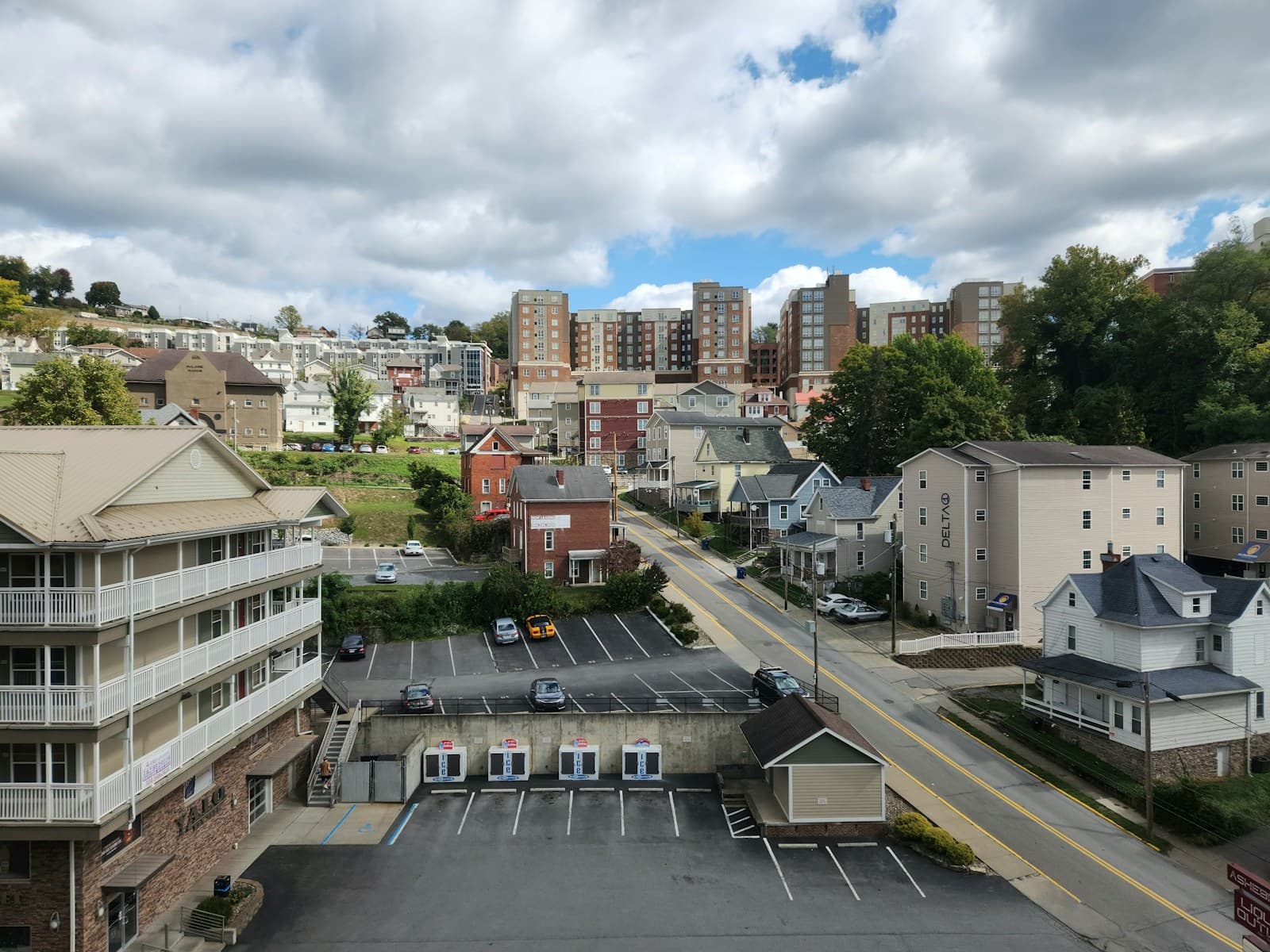
- Over 30,000 students add significant driving volume during the academic year, particularly along University Avenue, Patteson Drive, and Monongahela Boulevard. Inexperienced drivers and pedestrian-heavy zones around campus increase accident frequency. First-time drivers under 25 already face higher base rates, and living near campus compounds this with elevated collision risk.
- Morgantown sits in the Appalachian foothills with steep grades throughout the city, especially on roads like Stewartstown Road and Don Knotts Boulevard. Winter ice and snow on these hills lead to frequent fender-benders and brake wear. Comprehensive coverage (which covers non-collision damage) becomes important here, though deductibles—what you pay before insurance kicks in—should match what you can afford out-of-pocket.
- Many Morgantown residents commute to jobs in Fairmont or Uniontown via I-68 or south on I-79, adding highway miles that increase exposure to multi-car accidents. Highway driving raises your liability risk—liability insurance pays for damage you cause to others. West Virginia requires minimum liability of 25/50/25 ($25,000 per person injured, $50,000 per accident, $25,000 property damage), but these limits can be exhausted quickly in a serious crash.
- The compact downtown along High Street and Walnut Street has tight parallel parking and frequent door-dings, shopping cart scrapes, and minor collisions. Comprehensive and collision coverage (often called full coverage together) protect your own vehicle from these damages, but they add $80–$150/mo to your premium. If you drive an older car worth under $3,000, you may skip these and carry only liability to save money.
- Deer strikes are common on Cheat Road, Grafton Road, and routes heading toward Coopers Rock State Forest. Comprehensive coverage pays for animal collisions, and your deductible (typically $500–$1,000) determines your out-of-pocket cost. Filing a comprehensive claim usually doesn't raise your rate as much as an at-fault accident would.
Compare car insurance for first-time drivers
Rates are high for new drivers — but the right carrier and discounts can make a real difference.
Get Your Free QuoteCoverage Recommendations
Cost estimates are based on available industry data and vary by driver profile. These are not insurance quotes.
Liability Insurance
Essential on I-68 and I-79 commutes where multi-car accidents can exceed the state minimum limits quickly.
$90–$180/moEstimated range only. Not a quote.
Full Coverage
Recommended if your car is financed or worth over $5,000, given Morgantown's hill-related collisions and deer strike frequency.
$180–$310/moEstimated range only. Not a quote.
Comprehensive Coverage
Valuable on roads near Coopers Rock and Cheat Lake where deer are active year-round.
$35–$70/moEstimated range only. Not a quote.
Collision Coverage
Useful in tight downtown parking areas and on steep winter roads where fender-benders are common.
$80–$150/moEstimated range only. Not a quote.
Uninsured Motorist
West Virginia has higher uninsured rates in rural areas; worth considering if you travel outside Morgantown frequently.
$15–$35/moEstimated range only. Not a quote.