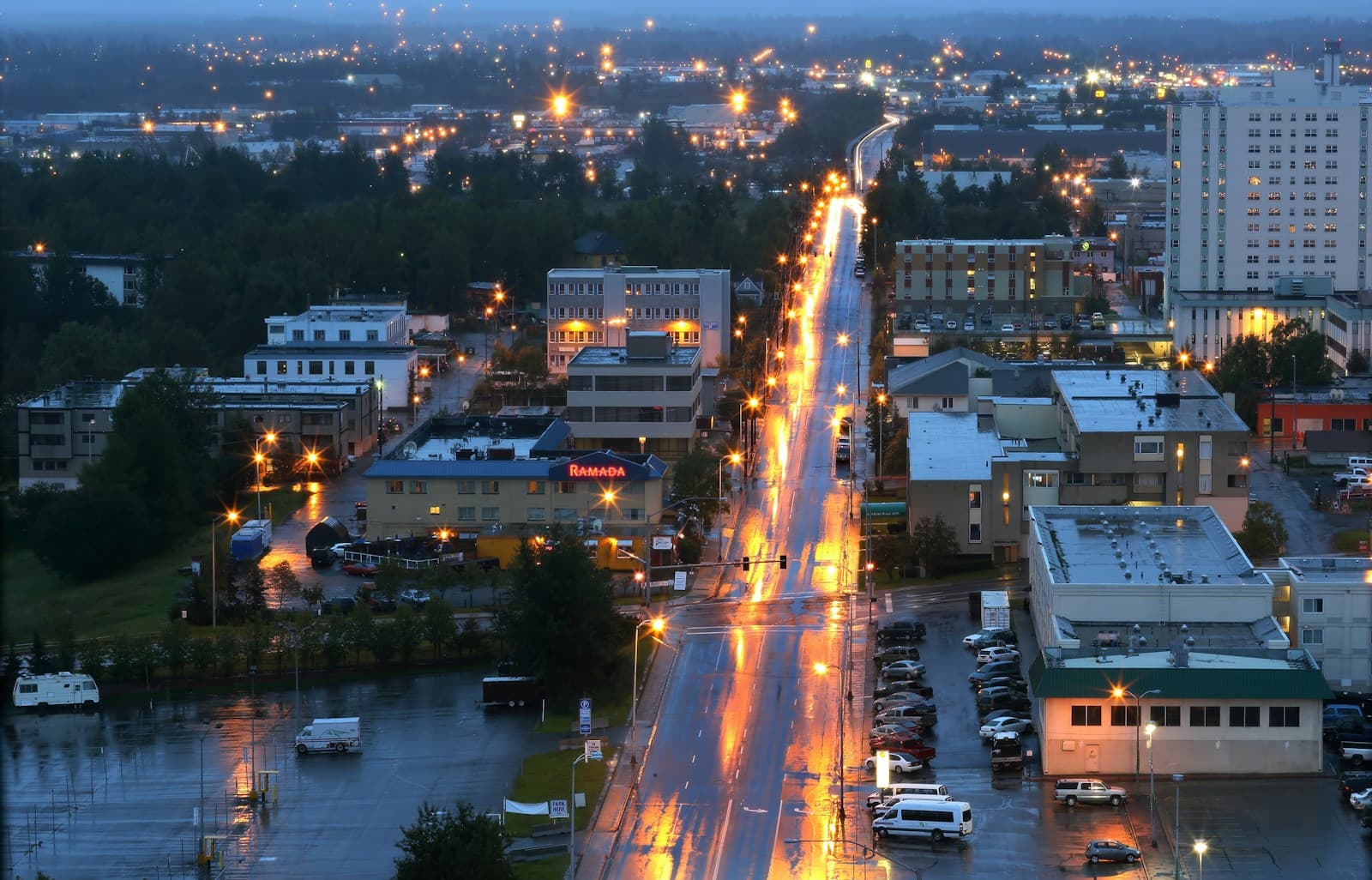
What Affects Rates in Anchorage
- The Glenn Highway from Eagle River and Seward Highway south to Girdwood see ice and snow from October through April, with black ice common on overpasses and shaded sections. First-time drivers face steep learning curves navigating studded tire laws, sudden whiteouts, and brake techniques on packed snow. Collision rates for drivers under 25 spike 40% in winter months compared to summer, directly impacting your premium.
- Anchorage reports over 1,200 moose-vehicle collisions annually, clustered along the Glenn Highway, Minnesota Drive, and residential areas near Campbell Creek and Kincaid Park. A single moose strike causes $8,000–$15,000 in damage and requires comprehensive coverage to repair. Insurers price this risk into Anchorage policies at levels you won't see in Juneau or Ketchikan.
- Midtown (especially along Spenard Road), Mountain View, and Fairview neighborhoods account for 65% of Anchorage's auto theft claims. Subarus, Hondas, and pickup trucks are primary targets, with catalytic converter theft surging in apartment parking lots. If you're parking in these ZIP codes (99503, 99508), expect comprehensive coverage premiums 20–30% higher than Eagle River or South Anchorage.
- Anchorage insurers apply surcharges of 80–120% for drivers under 25, higher than Alaska's suburban markets, because winter collision data shows inexperienced drivers struggle most with ice management on urban streets and highway merges. Your first winter on the Glenn or New Seward Highway significantly affects your rate until you build a three-year clean record.
- The 2018 magnitude 7.1 earthquake damaged roads and created persistent frost heave issues on Minnesota Drive, Tudor Road, and older Midtown streets. Pothole season (April–May) generates comprehensive claims for tire, wheel, and suspension damage. This ongoing infrastructure strain keeps Anchorage comprehensive costs above smaller Alaska cities with newer road networks.
Compare car insurance for first-time drivers
Rates are high for new drivers — but the right carrier and discounts can make a real difference.
Get Your Free QuoteCoverage Recommendations
Cost estimates are based on available industry data and vary by driver profile. These are not insurance quotes.
Liability Insurance
Winter pile-ups on the Glenn Highway and icy intersections along Northern Lights Boulevard create high liability exposure for new drivers navigating their first Anchorage winter.
$90–$140/moEstimated range only. Not a quote.
Full Coverage
Anchorage's moose collision rate and vehicle theft concentration in Midtown make full coverage essential for protecting financed vehicles, especially for first-time buyers with loans.
$180–$280/moEstimated range only. Not a quote.
Comprehensive Coverage
With 1,200+ annual moose collisions and elevated theft rates in Mountain View and Spenard Road corridors, comprehensive is non-negotiable for Anchorage drivers parking outdoors.
$50–$90/moEstimated range only. Not a quote.
Collision Coverage
Black ice on Glenn Highway overpasses and sudden whiteouts on Seward Highway make collision coverage vital for first-time drivers learning winter brake control and stopping distances.
$80–$130/moEstimated range only. Not a quote.
Uninsured Motorist Coverage
Alaska's uninsured driver rate hovers near 15%, with higher concentrations in Anchorage's older neighborhoods where enforcement is lighter and economic pressures push drivers to drop coverage.
$20–$40/moEstimated range only. Not a quote.