
What Maine Requires Before You Can Register a Car
You're at the registration counter or filling out your first quote form, and the coverage options don't match what you expected. Most new drivers assume car insurance is one thing you either have or don't have. Maine treats it as a stack of three separate mandatory coverages: bodily injury liability, Personal Injury Protection, and uninsured motorist coverage. Miss any one of the three and your policy isn't legal to bind.
The state won't let you register a vehicle, renew your registration, or reinstate a suspended license without proof that all three components are active. Carriers won't sell you a policy that omits any of them. This isn't about choosing the right coverage for your situation—it's about understanding what the legal floor actually includes before you start comparing quotes.
Compare car insurance for first-time drivers
Rates are high for new drivers — but the right carrier and discounts can make a real difference.
Get Your Free QuoteBodily Injury Per Person
$50,000
Maine's minimum liability limit for injuries to one person in an accident you cause. The per-accident limit is $100,000, and property damage is $25,000. Every policy must meet all three minimums simultaneously.
Maine Bureau of Insurance
The Three-Part Requirement Stack
Bodily injury liability covers medical bills, lost wages, and legal costs when you injure someone else in an accident you cause. Maine requires $50,000 per person and $100,000 per accident. If two people are injured and each has $60,000 in medical bills, your policy pays the first $50,000 for each person, capped at $100,000 total. Anything above that comes out of your assets.
Personal Injury Protection covers your own medical bills and lost wages after an accident, regardless of who caused it. Maine requires PIP on every policy. The minimum coverage amount is set by statute and applies whether you're injured in your own car, someone else's car, or as a pedestrian hit by a vehicle. PIP pays before your health insurance kicks in.
Uninsured motorist coverage protects you when you're hit by a driver who has no insurance or whose carrier denies the claim. Maine requires this coverage at the same limits as your bodily injury liability. If you carry $50,000/$100,000 liability, you must carry $50,000/$100,000 uninsured motorist. You can reject this coverage in writing, but doing so leaves you unprotected if an uninsured driver causes serious injuries.
The blocker: quote forms don't always label PIP and uninsured motorist as required, so new drivers assume they're optional add-ons and try to remove them to lower the premium, only to find the quote won't bind.
Property Damage Liability Closes the Liability Stack

Maine requires $25,000 in property damage liability. This is a separate limit from bodily injury. If you total someone's $30,000 car in an accident you cause, your policy pays the first $25,000 and you're personally liable for the remaining $5,000. The property damage limit does not apply to injuries—only to physical damage to property.
Most carriers bundle bodily injury and property damage into a single liability section on the quote form, displayed as split limits: 50/100/25. The first number is bodily injury per person, the second is bodily injury per accident, the third is property damage per accident. All three must meet or exceed Maine's minimums before the policy is legal to issue.
Related Articles


What the Minimums Don't Cover
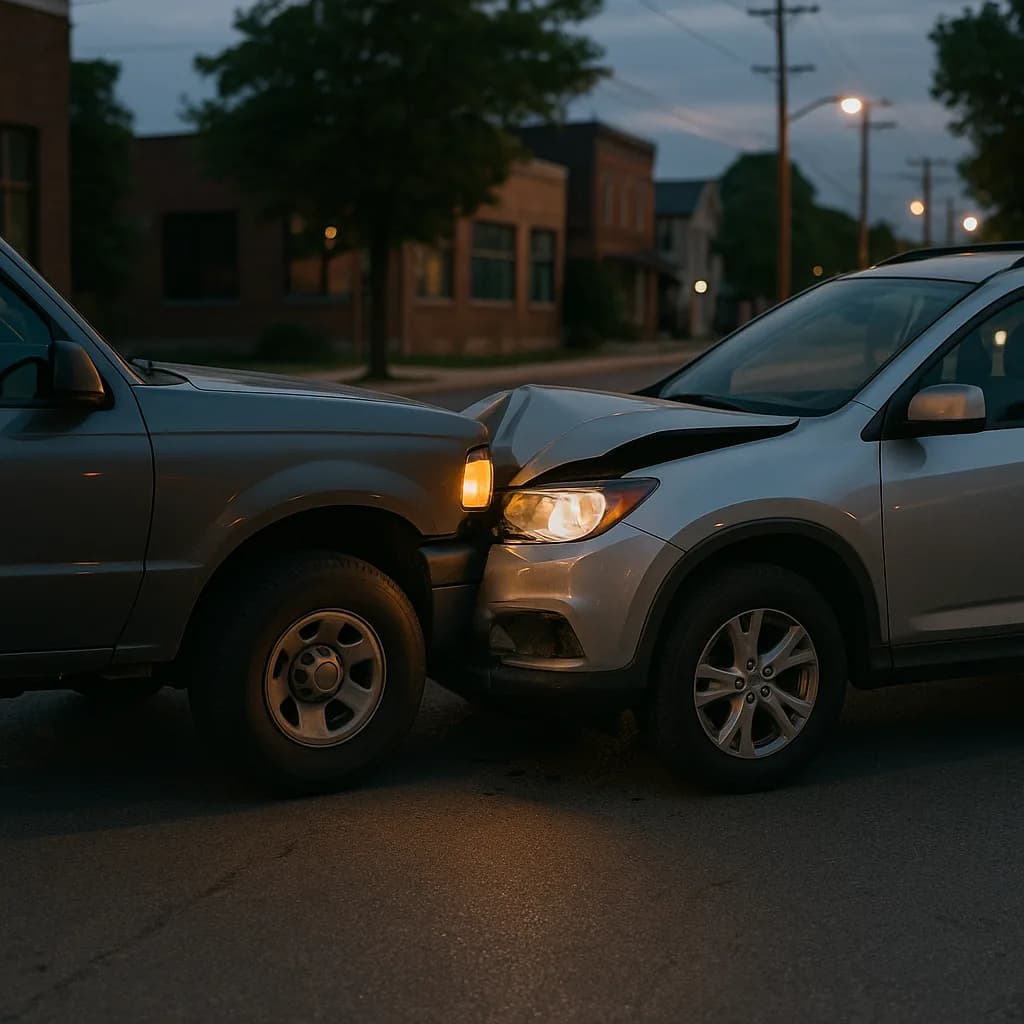
The required stack protects other people and covers your medical bills, but it does nothing for damage to your own car. Collision and comprehensive coverage are optional in Maine. Collision pays to repair your car after an accident you cause or a single-car crash. Comprehensive pays for theft, vandalism, weather damage, and animal strikes.
If you finance or lease your car, the lender will require both collision and comprehensive as a condition of the loan. The lender's requirement sits on top of the state's requirement. You'll need liability, PIP, uninsured motorist, collision, and comprehensive before the dealership releases the car. If you own your car outright, collision and comprehensive are your decision based on the car's value and your ability to replace it out of pocket.
The state minimum liability limits are low relative to the cost of serious injuries. A multi-car accident with severe injuries can generate claims in the hundreds of thousands. If your liability limit is $100,000 per accident and the total claims are $300,000, you're personally liable for the $200,000 gap. Carriers offer higher limits—100/300/100 and 250/500/250 are common—and the premium difference between minimum limits and higher limits is often smaller than new drivers expect.
How Carriers Verify You Meet the Requirement
When you request a quote, the carrier builds a policy that meets Maine's minimums by default. You can increase any limit, but you cannot decrease bodily injury liability, property damage liability, PIP, or uninsured motorist below the statutory floor. The quote form may let you adjust the limits, but if you drop any component below the minimum, the system will either reset it automatically or block you from binding the policy.
After you bind the policy, the carrier files an electronic certificate with the Maine Bureau of Motor Vehicles confirming that you have active coverage meeting the state's requirements. The BMV links this certificate to your vehicle registration. If your policy lapses or is canceled, the carrier notifies the BMV electronically, and your registration becomes invalid. Driving with an invalid registration is a separate violation on top of driving uninsured.
Carriers Writing in Maine
25
At least 25 carriers are licensed to write auto insurance in Maine and offer online quotes or agent access to new drivers. Comparing carriers matters because pricing for required coverage varies significantly even when the coverage stack is identical.
Maine Bureau of Insurance licensure data
Building Your First Policy Above the Minimums
Start with the required stack: 50/100/25 liability, PIP, and uninsured motorist at matching limits. Then evaluate whether your situation requires higher liability limits. If you have a job, savings, or assets a lawsuit could reach, increasing liability to 100/300/100 or 250/500/250 protects those assets. The premium increase is often $10 to $30 per month, and the protection gap is significant.
If you're financing a car, add collision and comprehensive at the deductible your lender allows. Lenders typically cap the deductible at $500 or $1,000; check your loan contract. If you own your car outright and it's worth less than a few thousand dollars, collision coverage may cost more over two years than the car's replacement value. Comprehensive is cheaper and covers theft and weather damage, so many drivers keep comprehensive and drop collision on older cars.
Get Quotes That Meet Maine's Requirements
Request quotes from at least three carriers licensed in Maine. Provide accurate information about your driving history, vehicle, and garaging address—the address where the car is parked overnight, not your mailing address if they're different. Verify that every quote includes bodily injury liability at 50/100 or higher, property damage liability at $25,000 or higher, PIP, and uninsured motorist coverage. Compare the total premium and the per-coverage breakdown to see where pricing differs. Bind the policy before your registration appointment or before the car leaves the dealership if you're financing.