
What Affects Rates in Madison
- The Beltline (US-12/18) circles the city and sees frequent rear-end collisions during peak commute times, especially where it merges with I-90/94 and US-151. The UW-Madison campus area — particularly around University Avenue, State Street, and Park Street — combines student pedestrian traffic with dense parking, raising collision frequency. These high-traffic zones directly increase premium costs for drivers who live or commute through them.
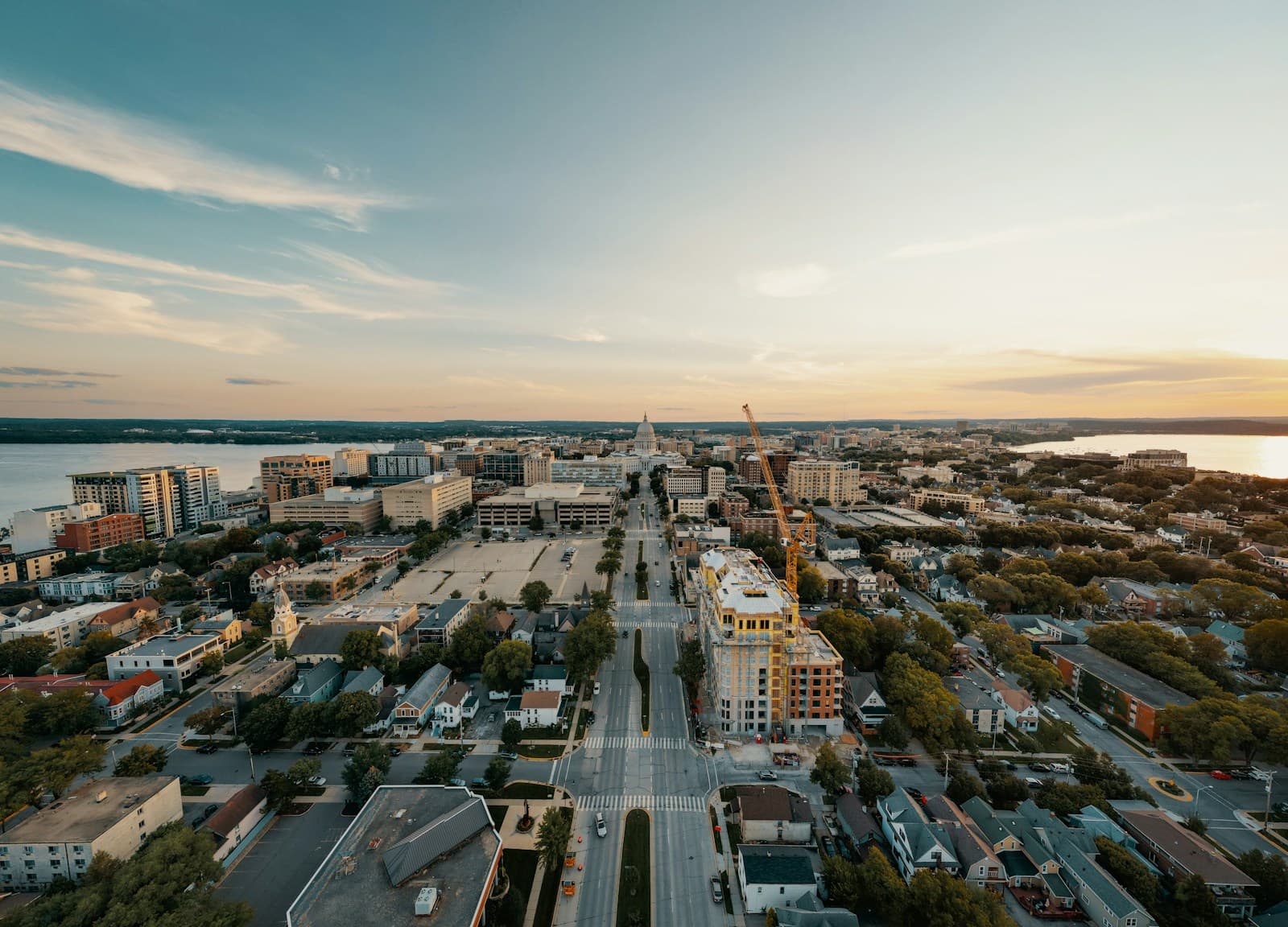
- Madison sits on an isthmus between Lake Mendota and Lake Monona, creating limited parking in downtown and Near East Side neighborhoods like Willy Street and Atwood. Student-heavy areas see elevated vehicle break-ins and catalytic converter thefts, especially during academic years. Comprehensive coverage (the part of insurance that covers theft and vandalism, separate from collision) costs more here than in suburban Middleton or Sun Prairie.
- Madison experiences extended winters with snow from November through March, and ice storms can make East Washington Avenue and University Avenue particularly hazardous. Black ice on lakeside roads and uncleared side streets contribute to single-vehicle accidents and fender-benders. First-time drivers without winter driving experience see this reflected in higher collision premiums, and it's worth learning winter driving techniques before your first snow.
- Living in Fitchburg, Verona, or McFarland typically costs 10–15% less than downtown Madison ZIP codes, even though you're still commuting to the same job centers. The shift reflects lower theft rates, wider roads, and less daily exposure to congestion. If you're a first-time driver choosing where to live, your address will directly impact your monthly premium.
- Insurers charge first-time drivers — whether you're 18 or 35 — significantly more because you have no claims history to prove you're low-risk. In Madison, that inexperience penalty combines with urban congestion to push premiums higher than Green Bay or Appleton. Rates typically drop 15–25% after your first year with a clean record, and shopping around after building six months of history often reveals better pricing.
Compare car insurance for first-time drivers
Rates are high for new drivers — but the right carrier and discounts can make a real difference.
Get Your Free QuoteCoverage Recommendations
Cost estimates are based on available industry data and vary by driver profile. These are not insurance quotes.
Liability Insurance
Wisconsin's minimum is 25/50/10, but Madison's dense traffic (especially around campus and the Capitol) makes 100/300/100 limits a smarter choice for first-time drivers navigating congested intersections.
$95–$175/mo for state minimum, $145–$225/mo for higher limitsEstimated range only. Not a quote.
Comprehensive Coverage
Madison's student neighborhoods see elevated vehicle break-ins and catalytic converter theft, making comprehensive worth the cost if your car is worth more than $3,000–$4,000.
$35–$75/mo additionalEstimated range only. Not a quote.
Collision Coverage
Beltline fender-benders and icy winter pileups on East Wash make collision valuable for first-time drivers still building defensive driving skills in Madison's seasonal conditions.
$75–$155/mo additionalEstimated range only. Not a quote.
Full Coverage
Most first-time drivers financing a car in Madison will need full coverage as a loan requirement, and it makes sense given theft risk and winter accident frequency.
$185–$295/mo totalEstimated range only. Not a quote.
Uninsured Motorist Coverage
While Wisconsin's uninsured rate is low statewide, campus-area parking lot hit-and-runs happen regularly, and this coverage fills the gap when the other driver flees.
$15–$35/mo additionalEstimated range only. Not a quote.