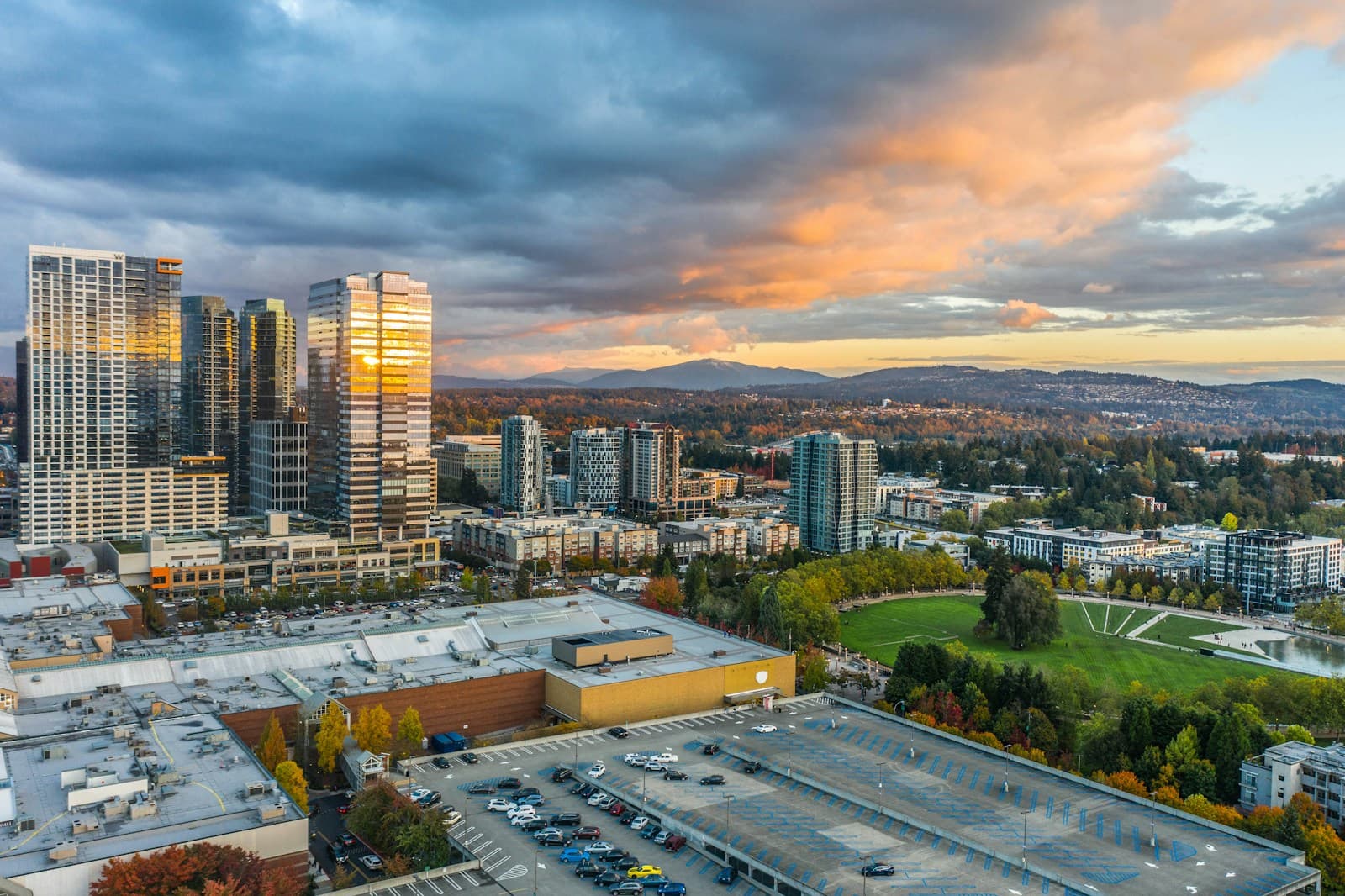
What Affects Rates in Bellevue
- Many Bellevue drivers commute daily across SR-520 or I-90, adding 20-40 miles of high-speed highway exposure each day. Insurance companies see bridge and freeway miles differently than local driving—your premium reflects accident frequency on these corridors, particularly during Eastside tech-sector rush hours. First-time drivers with Seattle or Redmond commutes pay measurably more than those working locally.
- I-405 runs directly through Bellevue and carries some of Washington's heaviest suburban traffic volumes, particularly between NE 8th Street and Coal Creek Parkway. Collision rates here are higher than rural highways but lower than Seattle's arterial grid. Your address relative to I-405 access points—Downtown, Factoria, Wilburton—affects how insurers calculate your daily risk exposure.
- Bellevue sees moderate vehicle theft concentrated in transit station lots (Overlake, South Bellevue Park & Ride) and retail areas near Bellevue Square. Comprehensive coverage costs (the part that covers theft) run 10-15% lower than Seattle but higher than Sammamish or Issaquah. Parking location matters—garage-kept vehicles in neighborhoods like Somerset or Clyde Hill get better rates than street parking near transit hubs.
- Bellevue spans from lake-level lowlands to hillside neighborhoods above 500 feet, creating variable winter driving conditions within the city. Lake-effect fog affects SR-520 approaches, while higher neighborhoods like Cougar Mountain see occasional ice that lower Eastside areas don't. Comprehensive claims for weather-related incidents are more common here than in flat suburban markets, slightly raising baseline rates.
- As a city with many transplant tech workers and their families, Bellevue has a higher-than-average concentration of adult first-time drivers and international license conversions. This doesn't directly raise your rate, but it means local insurers are experienced with no-prior-coverage applicants and you'll find more competitive options here than in smaller Washington cities with fewer new-to-insurance buyers.
Compare car insurance for first-time drivers
Rates are high for new drivers — but the right carrier and discounts can make a real difference.
Get Your Free QuoteCoverage Recommendations
Cost estimates are based on available industry data and vary by driver profile. These are not insurance quotes.
Liability Insurance
Essential for Bellevue's highway commutes where multi-car I-405 and SR-520 accidents frequently exceed Washington's minimum $25,000 property damage limit.
$95-$140/moEstimated range only. Not a quote.
Full Coverage
Recommended for Bellevue drivers with car payments or leases, particularly given vehicle theft rates near transit stations and collision frequency on I-405.
$185-$280/moEstimated range only. Not a quote.
Comprehensive Coverage
Addresses Bellevue's moderate vehicle theft risk in park-and-ride lots and retail corridors, plus occasional hail and windstorm damage in elevated neighborhoods.
$45-$75/moEstimated range only. Not a quote.
Collision Coverage
Particularly valuable on I-405 and SR-520 where Bellevue's dense commute traffic leads to frequent merge and lane-change collisions during peak hours.
$90-$150/moEstimated range only. Not a quote.
Uninsured Motorist Coverage
King County's uninsured rate is lower than Washington's rural counties, but cross-state commuters and out-of-area drivers on I-405 create exposure gaps.
$25-$45/moEstimated range only. Not a quote.