What Affects Rates in Duluth
- Duluth averages 86 inches of snow annually—nearly double Minnesota's state average—with lake-effect conditions creating sudden whiteouts and ice accumulation. The city's proximity to Lake Superior generates microclimates where weather can shift drastically within minutes, particularly along the North Shore corridor and Canal Park district. Comprehensive coverage becomes essential protection against weather-related claims that spike during November through March when freeze-thaw cycles damage vehicles.
- Duluth's downtown sits on hillsides with some residential streets exceeding 10% grades, creating unique collision risks during winter months when ice makes steep descents treacherous. Streets like Fourth Avenue East and neighborhoods in East Duluth regularly see vehicles sliding into parked cars or colliding at intersections when attempting hill starts on ice. New drivers unfamiliar with hill braking and acceleration techniques face higher risk of at-fault accidents their first winters.
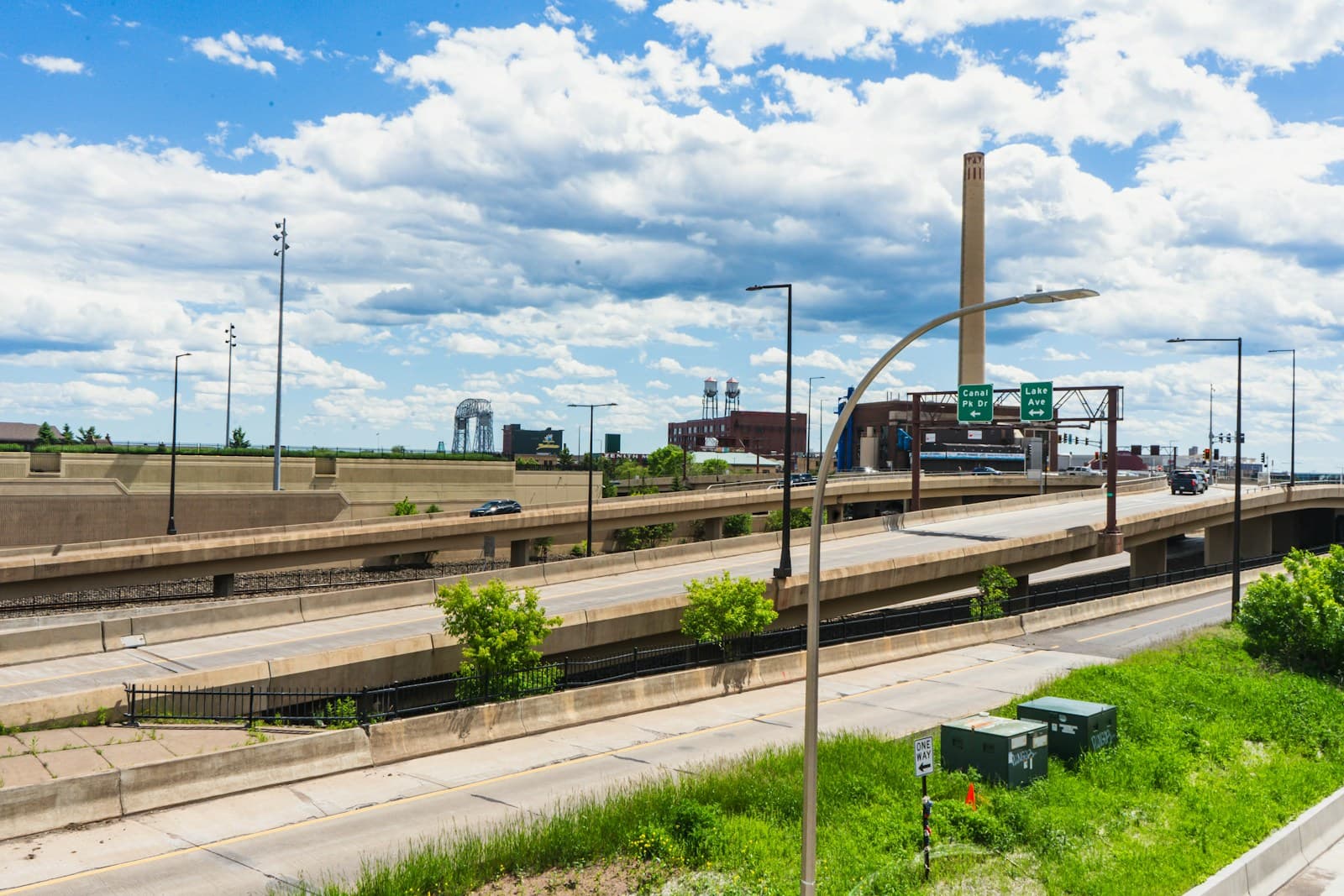
- Interstate 35 terminates in Duluth, funneling traffic from the Twin Cities and creating congestion bottlenecks near the Miller Hill Mall area and Thompson Hill rest area during peak commute hours and summer tourist season. The stretch between 27th Avenue West and the Michigan Street exit sees elevated rear-end collision rates, particularly during winter commutes when sudden stops on icy pavement lead to chain-reaction crashes. Liability limits matter significantly on this corridor where multi-vehicle incidents are common.
- The Duluth-Superior port generates heavy commercial vehicle traffic along Garfield Avenue and Rice's Point, mixing semi-trucks with passenger vehicles in areas where visibility is often compromised by grain dust and railroad crossings. First-time drivers navigating near the harbor district face increased risk from oversized loads, frequent railroad activity, and industrial vehicles making unexpected turns. Comprehensive and collision coverage protect against damage from road debris and gravel common near shipping terminals.
- Summer months bring substantial visitor traffic to Canal Park, Park Point, and Scenic Highway 61 along the North Shore, with out-of-state drivers unfamiliar with local road layouts contributing to accident rates. Tourist season parking challenges in Canal Park and along Superior Street increase door-ding and backing collision frequency. Young drivers working seasonal jobs in these districts benefit from understanding how tourism patterns affect their insurance risk and premium calculations.

Compare car insurance for first-time drivers
Rates are high for new drivers — but the right carrier and discounts can make a real difference.
Get Your Free QuoteCoverage Recommendations
Cost estimates are based on available industry data and vary by driver profile. These are not insurance quotes.
Liability Insurance
I-35 corridor congestion and icy hill intersections create elevated multi-vehicle accident risk where liability limits protect your assets if you're found at fault.
$95–$145/monthEstimated range only. Not a quote.
Full Coverage
Duluth's 86-inch annual snowfall and steep grades make full coverage essential for financed vehicles where collision and comprehensive protect your investment against weather and terrain-related damage.
$185–$295/monthEstimated range only. Not a quote.
Comprehensive Coverage
Lake-effect ice storms, falling tree limbs during winter storms, and harbor-area vandalism make comprehensive protection particularly valuable for overnight street parking in Duluth's older neighborhoods.
$55–$85/monthEstimated range only. Not a quote.
Collision Coverage
Hill descent sliding and I-35 winter pile-ups generate collision claims where this coverage repairs your vehicle even when you're partially or fully responsible for the accident.
$90–$150/monthEstimated range only. Not a quote.
Uninsured Motorist Coverage
Tourism traffic and transient port workers create exposure to out-of-state drivers who may carry minimal coverage, making this protection especially relevant in Canal Park and harbor districts.
$25–$45/monthEstimated range only. Not a quote.