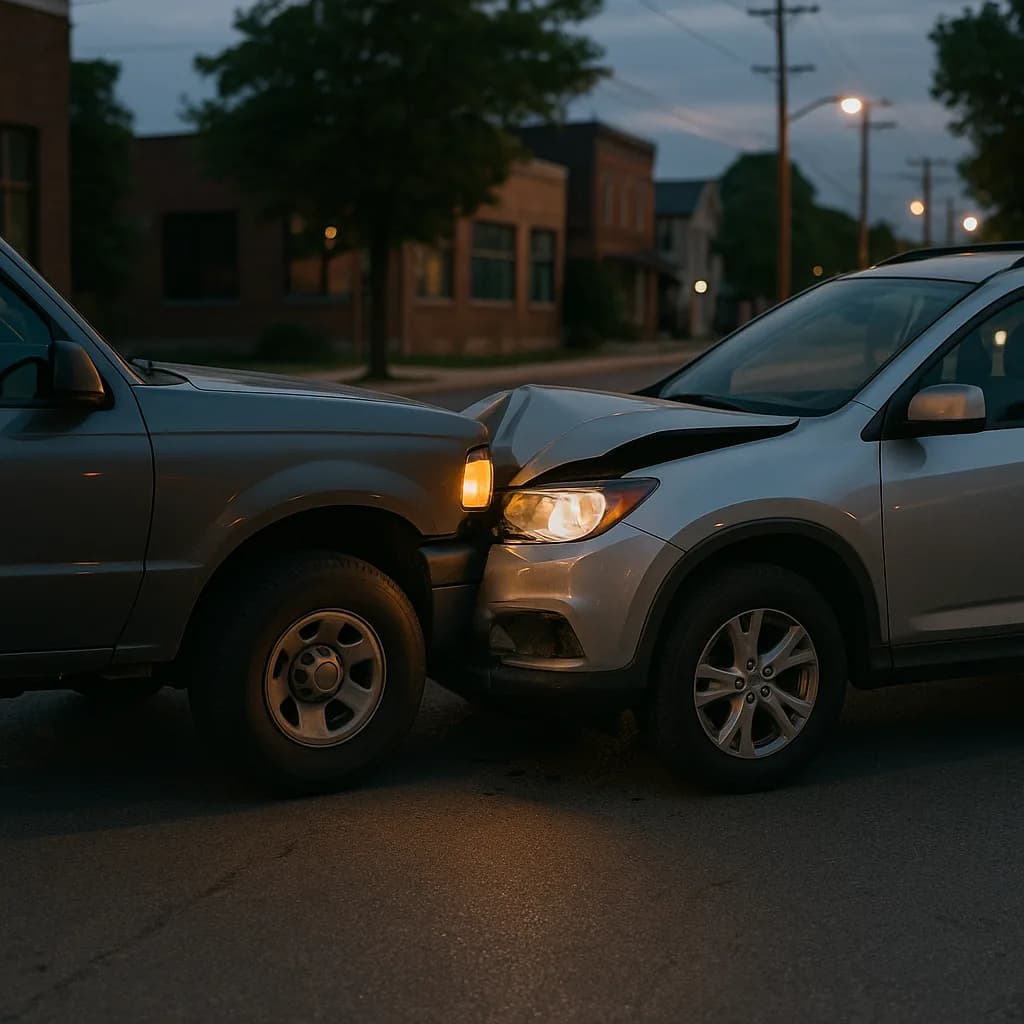
The first 72 hours after an accident determine your claim outcome — and most young drivers unknowingly say things that reduce their settlement or raise their rates for years.
Why Your First Words Matter More Than You Think
Insurance adjusters typically make their initial liability determination within 48 to 72 hours of your first statement — and young drivers under 25 are statistically more likely to provide statements that work against their own claims. According to industry claims data, approximately 60% of disputed liability cases involve conflicting initial statements made in the immediate aftermath of an accident.
The adjuster's job is not to determine the truth — it's to assess liability and protect their company's financial exposure. Every word you say gets documented in the claim file, and statements made in the first phone call carry more weight than corrections made days later. Young drivers face a specific disadvantage here: adjusters know that inexperienced drivers are more likely to accept fault reflexively, especially if the other driver is older or more confident.
Your insurance premium (the amount you pay monthly or every six months for coverage) can increase 20-40% after an at-fault accident, and that increase typically lasts three to five years. For a young driver already paying $200-300/mo, that's an additional $40-120/mo — or $2,400-7,200 over the life of the surcharge. The difference between "I'm sorry, I didn't see them" and "I stopped at the sign and was hit while proceeding through the intersection" can literally determine whether that increase happens.
Never Apologize or Accept Fault — Even If You Think You Caused It
"I'm so sorry" are the three most expensive words you can say after an accident. Even if you believe you caused the collision, you don't have the full picture in the moment. Traffic camera footage, witness statements, road conditions, vehicle maintenance records, and even the other driver's phone records can all shift liability in ways you can't assess standing on the roadside.
Adjusters are trained to distinguish between empathetic apologies and liability admissions, but they're also trained to document both. A statement like "I'm sorry, I didn't see the light change" becomes evidence of admitted fault. In comparative negligence states, even saying "I should have been paying more attention" can reduce your settlement by 10-50% depending on how the adjuster codes your statement.
Instead, stick to factual observations without interpretation: "I was traveling eastbound on Main Street," "The light was green when I entered the intersection," "I felt an impact on my rear passenger side." You're not being evasive — you're being accurate. You don't actually know if the other driver ran a red light, was texting, had faulty brakes, or was driving impaired. Those determinations require investigation, not roadside assumptions.
Compare car insurance for first-time drivers
Rates are high for new drivers — but the right carrier and discounts can make a real difference.
Get Your Free Quote✓ New Driver Specialists✓ No Obligation✓ Licensed Carriers✓ All 50 States
Don't Guess About Details You're Unsure Of
When an adjuster asks "How fast were you going?" and you weren't looking at your speedometer, "I'm not sure, maybe 30?" becomes a documented admission of traveling 30 mph. If it turns out the speed limit was 25 mph, you've just admitted to speeding. If witness statements suggest you were going slower, you've created an inconsistency that damages your credibility.
Young drivers feel pressure to answer every question immediately, especially when authority figures ask. But adjusters expect uncertainty after a stressful event — it's actually more credible to say "I don't recall my exact speed" than to guess. The same applies to signal usage, lane position, following distance, and timing. If you don't clearly remember, say that.
Never speculate about the other driver's actions, either. "I think they were texting" or "It seemed like they were speeding" are opinions, not facts. Adjusters will ask you to clarify how you know that, and if you can't, you've weakened your overall statement. Stick to what you directly observed: "I saw their vehicle cross the center line," "I heard tires screeching before impact," "I observed brake lights activate after the collision."
Avoid Discussing Injuries Until You've Been Medically Evaluated
"I'm fine" or "I'm not hurt" are statements that can block injury claims later — even if you develop whiplash, back pain, or concussion symptoms 24-72 hours after the accident. Adrenaline masks pain in the immediate aftermath, and soft tissue injuries often don't present symptoms until the next day or later.
If an adjuster asks about injuries during the initial call, the correct answer is "I'm still being evaluated" or "I have an appointment with my doctor." You're not exaggerating or being deceptive — you're acknowledging that full injury assessment takes time. Most states require you to report accident-related medical treatment within a specific window (often 14 days), but you don't need a complete diagnosis in the first phone call.
This is especially important for young drivers who may be on their parents' policy or dealing with insurance processes for the first time. If you say you're uninjured and later file a medical claim, adjusters will question why you didn't mention symptoms initially. A simple "I'm seeking medical attention to be safe" protects your ability to file a legitimate claim if injuries develop. For serious accidents, especially those involving potential liability coverage claims, understanding your liability insurance limits becomes critical if the other party files an injury claim against you.
Don't Agree to a Recorded Statement Without Preparation
Adjusters often request recorded statements within 24-48 hours of the accident, framing it as a routine procedural step. For your own insurance company, you typically have a contractual obligation to cooperate — but "cooperation" doesn't mean "immediate." For the other driver's insurance company, you have no obligation to provide a recorded statement at all, especially before consulting with your own insurer or legal counsel.
Recorded statements are transcribed and analyzed for inconsistencies, admissions, and liability indicators. Adjusters ask the same question multiple ways to check for contradictions. They ask about your insurance history, previous accidents, and vehicle condition — information that can be used to argue you're a high-risk driver or that pre-existing damage contributed to the loss.
If you agree to a recorded statement, prepare first. Review the police report if available. Write down the sequence of events while your memory is fresh. Understand that you can pause, clarify, or correct yourself. If a question is unclear, ask for it to be rephrased. If you don't know an answer, say that. You're not required to estimate, guess, or speculate on the record. For young drivers who may already be classified in higher-risk categories, every statement detail matters — adjusters use demographic data alongside claim-specific information when assessing future risk.
What You Should Say Instead
Provide clear, factual information without interpretation: your name, contact information, policy number, vehicle information, and the basic facts of what happened. Describe the accident in simple chronological terms: "I was stopped at the red light. The light turned green. I proceeded into the intersection. I felt an impact on my driver's side door."
If the adjuster asks leading questions — "So you didn't see the other car?" — don't accept their framing. Respond with what you did observe: "I checked my mirrors and looked both ways before proceeding." You're not obligated to explain why you didn't see something; you're obligated to report what you did see.
Document everything yourself immediately: take photos of all vehicles, the intersection, traffic signals, road conditions, and visible damage. Note the time, weather, and lighting conditions. Collect contact information from witnesses. This creates your own record independent of the adjuster's interpretation. If your statement differs from the other driver's, your documentation becomes critical evidence. For young drivers navigating their first accident, this paper trail often makes the difference between a fair settlement and a years-long rate increase that could have been avoided.