Most first-time buyers skip uninsured motorist coverage to save $5–15/mo, but one crash with an uninsured driver can leave you paying thousands out of pocket. Here's how to decide if it's worth it.
What Uninsured Motorist Coverage Actually Protects
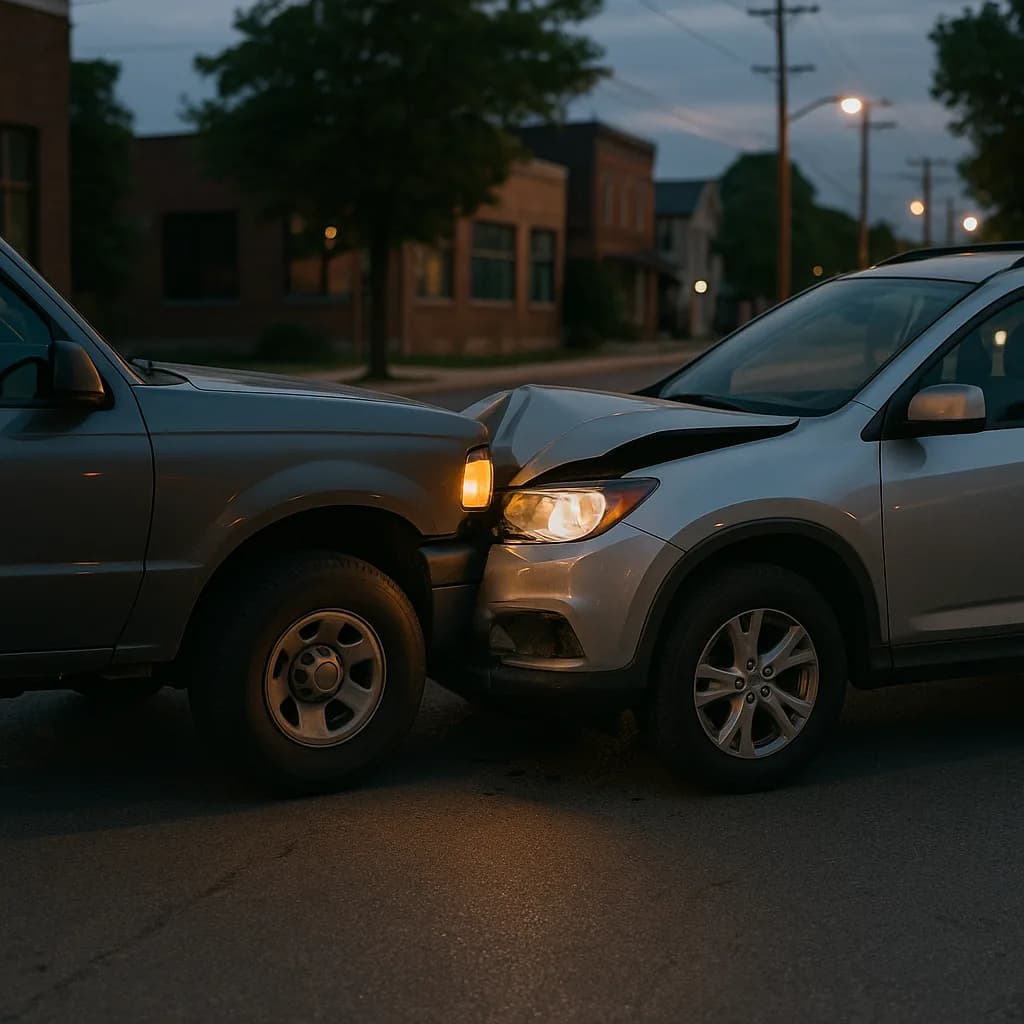
Uninsured motorist coverage (UM) pays for your injuries, lost wages, and vehicle damage when you're hit by a driver who has no insurance or flees the scene. Your own liability insurance only pays for damage you cause to others — it does nothing when someone else hits you and can't pay. Without UM coverage, you're left filing a lawsuit against someone who likely has no assets to collect from, or paying your own medical bills and repair costs.
The coverage splits into two parts: uninsured motorist bodily injury (UMBI) covers your medical expenses, lost income, and pain and suffering after a crash. Uninsured motorist property damage (UMPD) covers repairs to your car. Some states require insurers to offer both; others only mandate UMBI. A few states — including North Carolina, South Carolina, and Virginia — require you to carry UMBI unless you reject it in writing.
Underinsured motorist coverage (UIM) works the same way but kicks in when the at-fault driver has insurance that's too low to cover your full damages. If someone with a $25,000 bodily injury limit hits you and your medical bills reach $50,000, UIM pays the remaining $25,000 up to your policy limit. Most insurers bundle UM and UIM together as a single coverage option.
Why This Matters More for Young Drivers
Uninsured driver rates vary dramatically by state, but nationally about 13% of motorists drive without insurance according to the Insurance Research Council's 2022 study. In states like Mississippi and Michigan, that figure climbs above 20%. For a first-time driver already paying high premiums, the instinct is to cut optional coverages — but UM is one of the few that protects you rather than others.
Young drivers face statistically higher crash risk, which means higher odds of encountering an uninsured driver. Your own liability coverage won't help if you're rear-ended at a stoplight by someone with no policy. If you don't have health insurance or carry a high deductible, UM bodily injury becomes the only coverage paying your emergency room visit, physical therapy, and time off work. Medical bills from even a moderate injury crash can easily exceed $10,000.
The cost difference is smaller than most first-time buyers expect. Adding uninsured motorist coverage typically increases premiums by $5–15 per month depending on your state and the limits you choose. That's roughly the same as one streaming service subscription, but it protects you from five-figure out-of-pocket costs if you're hit by an uninsured driver.
Compare car insurance for first-time drivers
Rates are high for new drivers — but the right carrier and discounts can make a real difference.
Get Your Free Quote✓ New Driver Specialists✓ No Obligation✓ Licensed Carriers✓ All 50 States
How to Choose Limits That Actually Make Sense
Uninsured motorist coverage limits usually mirror your liability limits, but you can often select lower or higher amounts. The most common mistake first-time buyers make is choosing the state minimum — often $25,000 per person and $50,000 per accident for bodily injury — because it's the cheapest option. Those limits barely cover a single emergency room visit, imaging scans, and a few weeks of physical therapy.
A more practical starting point: match your UM limits to your liability limits. If you carry $100,000/$300,000 liability coverage, select the same for uninsured motorist. This ensures you're protected to the same degree you're protecting others. If your liability limits are lower, consider increasing both at the same time — the premium difference between $50,000 and $100,000 UM coverage is often less than $10 per month.
For property damage, decide whether UMPD duplicates your collision coverage. If you already carry collision coverage, it will pay for your car repairs after any crash regardless of fault, minus your deductible. UMPD typically comes with a lower deductible or none at all, so it can save you that out-of-pocket cost if the at-fault driver is uninsured. If you don't have collision coverage because you drive an older car, UMPD becomes essential — it's your only path to getting repair costs covered.
When Skipping UM Coverage Might Make Sense
There are limited situations where declining uninsured motorist coverage is defensible, but they're narrower than most first-time buyers assume. If you have comprehensive health insurance with low deductibles and out-of-pocket maximums, your health plan will cover medical bills from a car crash. If you also carry collision and comprehensive auto coverage, your vehicle repairs are covered. In that scenario, UM bodily injury provides redundant protection — though it may still cover lost wages and pain and suffering that health insurance doesn't.
If you live in a no-fault insurance state like Michigan or Florida, your personal injury protection (PIP) coverage already pays your medical bills and lost income after any crash, regardless of who's at fault. PIP reduces the value of UM bodily injury, though UIM can still fill gaps if the at-fault driver's liability limits are too low. Check your state's PIP requirements before deciding.
The weakest reason to skip UM: trying to shave $10 off your monthly premium. If your budget is that tight, you're better off increasing your liability deductible or dropping collision coverage on an older vehicle. Cutting UM leaves you exposed to someone else's irresponsibility, and you can't control how many drivers around you are uninsured.
State Rules You Need to Know Before Deciding
State laws determine whether uninsured motorist coverage is mandatory, optional, or offered with the right to reject. In states like Illinois, Kansas, and Missouri, insurers must include UM in every policy unless you sign a waiver declining it. In states like California and Arizona, UM is optional but must be offered. In Alabama and a handful of others, insurers aren't required to offer it at all, though most do.
Some states set minimum UM limits equal to your liability limits, which prevents you from carrying lower UM than liability. Others allow you to choose independently. A few states — including Maryland and New York — require UM limits to match your liability limits exactly unless you request lower coverage in writing. If you're buying your first policy, your insurer or agent should explain your state's rules during the quote process, but many don't unless you ask directly.
Rejection waivers matter more than most first-time buyers realize. If you decline UM coverage to save money, you'll need to sign a form acknowledging the decision. Some insurers require you to initial next to a disclosure explaining what you're giving up. Keep that waiver — if you're ever hit by an uninsured driver and try to file a claim, the insurer will produce your signed rejection to deny coverage.
How to Add or Adjust UM Coverage After Buying a Policy
If you initially declined uninsured motorist coverage or chose low limits, you can add or increase it at any time by contacting your insurer. The change typically takes effect within 24–48 hours and doesn't require underwriting review. Your premium will increase starting with your next billing cycle, prorated if you're adding coverage mid-term.
Adding UM midterm is particularly common after a near-miss — a fender bender where the other driver has no insurance, or a news story about rising uninsured driver rates in your area. Most insurers allow you to make the change online through your account portal or by calling customer service. Expect the representative to ask which limits you want for bodily injury and property damage, and whether you also want underinsured motorist coverage included.
If you're comparing quotes right now and trying to decide whether to include UM, request two versions of each quote: one with and one without uninsured motorist coverage at your desired limits. The side-by-side cost difference makes the decision clearer than trying to guess whether it's worth it. Most young drivers find the premium increase smaller than expected once they see the actual numbers.