Most first-time buyers don't realize liability insurance covers the other driver's damages, not yours — a distinction that changes how you should think about your total coverage needs.
Liability Insurance Pays the Other Driver, Not You
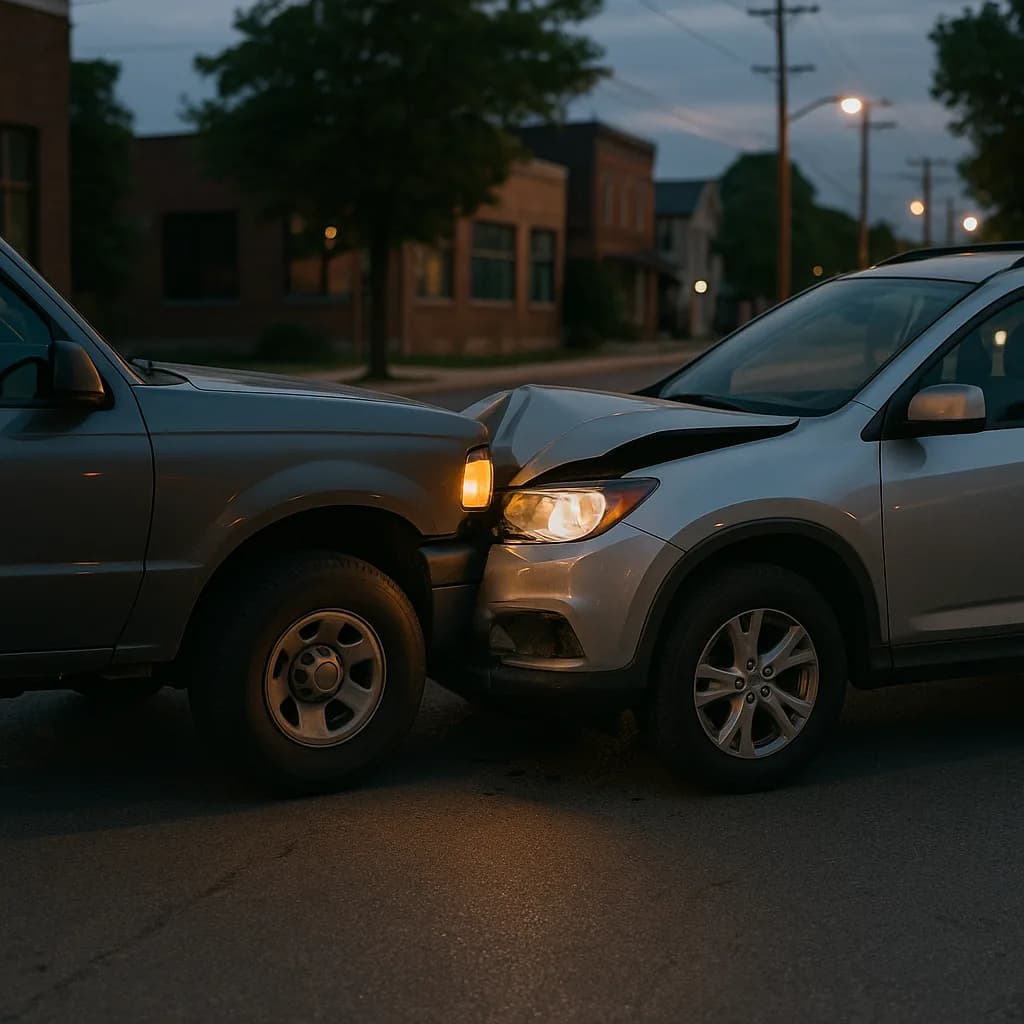
You just got your first policy and chose liability-only coverage because it was the cheapest option. Here's what most new drivers don't realize until after an accident: liability insurance only covers damage you cause to other people and their property — it pays nothing toward fixing your own car or your own medical bills if you're at fault. If you cause a $15,000 accident, your liability coverage pays the other driver's repair bills and hospital costs, but you're paying out of pocket to fix your own vehicle or replace it entirely.
This matters immediately because liability-only policies are common among young drivers trying to minimize costs. According to the Insurance Information Institute, approximately 13% of U.S. drivers carry only state-minimum liability coverage, and that percentage is significantly higher among drivers under 25. The monthly savings — typically $40 to $80/mo compared to full coverage — feel substantial when you're budgeting your first policy, but one at-fault accident where you total your own $8,000 car means you're walking while still making the same insurance payments.
Liability coverage is actually two separate coverages bundled together: bodily injury liability and property damage liability. Every state requires both, but the required amounts vary dramatically. You'll see liability limits written as three numbers, like 25/50/25, which means $25,000 per person for injuries, $50,000 total per accident for injuries, and $25,000 for property damage. Those numbers represent the maximum your insurance company will pay on your behalf — anything beyond that comes from your own assets.
What Bodily Injury Liability Actually Pays For
Bodily injury liability covers medical expenses, lost wages, pain and suffering, and legal fees when you injure someone in an at-fault accident. This includes the other driver, their passengers, pedestrians you hit, and cyclists. If you run a red light and send someone to the emergency room with a broken collarbone, your bodily injury coverage pays their hospital bills, ambulance costs, follow-up care, physical therapy, and the income they lost while recovering. It also pays for your legal defense if they sue you, and any settlement or judgment up to your policy limit.
State minimum requirements for bodily injury are often dangerously low. Many states require only $25,000 per person, but the average non-fatal injury claim from a car accident costs approximately $29,000 according to NAIC data, and serious injuries easily exceed $100,000. If your limit is $25,000 and you cause $80,000 in medical bills, your insurance pays the first $25,000 and you're personally liable for the remaining $55,000 — which can mean wage garnishment, liens against future assets, or bankruptcy for a driver just starting their financial life.
For young drivers, the risk calculation is specific: you're statistically more likely to cause a serious accident in your first five years of driving, but you're also least likely to have savings or assets that could survive a lawsuit. Most insurance professionals recommend carrying at least 100/300/100 limits even if your state requires far less. The cost difference between state minimum 25/50/25 and recommended 100/300/100 limits typically adds only $15 to $30/mo to your premium, while the liability protection triples or quadruples.
Compare car insurance for first-time drivers
Rates are high for new drivers — but the right carrier and discounts can make a real difference.
Get Your Free Quote✓ New Driver Specialists✓ No Obligation✓ Licensed Carriers✓ All 50 States
What Property Damage Liability Covers
Property damage liability pays for damage you cause to other people's vehicles, buildings, fences, mailboxes, guardrails, and any other physical property. If you slide through an intersection and hit two parked cars, your property damage coverage pays to repair or replace both vehicles. If you lose control and crash through someone's fence into their garage, it pays for the fence, the garage repair, and any belongings you damaged inside. It does not pay for damage to your own car — that requires collision coverage, which is a separate policy add-on.
State minimum property damage limits range from $5,000 to $25,000 in most states, but these amounts haven't kept pace with vehicle values. The average new car costs over $48,000 as of 2024, and even used vehicles frequently exceed $20,000. If you carry your state's minimum $10,000 property damage limit and you total someone's $30,000 SUV, your insurance pays $10,000 and you owe the remaining $20,000 personally. This is especially risky in parking lots and multi-vehicle accidents where you could damage several cars simultaneously.
Young drivers should note that property damage claims happen more frequently than injury claims but typically cost less individually. According to Insurance Information Institute data, property damage claims are filed in approximately 70% of at-fault accidents, compared to injury claims in about 30%. The frequency makes adequate limits critical — one accident with insufficient coverage creates debt that follows you for years and makes future insurance prohibitively expensive as you'll be moved into high-risk pools.
What Liability Insurance Specifically Excludes
Liability coverage has clear exclusions that catch first-time buyers by surprise. It never covers intentional damage — if you deliberately hit another vehicle, your claim will be denied and your policy likely canceled. It doesn't cover damage you cause while using your vehicle for commercial purposes like food delivery or rideshare unless you've added commercial coverage. It excludes damage to property you own or are transporting, so if you're moving a friend's furniture and it's damaged in an accident you caused, your liability policy won't pay for it.
Liability insurance also doesn't cover your own medical bills after an at-fault accident. If you cause a crash and break your arm, you're relying on your health insurance, not your auto policy. This creates a coverage gap that many young drivers don't anticipate — they assume "having insurance" means their medical costs are covered regardless of fault. Medical payments coverage (MedPay) or personal injury protection (PIP) fills this gap, but both are optional add-ons in most states and cost an additional $5 to $15/mo depending on the coverage amount.
The exclusion that matters most for cost-conscious young drivers: liability coverage provides zero protection for your own vehicle. After an at-fault accident, you're paying to replace or repair your car entirely out of pocket unless you've added collision coverage to your policy. For a driver with a financed $15,000 car and $2,000 in savings, one at-fault accident means walking to work while still making both insurance and car loan payments on a totaled vehicle.
How Liability Limits Work When You Cause an Accident
Understanding how your limits apply in a real accident prevents dangerous assumptions. If you carry 50/100/50 limits and cause an accident that injures three people, your policy pays up to $50,000 for any one person's injuries and up to $100,000 total for all injuries combined. If Person A has $60,000 in medical bills, Person B has $45,000, and Person C has $30,000, your insurance pays $50,000 to Person A (your per-person limit), $50,000 combined to Persons B and C (hitting your $100,000 per-accident limit), and you're personally liable for the remaining $85,000.
Property damage limits work more simply but create similar exposure. If your limit is $25,000 and you cause $40,000 in vehicle damage, your insurance pays $25,000 and you owe $15,000. The liability doesn't disappear because your coverage ran out — the other driver can sue you personally for the difference, obtain a judgment, and garnish your wages or place liens on assets. For young drivers with limited income and no home equity, a judgment can mean years of reduced paychecks and damaged credit that affects apartment applications, future insurance rates, and even job prospects in some fields.
Your liability limits also determine how aggressively your insurance company will defend you in a lawsuit. If someone sues you for $200,000 and your limit is $25,000, your insurer is only obligated to pay up to $25,000, so their incentive to fight the claim is limited — they may settle quickly at your policy limit and leave you to defend the remaining $175,000 on your own. Higher limits mean your insurance company has more at stake and will provide a more robust legal defense since they're protecting their own potential payout.
Why State Minimum Liability Leaves Most Young Drivers Exposed
State minimum liability requirements were set decades ago and have not kept pace with medical costs, vehicle values, or lawsuit settlements. A state requiring 25/50/25 minimums is asking you to carry $25,000 in bodily injury coverage per person when the average hospital stay costs over $15,000 and surgery for common accident injuries like broken bones, internal injuries, or spinal damage routinely exceeds $50,000. You're essentially one moderate injury accident away from personal financial liability that could take decades to resolve.
The cost to increase from state minimums to recommended limits is disproportionately small compared to the additional protection. Moving from 25/50/25 to 100/300/100 typically increases premiums by $180 to $360 annually — that's $15 to $30/mo for liability protection that quadruples your per-person coverage and triples your total per-accident protection. For young drivers already paying $150 to $300/mo for basic coverage due to age and experience factors, that's a 10-15% increase in cost for a 300-400% increase in protection.
If you're financing a vehicle, your lender requires collision and comprehensive coverage anyway, which already pushes you well above liability-only pricing. At that point, the incremental cost to increase your liability limits to 100/300/100 or even 250/500/100 is minimal — often just $20 to $40/mo more — and provides protection against the lawsuit and wage garnishment risk that state minimums leave wide open. The decision isn't whether you can afford higher limits; it's whether you can afford the financial consequences of inadequate limits after your first serious at-fault accident.
Building Complete Protection Beyond Liability
Liability insurance is legally required but functionally incomplete — it protects everyone except you. To build complete coverage as a first-time buyer, you need to understand what fills the gaps. Collision coverage pays to repair or replace your own vehicle after an at-fault accident, regardless of who was responsible. Comprehensive coverage pays for non-accident damage to your car like theft, vandalism, hail, or hitting a deer. Uninsured motorist coverage pays your medical bills and vehicle damage when you're hit by a driver with no insurance or insufficient coverage.
For young drivers, the collision coverage decision is purely financial math. If your car is worth less than $3,000 and you have savings to replace it, carrying liability-only makes mathematical sense — you're self-insuring a low-value asset. If your car is worth $8,000 or more, or if losing it would eliminate your ability to get to work or school, collision coverage is essential protection even though it typically adds $60 to $120/mo to your premium. The alternative is absorbing a total loss out of pocket, which most drivers under 25 cannot do without severe financial disruption.
The smartest coverage strategy for first-time buyers is to maximize liability limits first, then add collision and comprehensive if the vehicle value justifies it, then consider uninsured motorist coverage based on your state's uninsured driver rate. Some states like Florida and Michigan have uninsured driver rates above 20%, making uninsured motorist coverage nearly essential. States like Maine and New York have rates below 5%, making it a lower priority. You can compare quotes with different coverage combinations in under three minutes to see exactly what each protection layer costs for your specific situation.