Most new drivers skip uninsured motorist coverage to save money, but statistically you're more likely to need it in your first three years than any other coverage except liability.
Why New Drivers Are More Likely to Encounter Uninsured Motorists
You just got your first policy quote, and uninsured motorist coverage is listed as optional in most states. The monthly cost difference might be $15–$30, and when you're already paying $180–$280/mo as a new driver, every line item feels like a target for cuts. But the math works differently for young drivers than it does for experienced ones.
New drivers are statistically more likely to be involved in accidents during evening and weekend hours — the same timeframes when uninsured driver accidents peak. Insurance Research Council data shows that approximately 1 in 8 drivers nationally lacks insurance, but that ratio climbs to nearly 1 in 5 during late-night hours in urban areas where new drivers often commute to work or school. You're not just more likely to have an accident in your first three years of driving — you're more likely to have one when and where uninsured drivers are on the road.
Uninsured motorist (UM) coverage pays for your injuries and vehicle damage when you're hit by a driver who has no insurance or not enough to cover your losses. Without it, you're left filing a lawsuit against someone who likely has no assets to collect from. For new drivers who can't afford to replace a totaled car out of pocket or cover medical bills after an accident, UM coverage functions as a financial backstop that liability-only policies don't provide.
What Uninsured Motorist Coverage Actually Pays For
UM coverage comes in two parts, and understanding the difference matters when you're building your first policy. Uninsured motorist bodily injury (UMBI) covers your medical bills, lost wages, and pain and suffering after an accident caused by an uninsured driver. Uninsured motorist property damage (UMPD) covers repairs to your car — though not all states offer this, and some require you to carry collision coverage instead.
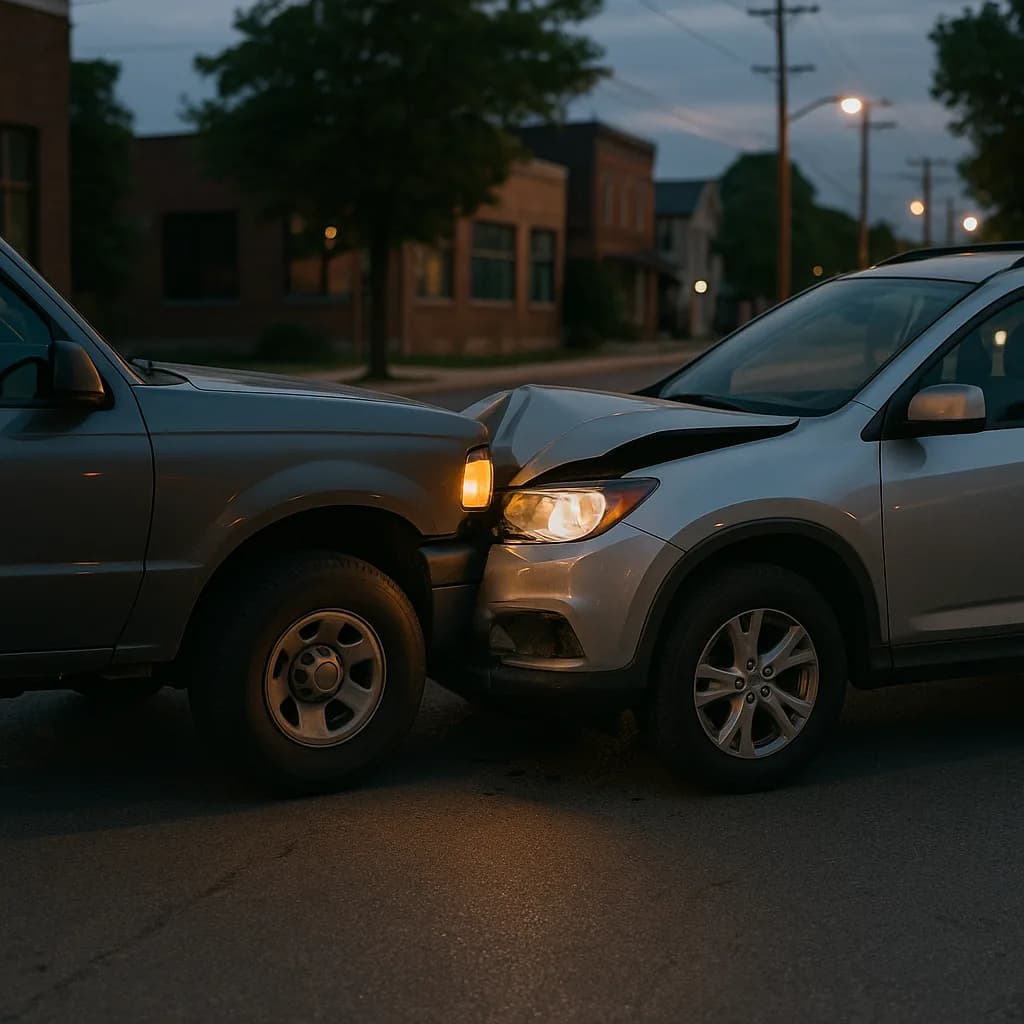
Here's the practical breakdown: if an uninsured driver runs a red light and hits you, UMBI pays for your emergency room visit, follow-up care, physical therapy, and any wages you lose while recovering. If you're a delivery driver or rely on your car to get to work, those lost wages can exceed your medical bills. UMPD covers the $4,200 in damage to your car's front end — but only if your state allows it and you elected it on your policy. Without UMPD, you'd either pay that repair bill yourself or file a collision claim and pay your deductible, typically $500–$1,000 for new drivers.
The coverage also applies if you're hit by a driver who has insurance but their liability limits are too low to cover your damages — that's called underinsured motorist coverage, and it's usually bundled with UM. If the at-fault driver has a state-minimum $25,000 bodily injury limit but your medical bills total $40,000, underinsured motorist coverage pays the $15,000 gap up to your UM policy limit.
Compare car insurance for first-time drivers
Rates are high for new drivers — but the right carrier and discounts can make a real difference.
Get Your Free Quote✓ New Driver Specialists✓ No Obligation✓ Licensed Carriers✓ All 50 States
How Much UM Coverage Costs and What Limits to Choose
For new drivers, uninsured motorist coverage typically adds $15–$35/mo to your premium, depending on your state and the limits you select. That cost is substantially lower than collision or comprehensive coverage because UM claims are less frequent — but when they happen, they're often catastrophic for drivers without it.
Your UM limits should match your liability limits in most cases. If you carry $50,000/$100,000 liability coverage (meaning $50,000 per person injured, $100,000 per accident), your UM coverage should mirror that. The reasoning is simple: if you believe $50,000 is enough to cover someone else's injuries in an accident you cause, you should want the same protection for yourself when someone else causes an accident. Choosing lower UM limits than liability limits leaves a coverage gap that serves no strategic purpose — you're just underinsuring yourself to save $5–$10/mo.
In states where UMPD is available, it typically comes with a lower per-accident limit than collision coverage — often $3,500 or $15,000 depending on the state. If your car is worth $8,000 and you don't carry collision coverage, UMPD becomes critical. If you already have collision, UMPD may be redundant, though some drivers keep both to avoid paying a collision deductible when the accident wasn't their fault.
State Requirements: Where UM Coverage Is Mandatory
Roughly half of U.S. states require uninsured motorist coverage by law, though the specifics vary significantly. In states like Illinois, Kansas, and Missouri, insurers must offer UM coverage and you must explicitly reject it in writing to exclude it from your policy. In states like Maine, Maryland, and New York, UM coverage is mandatory — you cannot waive it.
Other states make it optional but strongly recommended. Florida, for example, doesn't require UM coverage but has one of the highest uninsured driver rates in the country at approximately 20%. If you're a new driver in Florida carrying liability-only coverage, you're exposed to a 1-in-5 chance that the driver who hits you won't have insurance to pay your claim. That's not a comfortable margin when you're driving a financed car or don't have savings to cover a $6,000 repair bill.
Even in states where UM is optional, lenders typically require it if you're financing or leasing a vehicle. The lender's concern is protecting their collateral — if your car is totaled by an uninsured driver and you don't have UM or collision coverage, the loan doesn't disappear. You'd still owe the remaining balance on a car you can no longer drive.
When Skipping UM Coverage Makes Sense (Rarely)
There are narrow scenarios where dropping uninsured motorist coverage might be defensible, but they don't apply to most new drivers. If you're driving a car worth less than $1,500, don't rely on it for work or school, and have health insurance that covers auto accident injuries with low out-of-pocket maximums, the case for UM weakens — though even then, UM still covers lost wages and pain and suffering that health insurance won't.
The more common mistake is new drivers assuming they don't need UM because they have liability coverage. Liability insurance only pays for damage you cause to others. It does nothing when someone else hits you. If that other driver is uninsured and you don't have UM, collision, or comprehensive coverage, you're paying for everything yourself: car repairs, medical bills, rental car costs, and lost income.
Another faulty assumption: "I'll just sue the uninsured driver." Legally, yes, you can sue. Practically, most uninsured drivers lack the assets to make collection realistic. Winning a judgment against someone with no income, no property, and no insurance doesn't put your car back on the road or pay your hospital bill. UM coverage is the mechanism that turns a legal right into actual compensation.
How to Add UM Coverage If You Don't Have It
If you already have an active policy without uninsured motorist coverage, adding it is straightforward. Contact your insurer or log into your online account and request a policy endorsement to add UM coverage. The change typically takes effect within 24–48 hours, and your premium adjusts on a pro-rated basis for the remainder of your policy term.
When you add UM, you'll choose your bodily injury limits and, if your state allows it, property damage limits. Most insurers will recommend matching your liability limits, which is sound advice for new drivers. You'll also confirm whether you want stacked or unstacked coverage if you insure multiple vehicles — stacked coverage combines the UM limits across all your vehicles, increasing your total available coverage but also raising your premium by 15–30%.
If you're shopping for your first policy and comparing quotes, verify that each quote includes UM coverage at identical limits. A quote that's $40/mo cheaper may simply be excluding UM, collision, or comprehensive coverage rather than offering a better rate. When you're ready to finalize coverage, make sure uninsured motorist protection is included before you bind the policy — adding it later works, but having it from day one means you're never exposed.