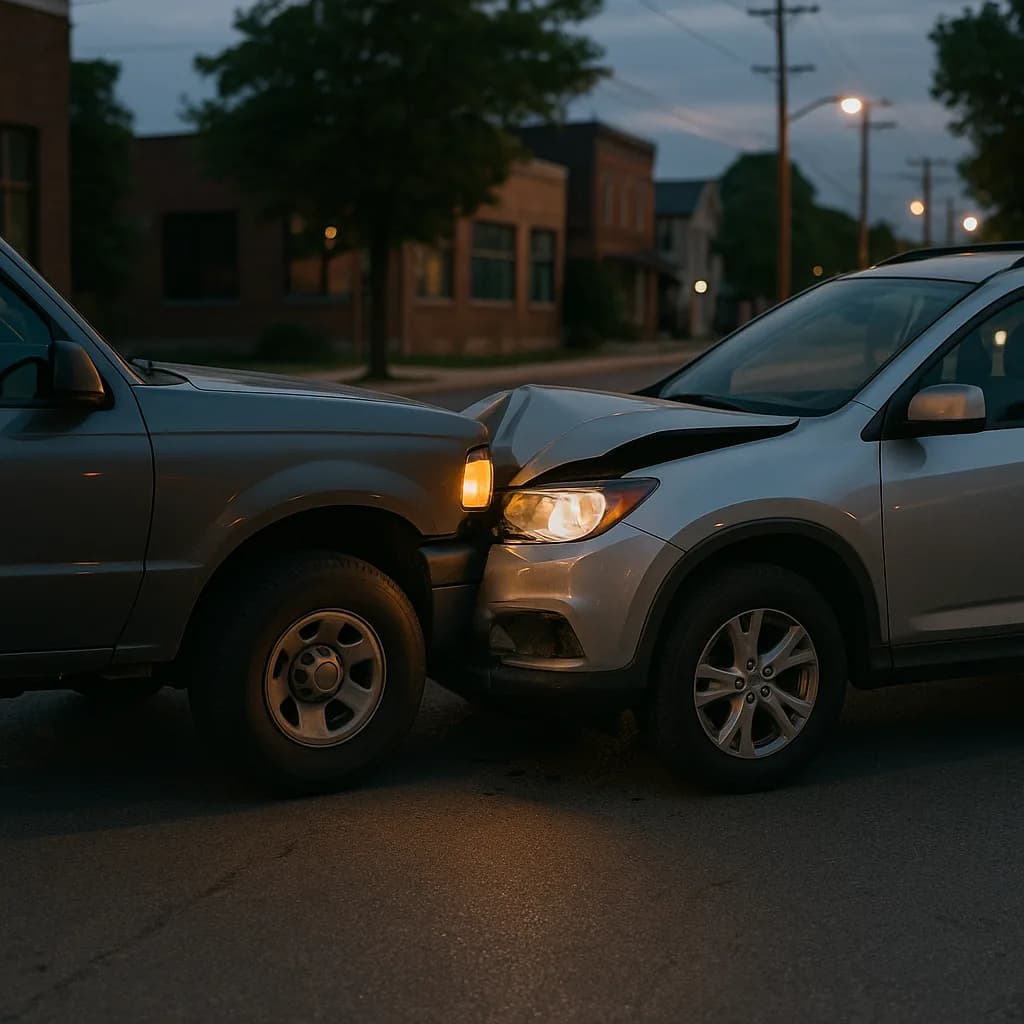
Most new drivers use the wrong decision rule after a first accident — comparing repair cost to deductible instead of calculating the break-even point against future rate increases.
The Real Cost Calculation Most New Drivers Miss
You just backed into a parked car and caused $2,100 in damage. Your collision deductible is $500. The common advice says file a claim if damage exceeds your deductible — but that rule ignores the three to five years of rate increases you'll pay after filing. For drivers under 25, a single at-fault claim typically raises premiums 30-50% for three years, meaning that $1,600 net payout ($2,100 minus your $500 deductible) could cost you $2,400-$4,000 in cumulative premium increases.
The correct decision framework calculates your break-even point: multiply your current annual premium by the expected percentage increase, then multiply that result by how many years the claim stays on your record. If you're currently paying $2,400 annually and an at-fault claim raises your rate 40%, you'll pay an extra $960 per year. Over three years, that's $2,880 in increased premiums — meaning any claim under roughly $2,900 costs you more than paying out of pocket.
This calculation changes dramatically based on your current rate tier. If you're already paying high-risk rates due to a previous violation, adding another claim can push you into non-standard insurance markets where annual premiums can exceed $5,000. The rate increase percentage stays similar, but the dollar impact becomes much larger.
How Long Claims Actually Stay on Your Record
Insurance companies look back three to five years when calculating your rates, but the timeline varies by carrier and state. Most standard carriers in most states apply surcharges for three years from the claim date, not from the accident date. If you file a claim in June 2024, expect elevated rates through your June 2027 renewal, assuming you don't add additional claims during that period.
Some states limit how long insurers can consider at-fault accidents. California restricts lookback periods to three years for most violations and claims. Massachusetts uses a five-year window. Your state's Department of Insurance determines these rules, but your carrier's underwriting guidelines determine how heavily they weight recent claims versus older ones.
The distinction matters for timing decisions. If you already have a claim from two years ago that will drop off in 12 months, adding a second claim now resets the clock and extends your high-rate period by another three years. A driver paying $200/mo with one existing claim might see rates drop to $140/mo when that claim ages off — but filing a new claim before the old one expires keeps you at elevated rates for years longer.
Compare car insurance for first-time drivers
Rates are high for new drivers — but the right carrier and discounts can make a real difference.
Get Your Free Quote✓ New Driver Specialists✓ No Obligation✓ Licensed Carriers✓ All 50 States
State Minimum Damage Thresholds and Reporting Requirements
Whether you file a claim or pay privately, most states require you to report accidents above a specific damage threshold to the Department of Motor Vehicles or state police. The threshold ranges from $500 in some states to $2,500 in others. Failing to report a reportable accident is a separate violation that can result in license suspension regardless of whether you filed an insurance claim.
This creates a decision tree most new drivers don't anticipate: damage below your state's reporting threshold can be handled completely privately without any government record. Damage above the threshold must be reported to the state even if you pay the other driver directly, which means the accident appears on your driving record even though you avoided a claim. That driving record entry can still affect your rates at renewal, though typically less severely than a filed claim would.
You cannot avoid reporting requirements by paying the other driver cash and asking them not to report. If the other party files a police report or their own insurance claim, the accident enters official records whether you participate or not. For accidents involving another vehicle, you control only your own claim decision — not whether the accident gets documented.
The At-Fault Determination That Decides Everything
Rate increases depend entirely on fault determination. A not-at-fault claim — where another driver caused the accident and their liability insurance pays for your damage — typically doesn't affect your rates at all. An at-fault claim triggers the surcharge. The problem for new drivers in minor accidents is that fault isn't always clear-cut, and filing a claim locks you into your insurer's determination.
If you backed into a parked car, fault is obvious and undisputed. But if you were changing lanes and made contact with another vehicle also changing lanes, fault allocation becomes arguable. Once you file a claim, your insurance company assigns fault based on your state's rules and the available evidence. Some states use contributory negligence (one party is 100% at fault), while others use comparative negligence (fault splits between parties). A 50% at-fault determination can still trigger a rate increase.
This is why getting a police report matters even for seemingly minor accidents. The police report documents the other driver's statement, any citations issued, and the officer's assessment of what happened. If you file a claim three days later and the other driver changes their story, that police report becomes your primary evidence. Without it, insurers often default to 50-50 fault in ambiguous situations.
When Paying Out of Pocket Actually Makes Sense
Paying privately works best when damage is minor, fault is clear, you have cash reserves to cover the cost, and the total cost falls below your calculated break-even point. For most new drivers paying $150-250/mo, that break-even point falls somewhere between $2,000 and $4,000 for a first at-fault claim.
The payment method matters. Never hand cash to another driver at the accident scene without a signed release. The proper sequence: get a written repair estimate from a body shop, draft a simple settlement agreement stating you'll pay the repair cost in exchange for the other party not filing a claim, pay by check or electronic transfer with documentation, and get a signed release confirming the matter is settled. Keep all documentation for at least five years in case the other party later claims the accident was never resolved.
Paying your own damage out of pocket is simpler — you just pay the body shop directly and don't involve your collision coverage. But understand that choosing not to file a claim now doesn't erase the accident. If the other driver files their own claim against your liability coverage, your insurer will still record the incident and it will still affect your rates even though you didn't claim your own vehicle damage.
The First-Accident Forgiveness Reality
Some carriers advertise accident forgiveness, but the programs rarely benefit drivers under 25 or those in their first three years of coverage. Most forgiveness programs require you to be claim-free for three to five years before the benefit activates, or they're available only as an add-on endorsement that costs $40-80 annually.
If you do have accident forgiveness on your policy — typically because you're still on a parent's policy and they qualified — verify exactly what it covers before filing. Some programs forgive only the first at-fault accident under a specific dollar threshold. Others forgive the accident but not associated violations like following too closely or failure to yield. The policy declarations page lists whether you have this coverage, but you'll need to call your agent to understand the specific terms.
For new drivers shopping for their own coverage, accident forgiveness is rarely worth purchasing as an add-on. You're already paying elevated base rates, and the forgiveness feature only provides value if you have an at-fault accident during the policy period. The premium you'd save by skipping the endorsement and banking that money often exceeds the benefit unless you're statistically certain you'll have an accident.