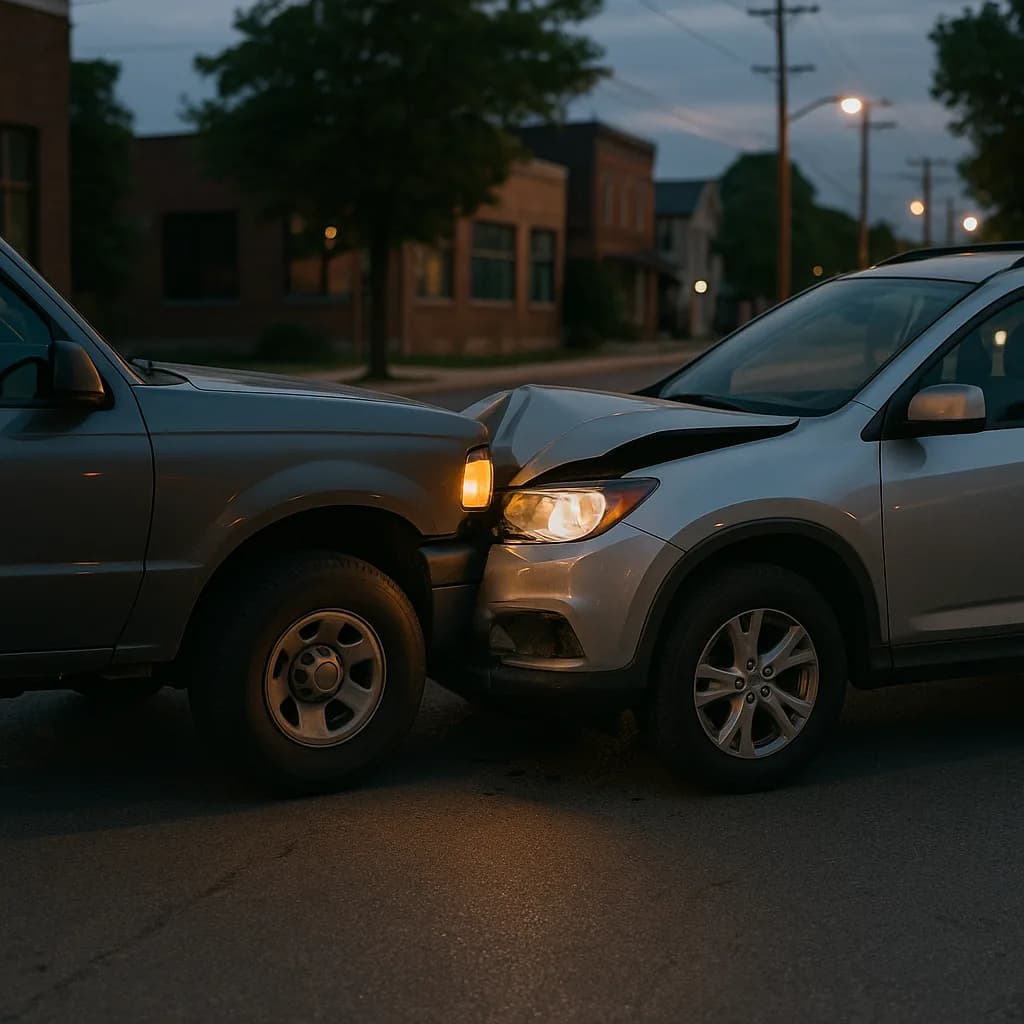
Parking lot accidents trigger the same insurance consequences as highway collisions — understanding fault rules and rate impact before you report can save you thousands in first-year premiums.
Why Parking Lot Accidents Count the Same as Any Other Collision
You just backed into another car while leaving a shopping center. The damage looks minor — maybe a dented bumper or scraped paint — but you're wondering if this "counts" the same way a highway accident would. The answer: your insurance company makes no distinction between parking lot accidents and any other at-fault collision when calculating your rates.
Carriers use the same loss data and rating models regardless of where an accident occurs. An at-fault claim for $3,000 in parking lot damage triggers the same rate increase as a $3,000 claim from a road collision. Industry data shows first accident surcharges for drivers under 25 typically range from 40% to 80% depending on the carrier and your state's rating regulations.
The location matters only for fault determination. Parking lots follow different right-of-way rules than public roads — drivers in through lanes typically have right of way over drivers backing out of spaces, and the driver moving usually bears fault when hitting a stationary vehicle. These distinctions affect who pays, but once your insurer determines you're at fault, the rating impact is identical to any other collision.
How Fault Gets Assigned in Parking Lot Accidents
Parking lot fault rules differ from roadway rules because parking lots are private property without standard traffic controls. Most states apply a "due care" standard rather than specific right-of-way laws, which means adjusters look at which driver had the clearest opportunity to avoid the accident.
Drivers backing out of parking spaces bear fault in roughly 80% of backing collisions, according to insurance adjuster guidelines, because the reversing driver has the greater duty to ensure the path is clear. If you're backing and hit a moving vehicle in the lane, you'll almost certainly be found at fault. If two drivers reverse into each other simultaneously, many states assign comparative fault — splitting liability 50/50 or based on each driver's contribution to the accident.
The key distinction: parking lot accidents often lack police reports because most incidents occur on private property where police don't respond unless there's injury. This means your insurer relies heavily on driver statements, photos, and witness accounts. If you admit fault at the scene or in your claim report, that statement becomes the primary evidence. New drivers filing their first claim should provide factual descriptions of what happened without making fault conclusions — let the adjuster make that determination based on the evidence.
Compare car insurance for first-time drivers
Rates are high for new drivers — but the right carrier and discounts can make a real difference.
Get Your Free Quote✓ New Driver Specialists✓ No Obligation✓ Licensed Carriers✓ All 50 States
The Damage Threshold Decision: When Not to File
The most consequential decision after a minor parking lot accident is whether to file a claim at all. For new drivers already paying high premiums, a single at-fault claim can cost thousands more over the next three to five years than simply paying for minor damage out of pocket.
Here's the math: if the total damage is $1,500 and your deductible (the amount you pay before insurance covers the rest) is $500, your insurance pays $1,000. But a first accident surcharge of 50% on a $200/mo policy costs you $100/mo extra for 36 months — that's $3,600 in increased premiums to recover $1,000. You've paid $4,100 total ($500 deductible + $3,600 surcharge) for $1,500 in damage.
Most insurance professionals advise against filing claims when total damages fall below $2,000 to $3,000, especially for drivers under 25 who already pay elevated rates. Some carriers offer accident forgiveness programs that waive the first at-fault accident surcharge, but these typically require being claim-free for three to five years first — most new drivers haven't been driving long enough to qualify. Before reporting, get repair estimates from two body shops and compare that amount against your expected rate increase using your current premium as the baseline.
How Long the Rate Increase Lasts and What It Costs
At-fault accident surcharges typically remain on your insurance record for three to five years depending on your state and carrier. During this period, you'll pay elevated premiums with every renewal, and the surcharge follows you even if you switch insurance companies because accidents appear on your driving record and claims history report.
For drivers under 25, the financial impact compounds because you're already in the highest-risk rating tier. A driver paying $2,400/year ($200/mo) who receives a 50% surcharge pays an additional $1,200/year, totaling $3,600 to $6,000 in extra premiums over three to five years. Some carriers apply steeper surcharges for young drivers — increases of 70% to 90% are common with certain insurers.
The surcharge percentage decreases over time with most carriers. An accident might trigger a 60% increase in year one, 45% in year two, and 30% in year three before finally dropping off. This gradual reduction means the total cost depends heavily on when the accident occurred — an accident in your first month of coverage costs significantly more than one in your third year. If you're approaching a milestone like turning 25 or completing a safe driving period, delaying any claim until after that rating change can reduce the financial impact.
What Happens If You Don't Report It
You're required to report accidents to your insurance company if you file a claim or if the other driver files against your policy — but you're not legally required to report an accident to your insurer if no one is filing a claim and you're paying for all damages privately. This distinction matters for minor parking lot damage where both parties agree to handle repairs without involving insurance.
The risk: if the other driver initially agrees not to file but changes their mind within days or weeks, they can still submit a claim against your policy. Most states allow claims to be filed within one to two years of an accident date. If they file and you haven't reported the incident, your carrier will contact you to gather your statement — the delay doesn't invalidate their claim, but it may complicate your defense if there's a fault dispute.
If you decide to pay out of pocket, get a signed settlement agreement from the other driver stating they accept your payment as full settlement and agree not to file an insurance claim. This doesn't legally prevent them from filing, but it provides evidence of your agreement. For damage estimates above $1,000, some drivers pay the other party's repair shop directly rather than handing over cash — this creates a paper trail showing the repair was completed. New drivers unfamiliar with private settlements should consider whether the small damage savings justifies the risk of a later claim surprise.
How This Affects Your Ability to Get Affordable Coverage
A single at-fault accident doesn't disqualify you from standard insurance, but it does move you into a higher-risk rating tier within your current carrier and limits your options when shopping for better rates. Many low-cost carriers that advertise heavily to young drivers require clean driving records — one accident can make you ineligible for their best pricing or reject your application entirely.
After an at-fault claim, expect renewal quotes from your current carrier to increase substantially. When you shop around, you may find that carriers who previously offered competitive quotes now price you significantly higher or decline to quote at all. This is especially true for drivers under 25 with less than three years of licensed driving history — you're already in the highest-risk category, and an accident eliminates access to good-driver discounts that offset some of that base cost.
Some new drivers move to non-standard auto insurance after their first accident because standard carriers price them out. Non-standard policies cost 20% to 50% more than standard policies but accept higher-risk drivers. The key is maintaining continuous coverage without lapses — a gap in coverage on top of an accident record can double your rates when you return to the market. If your premium becomes unaffordable after an accident, reducing coverage limits or increasing your deductible keeps you insured while you wait for the surcharge to age off your record.