Most new drivers buy their first policy by matching their parents' coverage without understanding what they're paying for. This checklist walks through every decision in order, with the actual cost differences and coverage trade-offs at each step.
Why Coverage Decisions Have to Happen in Order
You cannot choose a collision deductible before you know whether you're buying collision coverage at all, and you cannot evaluate collision costs until you've locked in your liability limits. But most insurance comparison tools present all coverage options simultaneously, forcing new drivers to make interdependent decisions without understanding how each choice constrains the next.
The average first-time policy for a driver under 25 costs $250–$400/mo depending on state, vehicle, and coverage level. That range exists almost entirely because of five decision points that happen in sequence: liability limits, comprehensive and collision election, deductible selection, uninsured motorist coverage, and optional add-ons. Each decision changes the math for the next one.
This checklist presents those decisions in dependency order. Complete each step before moving to the next — skipping ahead produces coverage gaps or unnecessary costs that only become visible after you've already bound the policy.
Step 1: Choose Your Liability Limits (This Decision Anchors Everything Else)
Liability coverage pays for damage you cause to other people and their property. Every state requires minimum liability limits, but those minimums are dangerously low — often $25,000 per person for injuries you cause, which doesn't cover a single severe injury in most accident scenarios.
The standard recommendation for new drivers is 100/300/100 coverage: $100,000 per person for injuries, $300,000 per accident total, and $100,000 for property damage. Increasing from state minimums to 100/300/100 typically adds $40–$80/mo to your premium, but protects your future income from lawsuits that exceed your coverage. If you cause $200,000 in injuries but only carry $25,000 in coverage, you are personally liable for the $175,000 difference — which can mean wage garnishment for years.
This decision comes first because your liability insurance premium becomes the baseline against which all other coverage costs are measured. Lock this in before evaluating collision or comprehensive, because you cannot skip liability to save money — it's legally required and financially non-negotiable.
Compare car insurance for first-time drivers
Rates are high for new drivers — but the right carrier and discounts can make a real difference.
Get Your Free Quote✓ New Driver Specialists✓ No Obligation✓ Licensed Carriers✓ All 50 States
Step 2: Decide Whether to Buy Collision and Comprehensive
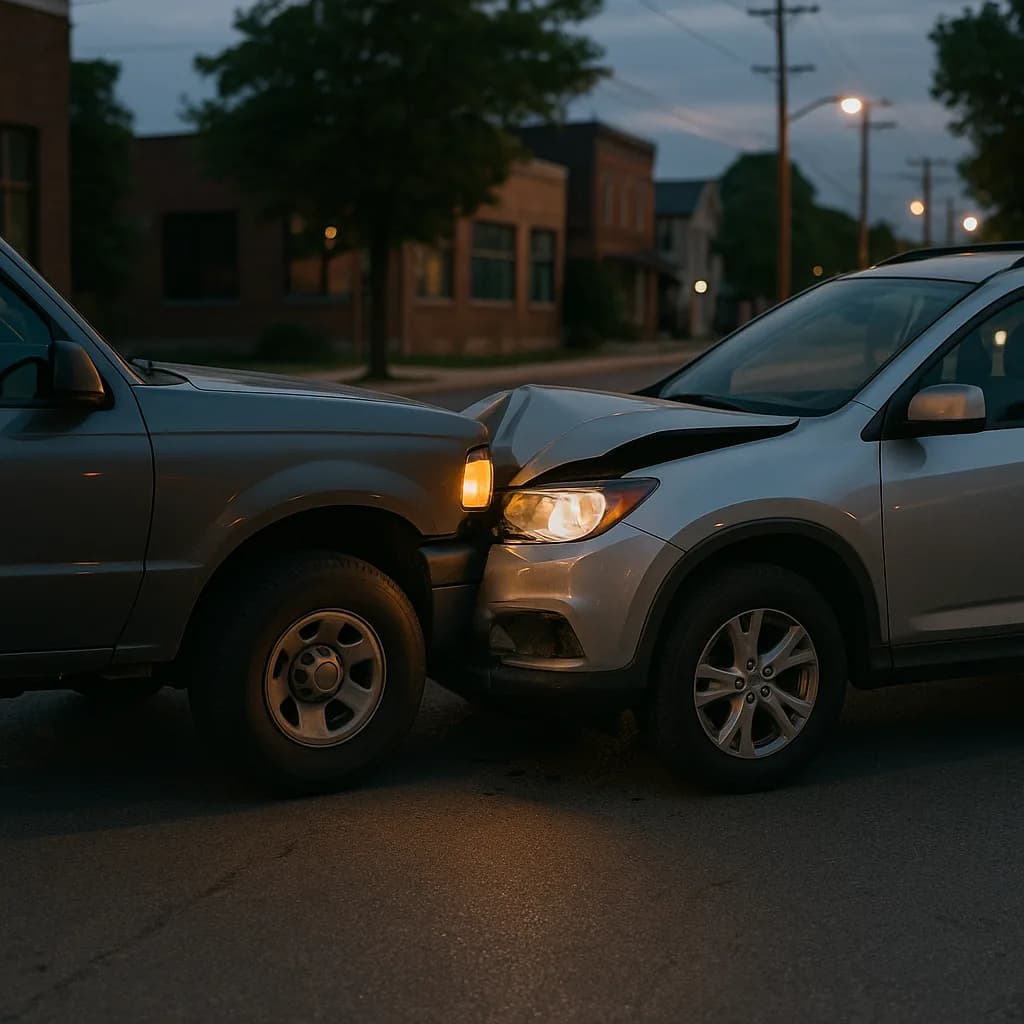
Collision coverage pays to repair your car after an accident you cause. Comprehensive coverage pays for non-crash damage like theft, vandalism, hail, or hitting a deer. Neither is legally required, but lenders require both if you finance or lease your vehicle.
The decision rule: if your car is worth less than $4,000, most drivers skip both and pay out-of-pocket for repairs. If your car is worth more than $4,000 or you owe money on it, you buy both. Collision and comprehensive together typically cost $100–$180/mo for drivers under 25, compared to $15–$30/mo for drivers over 30 with the same vehicle — the age penalty is steepest in physical damage coverage because claim frequency is highest for new drivers.
Do not buy collision without comprehensive or vice versa unless you have a specific reason. These coverages are priced as a pair — buying only one saves far less than half the combined cost, because the administrative and underwriting expenses don't change. If you're skipping both, document that decision in writing with your insurer so there's no confusion if you file a claim later.
Step 3: Set Your Deductibles (Only If You Bought Physical Damage Coverage)
If you bought collision and comprehensive in Step 2, you now choose how much you'll pay out-of-pocket before insurance covers the rest. Standard deductible options are $500, $1,000, and $2,000. A $500 deductible costs approximately $25–$40/mo more than a $1,000 deductible for the same driver and vehicle.
The math that matters: if you're paying $30/mo extra for a $500 deductible instead of $1,000, you're spending $360/year to save $500 on a future claim. That's worth it only if you file a claim within 17 months. Drivers under 25 file collision claims at approximately twice the rate of drivers 30–50, which means the break-even timeline is more favorable for young drivers than older ones — but you still need to file a claim within two years to justify the lower deductible cost.
Choose $1,000 deductibles unless you have less than $1,000 in accessible savings. If a $1,000 repair would require a credit card or payday loan, the $500 deductible is worth the monthly premium increase. If you can cover $1,000 from checking or savings without financial stress, take the $1,000 deductible and bank the monthly savings.
Step 4: Add Uninsured Motorist Coverage (Required in Some States, Optional in Others)
Uninsured motorist coverage pays your medical bills and vehicle damage when you're hit by a driver with no insurance or insufficient coverage to pay for the harm they caused. Approximately 13% of drivers nationally are uninsured, with state rates ranging from 6% in New Jersey to over 25% in Mississippi and New Mexico.
In states where it's optional, uninsured motorist coverage typically costs $8–$20/mo and mirrors your liability limits — if you bought 100/300/100 liability, you'd buy 100/300 uninsured motorist. This is one of the highest-value coverages available because it protects you from someone else's decision not to buy insurance, and the cost is low relative to the protection.
Some states require you to reject this coverage in writing if you don't want it. If your state makes it optional, buy it unless you have health insurance that covers car accident injuries with no out-of-pocket costs and you're willing to pay for vehicle repairs yourself if you're hit by an uninsured driver. For most first-time buyers, the $10–$15/mo cost is worth avoiding that financial exposure.
Step 5: Evaluate Optional Add-Ons (Rental, Roadside, Gap)
Rental reimbursement pays for a rental car while yours is being repaired after a covered claim. It typically costs $3–$6/mo and pays $30–$50 per day for up to 30 days. Roadside assistance covers towing, jump-starts, and lockouts for $5–$10/mo. Gap insurance pays the difference between what you owe on your car and what it's worth if it's totaled — critical if you financed more than 90% of the vehicle's value or bought a car that depreciates quickly.
Only buy rental coverage if you don't have access to another vehicle during repairs and can't afford to rent a car out-of-pocket for a week. Roadside assistance is usually cheaper through AAA or your credit card than through your auto insurer. Gap insurance is essential if you owe more than your car is worth — which is common in the first two years of a financed vehicle — and worthless if you paid cash or put down 30% or more.
These add-ons are the last decision point because they're the only truly optional pieces. Everything earlier in this checklist is either legally required or financially necessary for most drivers. These are convenience and edge-case protections that make sense for specific situations but aren't universal needs.
What Happens After You Complete the Checklist
Once you've made all six decisions, you'll have a complete coverage profile. The insurer will generate a quote based on your coverage elections, your vehicle, your driving record, and your location. That quote is typically valid for 30 days, but prices can change if your driving record updates or if the insurer changes rates in your state.
Before you bind the policy, confirm the coverage summary matches what you selected at each step. Verify your liability limits, confirm whether collision and comprehensive are included, check that your deductibles match what you chose, and ensure uninsured motorist coverage appears if you elected it. Binding errors are common when agents or online tools misinterpret selections during the quoting process.
New driver policies typically require payment in full for the first month before coverage starts. Some insurers offer payment plans that spread the six-month premium across monthly installments, but those plans usually add a $5–$10/mo installment fee. If you can pay the six-month premium upfront, you'll avoid those fees and sometimes qualify for a small paid-in-full discount.