Taking delivery gigs in your first year of driving adds a commercial use layer that personal auto policies explicitly exclude — here's what coverage actually costs and how to structure it correctly.
Why Personal Auto Policies Exclude Delivery Work
Your personal auto insurance policy — the coverage you bought when you first got your license — contains a commercial use exclusion that voids coverage the moment you turn on a delivery app. This exclusion applies regardless of whether you're actively transporting food or just waiting for an order, because insurers price personal policies based on commuting and personal errands, not commercial activity that increases both mileage and accident risk.
New drivers face a compounded problem: you're already paying 80–140% more than drivers over 25 due to inexperience, and adding delivery work requires either a commercial endorsement to your existing policy or a separate commercial policy. Most major carriers (State Farm, Geico, Progressive) will not add commercial endorsements to policies for drivers under 21, forcing you into the non-standard market where monthly premiums for delivery coverage start around $280–$420/mo depending on your state and driving record.
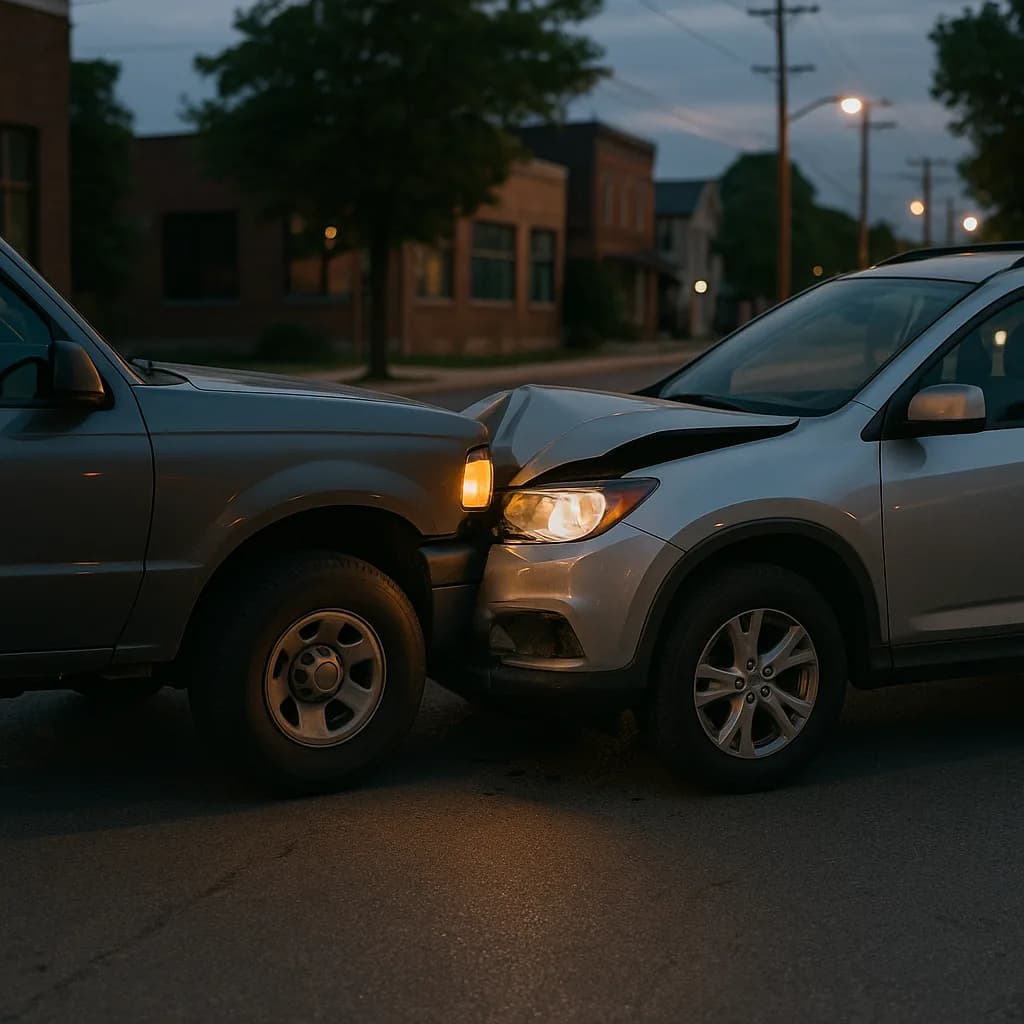
The coverage gap matters most during what insurers call "Period 1" — when your delivery app is on but you haven't accepted an order yet. During this window, your personal policy won't cover you, and most delivery apps provide zero coverage. A collision during Period 1 leaves you personally liable for all vehicle damage and any injuries you cause, which can exceed $50,000 in a moderate accident.
What Delivery Apps Actually Cover (And What They Don't)
DoorDash, Uber Eats, and Grubhub provide liability coverage only after you accept a delivery and are actively en route to pick up or drop off an order. This typically means $1 million in third-party liability coverage — but zero coverage for damage to your own vehicle unless you carry your own collision coverage. If you hit a pole while delivering an order, the app's insurance pays for the other driver's injuries and property damage, but your $8,000 car repair comes entirely out of pocket unless you have commercial collision coverage.
Period 1 (app on, no active order) remains the most dangerous gap. Some apps now offer contingent liability coverage during this period, but it's secondary to your personal policy and only activates if your personal insurer denies the claim — which they will, because of the commercial use exclusion. This creates a claims nightmare where both insurers point to the other, and you're left uninsured during roughly 40–60% of your online time based on typical order acceptance patterns.
Period 2 (order accepted, driving to restaurant) and Period 3 (driving to customer) receive the app's $1 million liability coverage, but again, no physical damage coverage for your vehicle. For a new driver in a financed vehicle, this gap violates your lender's requirement for comprehensive and collision coverage, potentially triggering forced-place insurance that costs 3–4 times standard rates.
Compare car insurance for first-time drivers
Rates are high for new drivers — but the right carrier and discounts can make a real difference.
Get Your Free Quote✓ New Driver Specialists✓ No Obligation✓ Licensed Carriers✓ All 50 States
Commercial Coverage Options for New Delivery Drivers
You have three structural options, each with different cost and coverage profiles. A commercial auto policy replaces your personal policy entirely and covers all driving — personal, commuting, and delivery. For new drivers, expect monthly premiums of $320–$480/mo for minimum liability limits (typically 50/100/50 in most states), roughly double what you'd pay for personal-only coverage. This option makes sense if you're delivering 20+ hours per week and your vehicle is paid off or inexpensive enough that you can self-insure physical damage.
A hired and non-owned auto (HNOA) endorsement added to a personal policy is cheaper — typically $45–$85/mo added to your base premium — but only covers liability when driving for business, not physical damage to your vehicle. This creates the same collision gap described earlier and only works if you're comfortable accepting that risk or driving an older vehicle you can afford to replace. Most carriers won't offer HNOA endorsements to drivers under 21 or with less than three years of driving history.
Rideshare endorsements, despite the name, sometimes cover delivery work depending on the carrier and state. Progressive and State Farm offer these in most states for $15–$30/mo added to your personal policy, covering the Period 1 gap with both liability and physical damage protection. However, availability drops to near zero for drivers under 21, and approval requires a clean driving record — even a single speeding ticket in your first year typically disqualifies you. If you can get approved, this is the most cost-effective option, but assume you'll need the commercial policy route until you turn 21 and have 1–2 years of clean driving history.
Some new drivers attempt to avoid disclosure and keep only personal coverage, gambling that they won't have an accident during delivery hours. This strategy fails catastrophically: insurers investigate claims, pull app login data during litigation, and retroactively void coverage if they discover undisclosed commercial use. You're then personally liable for all damages, which can include six-figure medical bills if you injure another person.
How Delivery Work Affects Your Rate Timeline
New drivers already face the steepest rate curve in insurance: your first year typically costs 120–180% more than you'll pay at age 25, with rates dropping roughly 15–20% at each annual renewal if you maintain a clean record. Adding delivery work freezes this timeline because you're now rated as a commercial driver, a separate risk class that doesn't benefit from the same age-based rate reductions.
Commercial policies recalculate risk based on annual mileage and claim frequency, not age milestones. If you're driving 15,000 delivery miles per year on top of personal use, you might see only 5–8% annual rate reductions instead of the 15–20% drops personal policies offer. This means staying in delivery work from ages 18–25 could cost you an additional $8,000–$12,000 in cumulative premiums compared to a new driver doing only personal driving, even with identical clean driving records.
The rate impact persists even after you stop delivery work. When you switch back to a personal policy, insurers see the gap in personal coverage history and often rate you as a new customer rather than someone with continuous coverage. Maintaining both a commercial policy for delivery and a separate personal policy for a second vehicle (if you have one) preserves your personal coverage history, but this dual-policy approach typically costs $180–$240/mo more than just the commercial policy alone — feasible only if delivery income substantially exceeds these costs.
State-Specific Requirements That Affect New Delivery Drivers
Some states mandate specific coverage structures for delivery drivers that override app-provided insurance. California requires transportation network companies (TNCs) to provide $1 million in liability coverage during all three periods, including Period 1, but this only applies to rideshare platforms — food delivery apps face no such requirement, leaving the Period 1 gap fully exposed. New York requires commercial plates and commercial insurance for any vehicle used for hire, including food delivery, making personal policy endorsements legally insufficient even if a carrier offers one.
Minimum liability limits vary dramatically and directly affect your base cost. Michigan requires unlimited personal injury protection (PIP) even on commercial policies, pushing monthly premiums for new delivery drivers to $520–$780/mo. Florida's minimum 10/20/10 limits allow commercial policies as low as $240/mo for new drivers, but leave you badly underinsured if you cause a serious accident — medical bills alone can exceed $100,000 in a moderate injury collision, and you're personally liable for everything above your policy limit.
Some states offer specific non-standard auto insurance programs designed for gig workers, typically through state-assigned risk pools. These programs guarantee coverage regardless of age or driving history but charge 40–70% more than voluntary market rates. For a new driver in Massachusetts, the assigned risk pool might charge $410/mo for commercial delivery coverage compared to $290/mo in the voluntary market — but if you're under 21 with a recent ticket, the voluntary market may not accept you at any price, making the assigned pool your only legal option.
Making the Financial Decision: When Delivery Work Makes Sense
The math breaks down clearly: if commercial coverage costs you an extra $150–$250/mo above your personal policy, you need to net at least that amount from delivery work after gas, maintenance, and depreciation just to break even on insurance. Most new delivery drivers report earning $14–$19/hour before expenses in suburban markets, with vehicle costs (gas, maintenance, depreciation) consuming roughly $0.45–$0.65 per mile driven.
At 15 deliveries per week averaging 6 miles round-trip each (90 miles weekly), you're driving roughly 380 miles monthly for delivery. At $0.55/mile in vehicle costs, that's $209/mo in vehicle expenses before insurance. If you're earning $16/hour and completing 3 deliveries per hour, your 15-delivery week takes 5 hours and grosses $80. Monthly gross: $320. After vehicle expenses ($209) and the insurance increase ($200), you're netting negative $89/mo — you're paying for the privilege of delivering food.
The break-even point typically requires 25–30+ hours of delivery work per week in markets with strong order density, or acceptance of significant uninsured risk by skipping proper coverage — a gamble that costs new drivers an average of $23,000 when it fails, based on typical claim costs for at-fault accidents without coverage. For most new drivers, delivery work makes financial sense only if you're driving a paid-off vehicle worth less than $5,000 (allowing you to drop physical damage coverage), you're over 21 (accessing cheaper endorsement options), and you're working 20+ hours weekly in a dense urban market where order frequency is high.