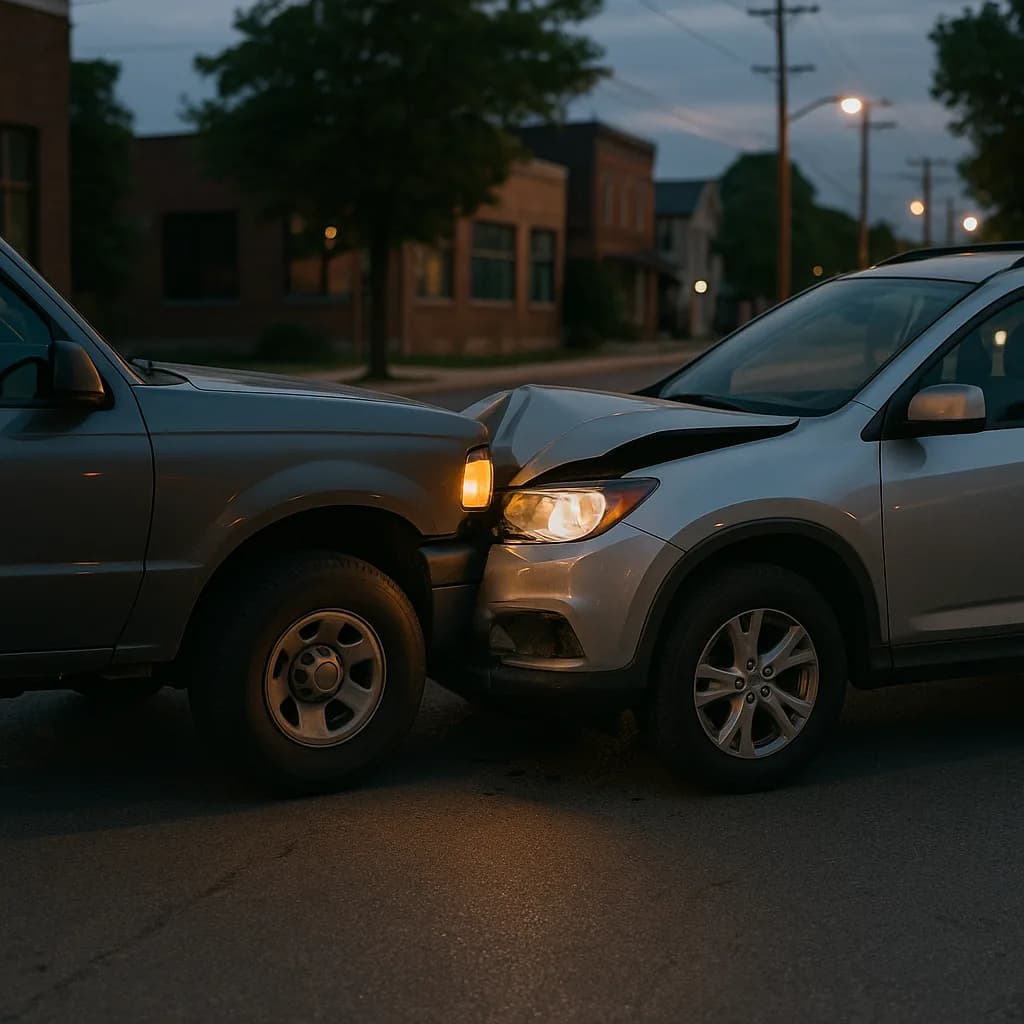
Most first-time buyers think 'full coverage' is a real policy type and confuse premium with deductible. Here's what each term actually means and which ones affect what you pay.
The Terms That Cause Coverage Gaps vs. The Ones That Just Sound Confusing
You just got your first car and need insurance by Friday. You're comparing quotes, and every page throws around "liability," "collision," "comprehensive," "deductible," and "premium" like you already know what they mean. Some of these terms matter because misunderstanding them leaves you without coverage when you need it. Others just sound intimidating but won't hurt you if you mix them up.
The dangerous confusion: thinking "full coverage" is a specific policy type you can buy. It's not — it's slang for a package that typically includes liability, collision, and comprehensive. Agents use it as shorthand, but no insurance card says "full coverage" on it. The harmless confusion: mixing up "premium" and "deductible." You'll sound inexperienced, but you won't end up uninsured.
This guide separates terms into three groups: the ones that determine whether you're covered after an accident, the ones that determine what you pay, and the ones that only matter during specific situations like filing a claim or changing your policy.
Terms That Determine Whether You're Covered
Liability insurance pays for damage you cause to other people and their property. It's required in nearly every state, and it's the foundation of every policy. If you hit someone's car, your liability coverage pays for their repairs and medical bills — not yours. Most states require minimum limits like 25/50/25, meaning $25,000 per injured person, $50,000 total per accident, and $25,000 for property damage. Those minimums are too low for most young drivers — a single serious accident can exceed them, leaving you personally responsible for the rest.
Collision coverage pays to repair your car after an accident, regardless of who caused it. Comprehensive coverage pays to repair your car after non-collision events like theft, vandalism, hail, or hitting a deer. These two are optional unless you're financing or leasing — your lender will require them. Together with liability, these three coverages are what people mean when they say full coverage.
Uninsured motorist coverage protects you when someone without insurance hits you. About 13% of drivers nationally have no insurance, and in some states that number exceeds 20%. If an uninsured driver totals your car, their non-existent policy won't pay for anything. Your uninsured motorist coverage fills that gap. Some states require it, others make it optional — but it's typically inexpensive and worth carrying even when not mandated.
Compare car insurance for first-time drivers
Rates are high for new drivers — but the right carrier and discounts can make a real difference.
Get Your Free Quote✓ New Driver Specialists✓ No Obligation✓ Licensed Carriers✓ All 50 States
Terms That Determine What You Pay
Your premium is the amount you pay for coverage — usually expressed as a monthly or six-month total. Your deductible is the amount you pay out-of-pocket before insurance kicks in after a claim. These get confused constantly, but they work in opposite directions: a higher deductible lowers your premium, because you're agreeing to cover more of the loss yourself.
Most new drivers see deductible options between $250 and $2,500. Choosing a $1,000 deductible instead of $500 might save you $15–30/mo in premium, but means you'll pay twice as much out-of-pocket if you file a claim. For drivers under 25, the math matters more than for experienced drivers — young drivers file claims at nearly double the rate of drivers over 30, so that deductible gets tested more often.
Your coverage limits are the maximum your insurer will pay per accident. A liability limit of 100/300/100 means $100,000 per person for injuries, $300,000 total per accident, and $100,000 for property damage. Higher limits increase your premium but protect you from personal financial responsibility if you cause a serious accident. If you cause $200,000 in damage but only carry $100,000 in coverage, you're personally liable for the remaining $100,000.
Terms That Only Matter During Specific Situations
A claim is your formal request for payment after an accident or loss. Filing a claim triggers your deductible and can increase your premium at renewal — insurers typically raise rates 20–40% after a single at-fault accident. That's why some drivers choose not to file claims for minor damage that costs less than their deductible plus the expected premium increase.
Your policy period is the length of time your coverage is active, typically six months. At the end of each period, your insurer reviews your record and decides whether to renew and at what price. A lapse is any gap in continuous coverage — even one day without active insurance can increase your rates 10–25% when you reapply, because insurers treat lapses as high-risk behavior.
Declarations page (or "dec page") is the document summarizing your coverage, limits, deductibles, vehicles, and drivers. You'll need it when registering your car, adding a roommate to your policy, or proving coverage after an accident. It's the only document that shows all your coverage details in one place — your insurance card only shows minimum state-required liability, not your actual full policy limits.
What These Terms Mean for Your First Quote
When you request your first quote, you'll be asked to choose liability limits, collision and comprehensive deductibles, and whether to add uninsured motorist coverage. The agent or website will use terms like "BI," "PD," "comp," and "UM" without explanation. BI is bodily injury liability. PD is property damage liability. Comp is comprehensive. UM is uninsured motorist. These abbreviations appear on every quote comparison and policy document.
The most common mistake new drivers make is selecting state minimum liability limits to get the lowest possible premium. Those minimums were set decades ago and don't reflect current medical costs or vehicle values. A single day in a hospital can exceed $25,000. The average new car costs over $48,000. Minimum limits leave you exposed — a better starting point for most young drivers is 100/300/100 liability, $500 or $1,000 collision and comprehensive deductibles, and uninsured motorist coverage that matches your liability limits.
The second most common mistake is not understanding that your deductible applies per claim, not per year. If you have three separate accidents in six months with a $1,000 deductible, you'll pay $1,000 out-of-pocket three times — not once. That's why choosing a deductible higher than your available savings is a risk even if it lowers your monthly cost.
When You'll Actually Use This Vocabulary
You'll hear these terms in four specific situations: comparing quotes from multiple insurers, filing a claim after an accident, adding or removing a driver or vehicle, and shopping for a new policy at renewal. Each situation uses the same vocabulary but emphasizes different terms.
When comparing quotes, focus on liability limits and deductibles — those are the variables that differ most between offers. When filing a claim, you'll discuss your deductible amount, coverage type (collision vs. comprehensive), and policy period to confirm you were covered when the loss occurred. When modifying your policy, you'll reference your declarations page and discuss how changes affect your premium. When renewing or switching, you'll compare your current limits and deductibles against new offers to identify better value.
The vocabulary becomes automatic after your first policy period. You'll stop confusing premium with deductible, you'll recognize coverage abbreviations, and you'll understand why your agent asks certain questions. Until then, every insurer is required to provide a declarations page that defines exactly what you bought — keep that document accessible and refer to it whenever you're uncertain what coverage you actually have.