Most first-time buyers choose coverage by price alone and end up either overpaying for protection they don't need or underinsured when they file their first claim. Here's how to shop by actual risk instead of sticker price.
Why Your First Policy Costs More Than Your Parents' — And What Actually Drives the Number
If you're under 25 or buying your first policy as an adult, expect to pay $180–$320/mo for liability-only coverage and $240–$450/mo if you finance a car and need full coverage. That's 2–3 times what a 35-year-old with identical coverage pays, and it's not arbitrary. Insurers price on claim frequency data: drivers with fewer than three years of licensed history file at-fault claims at nearly double the rate of experienced drivers, and the average payout per claim runs $6,200–$8,500 depending on state.
The rate drops meaningfully after your first policy anniversary if you avoid tickets and claims — typically 10–15% at renewal, then another 8–12% at age 25 if you're currently under that threshold. Your goal in the first shopping cycle is not to find the absolute cheapest carrier but to lock in coverage that won't leave you financially exposed when the other driver's car needs $4,800 in repairs and their chiropractor bills start arriving.
Rates vary more by carrier than by coverage amount at this stage. One insurer might quote you $290/mo while another offers functionally identical protection for $195/mo. The price difference reflects how each company weighs your specific risk factors — age, license history, credit tier, and zip code — not the quality of the coverage itself.
Start With What You'd Actually Owe, Not What Feels Cheap
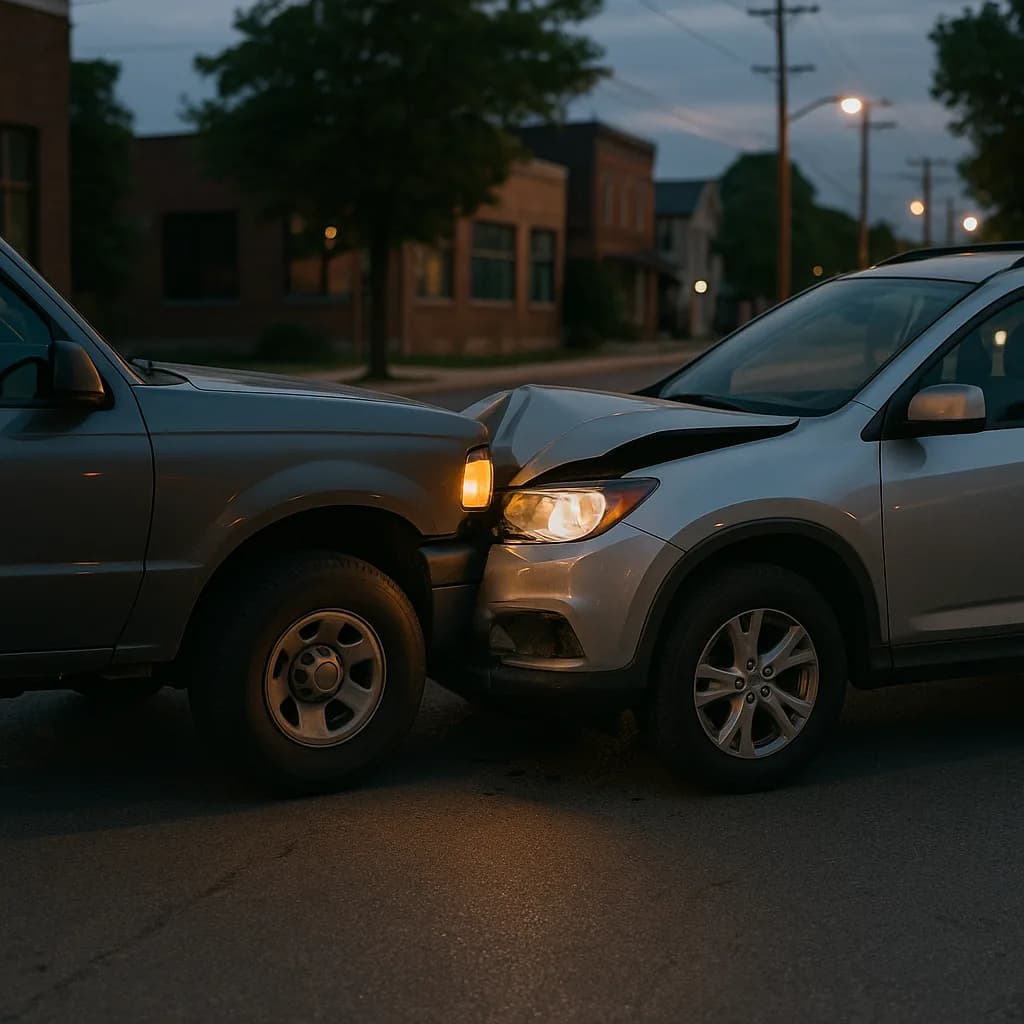
Most first-time buyers shop backward: they pick a monthly budget, then see what coverage fits inside it. That approach fails the moment you cause an accident. If you rear-end another car at a stoplight and total their vehicle, you're personally liable for every dollar your liability insurance doesn't cover. A $25,000 bodily injury limit sounds adequate until you learn the other driver's ER visit, imaging, and eight weeks of physical therapy cost $31,000 — you now owe $6,000 out of pocket, and wage garnishment starts if you can't pay.
Build your coverage from exposure backward instead. Ask: what's the worst financial outcome I'd face in a serious at-fault accident, and what limits do I need to cap that exposure? For most first-time buyers, that means 50/100/50 liability minimums — $50,000 per person for injuries, $100,000 per accident, $50,000 for property damage. Many states allow 25/50/25, but that ceiling is too low the moment you hit a newer SUV or injure someone who needs ongoing care.
If you're financing or leasing a car, your lender requires collision and comprehensive coverage, which pays to repair or replace your vehicle. Here's where the deductible decision matters: a $500 deductible typically costs $30–$50/mo more than a $1,000 deductible. Choose the higher deductible only if you have $1,000 in accessible savings. If you'd need to put a $1,000 repair on a credit card at 22% APR, the $500 deductible pays for itself in avoided interest after one claim.
Compare car insurance for first-time drivers
Rates are high for new drivers — but the right carrier and discounts can make a real difference.
Get Your Free Quote✓ New Driver Specialists✓ No Obligation✓ Licensed Carriers✓ All 50 States
Which Carriers Actually Insure New Drivers at Competitive Rates
Not all carriers want your business as a first-time buyer, and the ones that do price vastly differently. GEICO and Progressive typically offer the most competitive rates for drivers under 25 with clean records — average quoted premiums run $210–$280/mo for liability coverage in metro areas. State Farm and Allstate usually quote 15–25% higher but offer better claim service infrastructure and local agent access, which matters when you're filing your first claim and don't know what documentation to provide.
If you have any infractions — a speeding ticket, at-fault accident, or gap in prior coverage — expect standard carriers to either decline you or quote $400–$600/mo. At that threshold, check non-standard carriers that specialize in higher-risk profiles. These companies charge more than standard rates but far less than assigned-risk pools, and they'll actually bind coverage where others won't.
Get at least three quotes before buying. Carrier rate variance for first-time buyers often exceeds 40% for identical coverage, and the cheapest option changes based on your specific zip code, vehicle, and driving record mix. Most comparison tools take 8–12 minutes to complete and generate bindable quotes instantly.
The Four Coverage Decisions That Matter More Than the Rest Combined
You'll face a dozen coverage options when shopping, but four decisions account for 80% of your financial protection and premium cost. First: liability limits. Choose at least 50/100/50 unless your state mandates higher minimums. The premium difference between minimum legal limits and 50/100/50 typically runs $20–$35/mo, but the coverage gap is often $25,000–$75,000 in exposure.
Second: uninsured motorist coverage. Roughly 13% of U.S. drivers carry no insurance, and in some states that figure tops 20%. If an uninsured driver totals your car or injures you, uninsured motorist coverage pays your claim as if they had insurance. It typically costs $8–$18/mo and covers both vehicle damage and medical bills depending on the structure.
Third: deductibles on collision and comprehensive. Most lenders allow $500–$1,000 deductibles. The higher deductible saves $300–$600 annually in premium, but you pay that amount out of pocket for every claim. Choose based on your actual savings balance, not your optimism about avoiding accidents. Fourth: medical payments or personal injury protection. These cover your own medical bills after an accident regardless of fault, filling the gap before health insurance deductibles kick in. Cost runs $6–$15/mo for $5,000 in coverage.
Where New Buyers Lose Money Without Realizing It
The two most common coverage mistakes for first-time buyers both stem from optimizing for the wrong number. First: buying state minimum liability because it's the cheapest bindable option. A typical minimum-limit policy saves you $40–$70/mo compared to 50/100/50 limits, but exposes you to five-figure personal liability the first time you cause serious injuries. If you can't afford 50/100/50, you can't afford the car.
Second: skipping uninsured motorist coverage to shave $12/mo off the bill. That $144 annual savings evaporates the moment an uninsured driver rear-ends you at a red light and your $8,000 car is totaled with no one to subrogate against. You'll pay the remaining loan balance out of pocket while also needing to replace the vehicle — often a $4,000–$9,000 net loss that uninsured motorist property damage would have covered entirely.
A smaller mistake that still costs hundreds: not asking about usage-based discounts. If you drive fewer than 8,000 miles annually or maintain smooth driving habits, telematics programs can cut your premium 10–25% after the monitoring period. Most carriers offer app-based tracking that monitors hard braking, acceleration, and mileage. The data collection period runs 90–180 days, then your rate adjusts based on actual behavior rather than actuarial averages.
What to Do Right Now If You Need Coverage This Week
If your coverage needs to start in the next 3–7 days, you can still shop properly — you just need to compress the process. Most carriers bind policies instantly online once you complete the application and pay the first month's premium. The application takes 10–15 minutes and requires your driver's license number, VIN for the vehicle you're insuring, and current address.
Get quotes from at least two carriers even if you're under time pressure. Use the same coverage limits and deductibles for each quote so you're comparing equivalent protection. If one quote comes back 30% higher than another for identical coverage, the higher quote is usually wrong for your risk profile — but verify the limits match exactly before dismissing it.
Once you've selected a carrier and coverage structure, confirm the effective date and time before paying. Most policies start at 12:01 AM on the date you select, but some carriers allow same-day coverage if you bind before 3 PM in your time zone. If you're buying a car from a dealer and need proof of insurance before driving off the lot, request the declarations page and ID cards immediately after binding — most carriers email both within minutes.