Most first-time policyholders assume they have 30 days to pay late — but grace periods work differently than phone bills, and the consequences start faster than you think.
The Grace Period Gap: Why Your Policy Status and Legal Coverage Don't Match
You have 10 days left on your policy. The renewal bill is $267/mo — $80 more than last period — and you're waiting until payday to pay it. You assume you have a grace period, like your phone or electricity bill. Here's what actually happens: most insurers provide a 10-14 day grace period for late payment, but your state considers you uninsured the moment your policy term ends if the new term hasn't been paid.
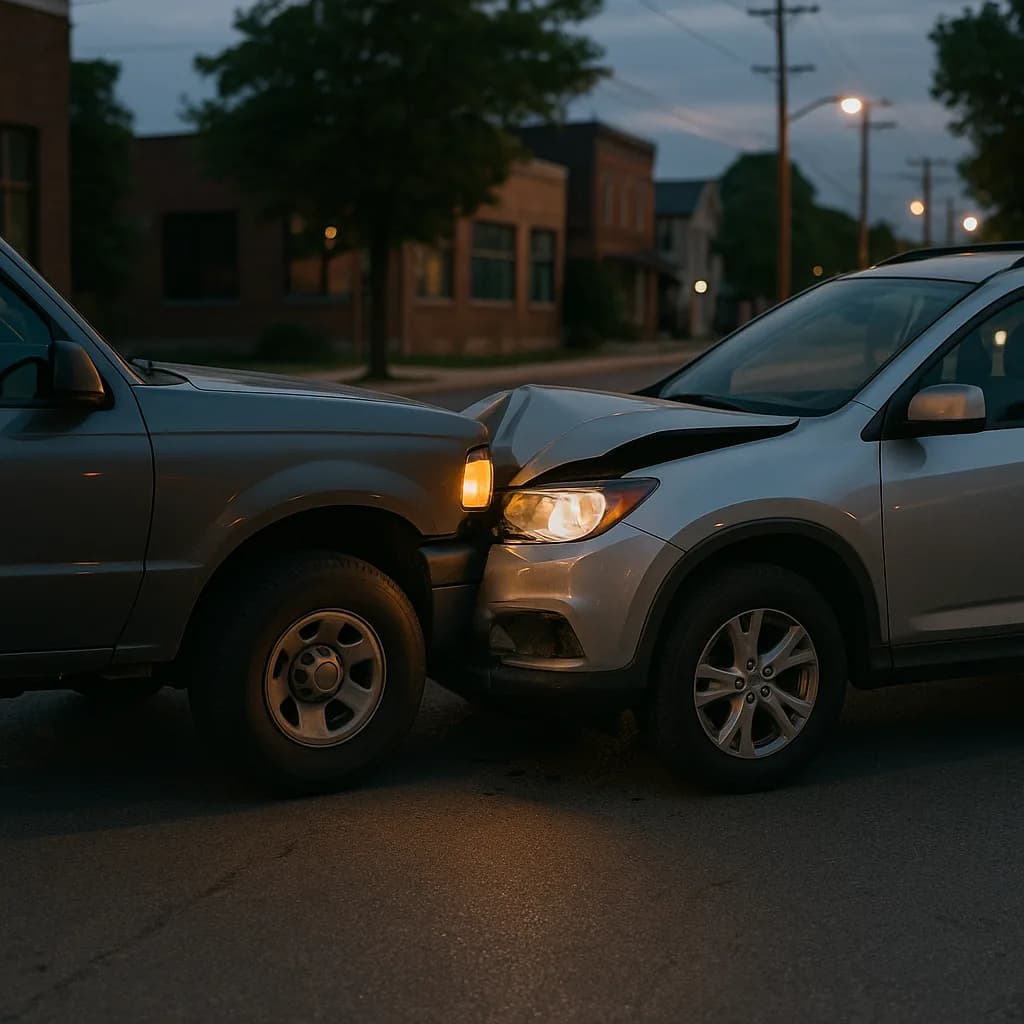
This creates a dangerous mismatch. Your insurer may give you until day 14 to pay without canceling your policy entirely. But if you get pulled over on day 3, or cause an accident on day 8, many states will treat you as driving without insurance — even though you're technically still within your grace period. The violation isn't for nonpayment. It's for failing to maintain continuous coverage, which is a separate legal requirement in 48 states.
The grace period only prevents your insurer from canceling your policy and forcing you to reapply. It doesn't extend your coverage or postpone your legal obligation to carry proof of insurance. If your policy end date was March 15 and you don't pay the renewal until March 22, you have a 7-day gap in coverage — even if your insurer's grace period is 14 days.
What Happens During the Grace Period: Day by Day
Day 1 after your policy lapses: You're driving without active coverage. If you're in an at-fault accident, the other driver's property damage and injuries are your personal financial responsibility. Your insurer will not cover claims during a lapsed period, even if you pay the overdue premium later that week.
Days 2-10: Your insurer sends a nonpayment notice. In most states, they're required to give you written warning before canceling for nonpayment — typically 10-20 days depending on state law. This notice period overlaps with the grace period but serves a different purpose. The notice satisfies legal requirements. The grace period is a company policy, not a legal protection. During this window, you can still pay and reinstate without reapplying, but you remain uninsured until the payment is processed and coverage is formally reinstated.
Days 11-14: If you haven't paid, most insurers cancel the policy entirely. This is reported to your state's Department of Motor Vehicles in states with electronic insurance verification systems — currently 46 states. Once reported, your registration can be suspended, your license can be suspended for proof of insurance violations, and you may be required to file an SR-22 certificate to reinstate driving privileges in some states.
After day 14: You're now shopping for a new policy with a lapse on your record. Expect rates to increase 8-12% for a lapse under 30 days, or 30-50% for lapses longer than 30 days, according to industry rate analyses. The new insurer will ask specifically about coverage gaps in the past 6-12 months.
Compare car insurance for first-time drivers
Rates are high for new drivers — but the right carrier and discounts can make a real difference.
Get Your Free Quote✓ New Driver Specialists✓ No Obligation✓ Licensed Carriers✓ All 50 States
Why Young and First-Time Drivers Face Harsher Consequences
If you're under 25 or on your first solo policy, a lapse triggers additional scrutiny because you don't have an established payment history to offset the gap. Insurers use payment behavior as a predictor of future risk. A missed payment in your first policy year signals higher likelihood of future lapses, which correlates with higher claim frequency in actuarial models.
You're also more likely to face immediate license consequences. Many states suspend licenses automatically after 30 days of uninsured driving. For drivers under 25, particularly those on provisional or probationary licenses, that suspension can extend your provisional period or require you to restart portions of your graduated licensing requirements depending on your state.
The rate increase compounds with age-based pricing. A 22-year-old driver paying $195/mo for liability insurance might see that jump to $260/mo after a 30-day lapse — a combination of the lapse penalty and loss of any new-customer or continuous-coverage discounts. That $65/mo increase costs $780 over the next year.
How to Actually Protect Yourself When You Can't Pay on Time
If you know you'll be late on a payment, call your insurer before the policy expires — ideally 5-7 days in advance. Many companies offer payment extensions or short-term payment plans that keep your coverage active while you arrange payment. This is not the same as a grace period. An extension is a formal agreement that maintains coverage. A grace period is just a cancellation delay.
Ask specifically: "If I pay on [date], will my coverage remain active between now and then, or will I have a gap?" The answer determines whether you're legally insured. If they say you'll have a gap, ask about a payment arrangement that avoids it. Some insurers will accept a partial payment — $50-100 — to extend coverage for 7-10 days while you gather the full amount.
If you can't avoid a lapse, minimize it. Every day uninsured increases your risk exposure and potential penalties. Even a 3-day gap can trigger a rate increase at renewal. If your lapse exceeds 30 days, expect to be moved to non-standard auto insurance, where monthly costs for minimum coverage can run $220-400/mo depending on state and driving record.
Never drive during a lapse. The financial exposure from one at-fault accident — even a minor one causing $8,000 in property damage and $15,000 in medical bills — will cost you far more than a few weeks of ride-sharing or public transit while you resolve your coverage.
What Happens After the Grace Period Ends
Once your policy is canceled for nonpayment, you lose access to several protections. You cannot simply pay the overdue amount and reactivate coverage. You must apply for a new policy, which means a new application, new underwriting review, and in most cases, a higher rate due to the cancellation on your record.
Your state DMV receives notification of the cancellation within 24-72 hours in most states with electronic verification. You'll receive a notice requiring you to either provide proof of new insurance or surrender your license plates and registration. Ignoring this notice leads to automatic license suspension in most states after 30-45 days.
If you're pulled over during this period without proof of insurance, you face state-specific penalties. Fines typically range from $150-500 for a first offense, plus potential license suspension ranging from 30 days to one year depending on state law. In some states, reinstatement after an uninsured driving violation requires an SR-22 filing, which increases your insurance costs by an additional 20-60% for three years.
The cancellation remains on your insurance record for 3-5 years depending on the insurer. During that time, you'll be asked about it on every application, and it will affect your eligibility for standard market coverage and preferred rates.
When a Lapse Doesn't Count Against You
Not all coverage gaps trigger penalties. If you sold your car and didn't own a vehicle for 60+ days, most insurers won't penalize the lapse as long as you can document the reason — typically with a bill of sale or registration surrender receipt. If you were deployed on military active duty, covered under someone else's policy, or living in a location where you didn't need a car, you can usually explain the gap without rate consequences.
The key is documentation and explanation. When you apply for new coverage after any gap longer than 30 days, you'll be asked directly: "Why was there a lapse in coverage?" Acceptable answers are "no vehicle owned," "covered as listed driver on another policy," or "living abroad." Unacceptable answers are "couldn't afford it," "forgot to pay," or "didn't think I needed it."
If you're moving from your parents' policy to your own, there's no lapse as long as the transition happens on the same day. Coordinate the end date of your parents' policy coverage with the start date of your new policy. Even a single day of overlap is better than a single day of gap.