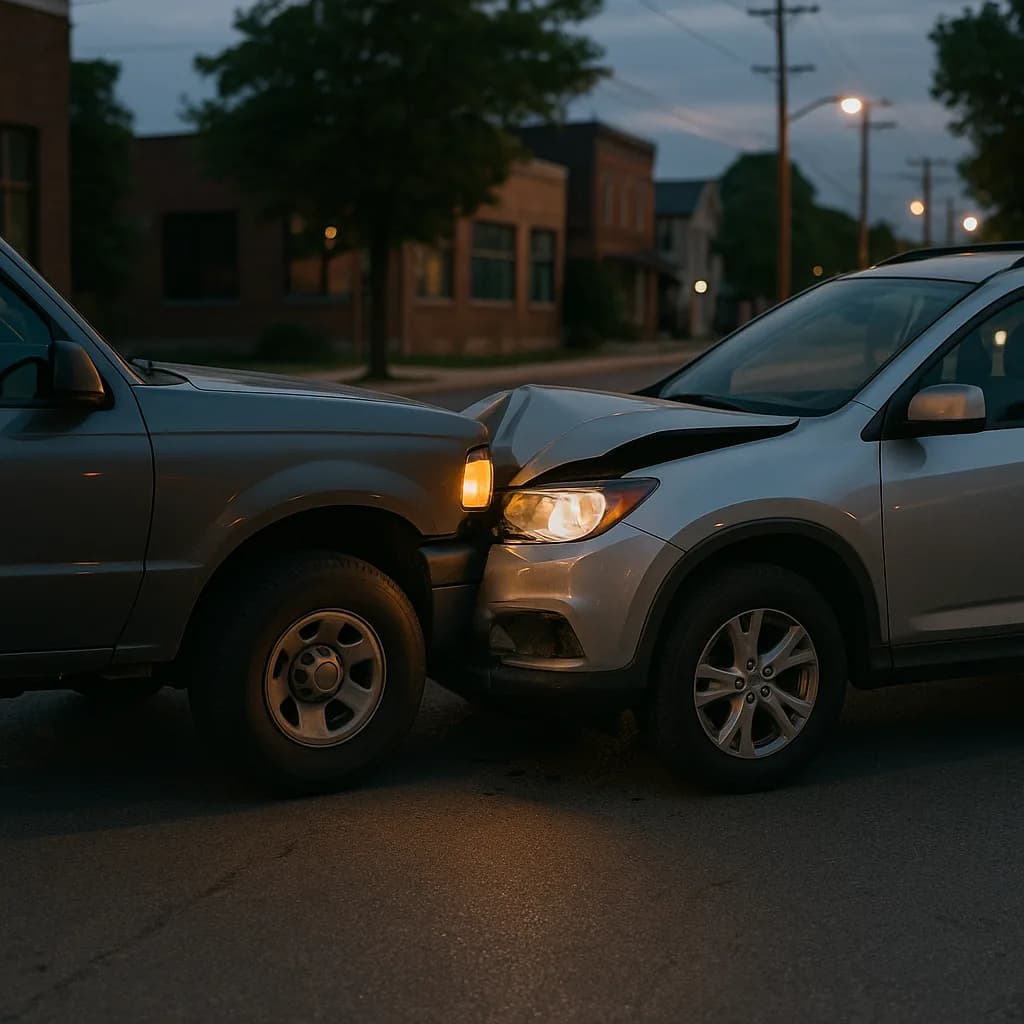
Florida's required coverage is cheaper than most states but leaves massive gaps if you cause an accident. Here's what the law requires, what it doesn't cover, and how to decide what else you need when you're building your first policy.
What Florida actually requires: PIP and property damage only
Florida requires two coverages to register a vehicle: $10,000 in Personal Injury Protection (PIP) and $10,000 in Property Damage Liability (PDL). That's it. Bodily injury liability — the coverage that pays when you hurt someone else in an accident — is optional in Florida unless you've had certain violations.
PIP covers your own medical bills after an accident regardless of who caused it, up to $10,000. It pays whether you hit another car, a tree, or get hit by someone else. PDL covers damage you cause to other people's property — their car, their fence, their mailbox. The $10,000 limit applies per accident, not per item.
This is one of the lowest required coverage floors in the country. Most states require bodily injury liability as part of the minimum. Florida doesn't, which makes the legal minimum cheaper to buy but creates a significant exposure if you cause an accident that injures another person. You're compliant with state law, but you're not protected from being sued personally for their medical bills, lost wages, or pain and suffering.
The bodily injury gap: optional coverage, mandatory risk
If you cause an accident that injures another driver or passenger in Florida, their medical bills don't come out of your PIP — PIP only covers you and your passengers. If you don't carry bodily injury liability, those bills come out of your bank account, your wages, or your future earnings. A moderate injury can generate $50,000 in medical costs. A serious one can exceed $200,000.
Bodily injury liability is optional at the point of purchase, but it becomes legally required after your first at-fault accident, DUI, or certain traffic violations. At that point, you'll need to file an SR-22 and carry higher limits for three years. The cost after a violation is typically 60–120% higher than if you'd carried it from the start.
Most carriers in Florida offer bodily injury in a split-limit format: $25,000 per person / $50,000 per accident is a common entry point. That means up to $25,000 for any one person's injuries, and up to $50,000 total if multiple people are hurt. Adding this coverage to a minimum PIP/PDL policy typically increases the premium by $40–$80/month for drivers under 25, depending on your location and driving record.
If you finance or lease a car, the lender will typically require bodily injury liability as part of the loan agreement, even though the state doesn't. If you own your car outright and you're trying to keep costs low, you're making a calculated financial decision: save $50/month now and accept personal liability risk, or pay for coverage that protects your assets and future income.
Compare car insurance for first-time drivers
Rates are high for new drivers — but the right carrier and discounts can make a real difference.
Get Your Free Quote✓ New Driver Specialists✓ No Obligation✓ Licensed Carriers✓ All 50 States
Collision and comprehensive: required if financed, optional if owned
Collision coverage pays to repair or replace your car after an accident, regardless of fault. Comprehensive covers non-collision damage — theft, vandalism, flooding, hitting an animal. If you finance or lease your vehicle, the lender requires both. If you own your car outright, they're optional.
The decision framework is straightforward: if your car is worth less than $3,000–$4,000 and you could afford to replace it out of pocket, collision and comprehensive often aren't worth the cost. If your car is worth $8,000 or more, or if losing it would eliminate your ability to get to work or school, the coverage makes sense. The middle ground — a $5,000 car with six months of savings in the bank — is where you're weighing the annual premium against the replacement cost and your financial cushion.
Deductibles matter significantly for young drivers. A $500 deductible is the most common choice, but increasing it to $1,000 can reduce your collision and comprehensive premium by 15–25%. You pay the deductible every time you file a claim, so the calculus is whether you can cover that amount if something happens. If you can't comfortably pay a $1,000 deductible, the monthly savings aren't worth the risk of being unable to repair your car after an accident.
One timing note: if you buy a car with cash now and plan to finance your next car in 1–2 years, adding collision and comprehensive on this policy builds your insurance history with those coverages. When you finance the next vehicle, carriers see continuous coverage rather than a gap, which can reduce your rate by 5–10% at the point of financing.
Uninsured motorist coverage: optional but disproportionately useful in Florida
Uninsured Motorist (UM) coverage pays your medical bills and vehicle damage when you're hit by a driver who doesn't have insurance or doesn't have enough. In Florida, approximately 20–26% of drivers are uninsured — one of the highest rates in the country. That means roughly one in four accidents involves a driver with no coverage.
Florida allows you to reject UM coverage in writing, and many young drivers do because it adds cost to an already expensive policy. But the math is worth running: UM bodily injury typically costs $15–$35/month for drivers under 25, and it covers the gap when someone hits you and can't pay. Your PIP covers your first $10,000 in medical bills, but if your injuries exceed that and the other driver is uninsured, UM coverage is the only thing standing between you and a personal financial loss.
UM property damage is separate and covers vehicle repairs when an uninsured driver hits you. It's less critical if you carry collision coverage, because collision will pay for the damage regardless of fault. If you're running a liability-only policy to keep costs down, UM property damage becomes more relevant — it's the only way to get your car repaired without paying out of pocket when the at-fault driver has no insurance.
The ROI calculation for UM is simpler than most coverages: the cost is low relative to the exposure, and the likelihood of needing it in Florida is measurably higher than in states with lower uninsured driver rates. If you're trying to decide where to allocate a limited budget, UM bodily injury belongs in the conversation before you add higher liability limits or lower deductibles.
How coverage choices now affect your rates at 21 and 25
Carriers price young drivers higher because of statistical accident rates, and that surcharge drops at two specific milestones: age 21 and age 25. But the size of the drop depends partly on your coverage history. If you've carried continuous full coverage from 18 to 21, you're demonstrating lower risk than someone who's been on a liability-only policy or who had a lapse.
The three-year clean record threshold also matters. Most carriers move you into a lower-risk pricing tier after three years with no tickets or claims. If you start your first independent policy at 19, that threshold hits at 22 — right in the middle of the peak-cost years. Every month without a lapse or a claim gets you closer to that rate reduction.
Staying on a parent's policy costs less per month than an independent policy, but it delays the start of your independent insurance history. If you stay on a parent's policy until 25 and then get your own, carriers price you as a newly independent driver with no history, not as a 25-year-old with seven years of clean driving. The result is a first-year independent rate that's 30–50% higher than if you'd started building history at 22 or 23.
The timing decision depends on your financial situation and your parents' policy structure. If adding you to their policy costs $150/month and an independent policy costs $220/month, the $70 difference is the price of building history three years earlier. If you can afford it and you're planning to stay in Florida long-term, starting your own policy in your early 20s compounds into lower rates by your late 20s.
Where young drivers in Florida have actual rate levers
Telematics programs — the apps that track your driving and offer discounts based on behavior — often work better for young drivers than for older ones. If you drive fewer than 8,000 miles per year, avoid late-night driving, and don't have a commute during peak hours, the data usually works in your favor. Discounts range from 5% to 30% depending on the program and your score, and they apply every renewal period as long as you stay enrolled.
Good student discounts require a 3.0 GPA or higher and typically save 5–15% on your premium. The part most students don't know: you have to re-submit proof every semester or every year, depending on the carrier. If you qualified as a freshman but never sent updated transcripts, you're losing the discount even though you still qualify. Set a reminder to submit documentation at the start of each school year.
Bundling policies — combining your auto insurance with renters insurance — typically saves 5–10% on the auto portion. Renters insurance costs $12–$20/month for most young drivers, so if the auto discount is $15/month, you're net positive. If you're renting an apartment or a room, the coverage also protects your belongings, which matters more than most first-time renters expect.
Paying in full rather than monthly eliminates the installment fee most carriers charge, which typically adds 4–8% to your annual cost. If your six-month premium is $900 and you can pay it in one payment, you'll often save $30–$50 compared to splitting it across six months. If you can't pay in full, some carriers charge lower fees than others — it's worth asking during the quote process.