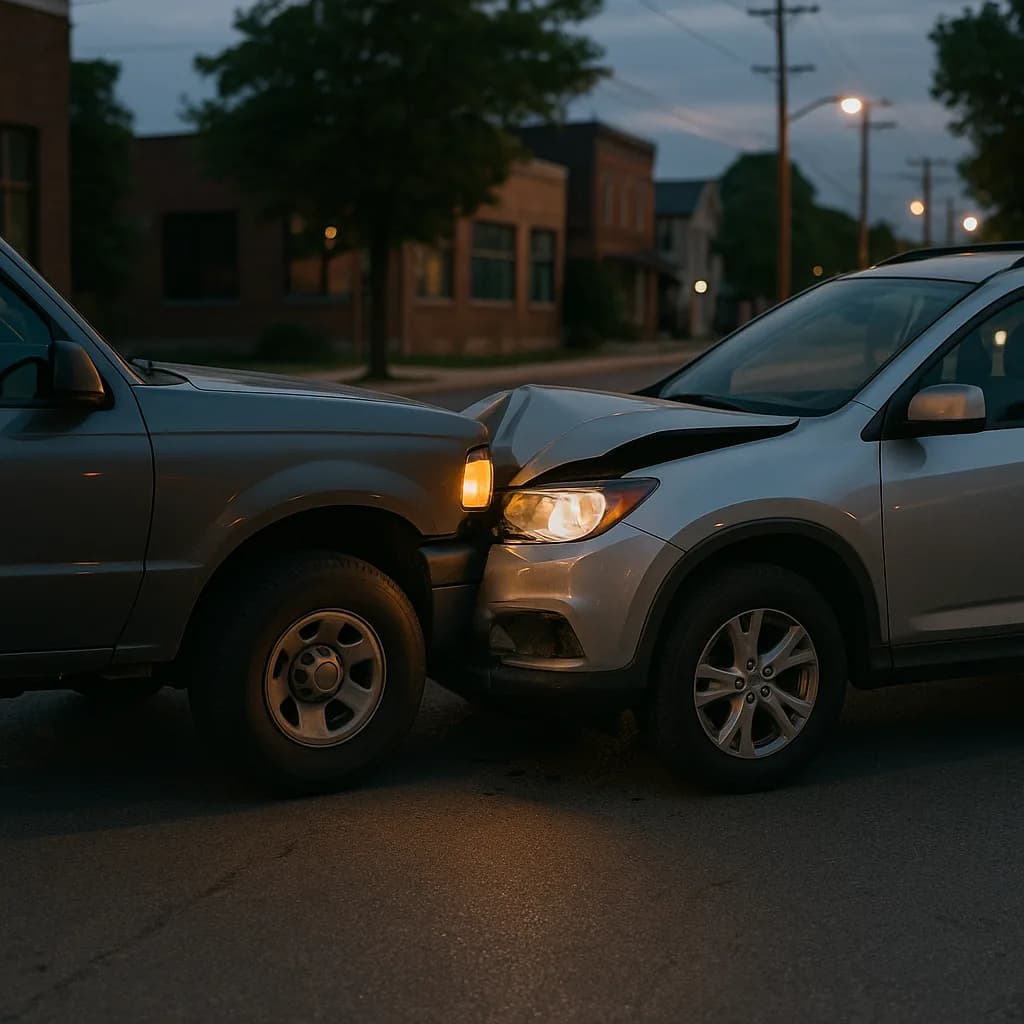
Arizona rates young drivers on a three-year experience curve most carriers don't explain — and the timing of when you shop matters more than which company you call first.
What Young Drivers Pay in Arizona: The Actual Numbers
A 20-year-old driver in Arizona with a clean record typically pays $180-$320/month for full coverage on a standard sedan — roughly double what a 30-year-old pays for identical coverage. That's not a penalty for being young. It's a statistical pricing model: drivers under 25 account for a disproportionate share of at-fault accidents nationwide, and Arizona carriers price that risk directly into your premium.
If you're on your parents' policy, you're seeing a different number — adding a young driver to an existing family policy typically costs $125-$250/month depending on the parent's coverage level and carrier. That looks cheaper, and it is. But it comes with a trade-off most young drivers don't realize until later: you're not building independent insurance history. When you eventually get your own policy at 23 or 25, you'll still be priced as someone with limited solo policy tenure.
The variance between carriers in Arizona is wider for young drivers than for any other age group. The difference between the most expensive and least expensive quote for the same 21-year-old profile can exceed $150/month — that's $1,800/year for identical coverage. Arizona doesn't cap how heavily carriers can weigh age and experience, so each insurer applies its own surcharge formula. That's why comparison shopping isn't optional for this age group — it's the single highest-impact action you can take.
Arizona's Minimum Coverage Requirements — And Why They're Not Enough
Arizona requires liability coverage of 25/50/15: $25,000 per person for bodily injury, $50,000 per accident for bodily injury, and $15,000 for property damage. That's the legal floor. It does not mean it's adequate for your actual risk exposure.
If you cause an accident that injures another driver and their medical bills hit $40,000, your policy covers the first $25,000. You're personally liable for the remaining $15,000. At 22, that could mean wage garnishment, a lawsuit, or both. Arizona is not a no-fault state — if you're at fault, the other driver can come after you directly for costs that exceed your policy limits.
Most young drivers I talk to assume minimum coverage is the cheapest option. It is — until you need it. The monthly cost difference between state minimums and a 50/100/50 policy (double the bodily injury limits, triple the property damage) is typically $30-$50/month in Arizona. If you're financing a car, your lender will require collision and comprehensive anyway, and stepping up your liability limits at the same time usually costs less than adding them later. The real question isn't whether you can afford higher limits — it's whether you can afford the exposure if you don't carry them.
Compare car insurance for first-time drivers
Rates are high for new drivers — but the right carrier and discounts can make a real difference.
Get Your Free Quote✓ New Driver Specialists✓ No Obligation✓ Licensed Carriers✓ All 50 States
The Experience Curve: When Your Rate Actually Drops
Arizona carriers price young drivers on a predictable experience curve, but most don't tell you when the milestones hit. Your rate typically drops at four specific points: after one year of continuous coverage with no incidents, at age 21, after three years of clean driving history, and at age 25. Each threshold moves you into a lower-risk pricing tier.
Here's what most young drivers miss: your current carrier applies these drops automatically, but they're pricing your past behavior. A new carrier prices your future risk. If you're 60 days away from your three-year clean record anniversary, you can shop as someone who will have three years clean at policy inception — and new carriers will quote you that way. If you wait until after the anniversary to shop, you've already locked in another six-month term at the higher rate with your current insurer.
The one-year mark matters more than most 19-year-olds realize. After 12 months of continuous coverage with the same carrier — no lapses, no claims, no at-fault accidents — you're no longer priced as a brand-new risk. That's when your rate typically drops 10-15% without you doing anything. But if you let your policy lapse for even 10 days because you switched cars or moved apartments and forgot to update your policy, that clock resets. Carriers treat a lapse as a risk signal, and you'll be quoted as a new driver again even if you've been driving for two years.
Full Coverage vs Liability-Only: The Real Calculation
Full coverage means you're carrying liability (required by law), plus collision (pays for damage to your car if you cause an accident) and comprehensive (pays for theft, weather damage, vandalism, and animal strikes). Liability-only means you're meeting the legal minimum but accepting 100% of the financial risk if your own car is damaged.
The decision isn't about which is "better" — it's about what your car is worth relative to what you can afford to replace out of pocket. If you're driving a 2015 sedan worth $8,000 and you have $8,000 in savings, liability-only makes sense. If that same car is worth $8,000 and you have $1,200 in savings, you're one accident away from losing transportation with no way to replace it. Collision coverage for a young driver in Arizona on a car in that value range typically costs $60-$90/month. That's expensive — but it's less expensive than suddenly needing to finance a replacement car because you totaled your current one and couldn't afford to fix it.
If you're financing or leasing your car, this decision is made for you. Your lender requires collision and comprehensive as a condition of the loan because they hold the title until you've paid it off. Dropping to liability-only while you still owe money on the car violates your loan agreement, and most lenders will force-place coverage on your behalf — which costs significantly more than if you'd carried it yourself.
Discounts That Actually Apply to Young Drivers in Arizona
Most carrier websites list 15 discounts. Four of them will actually reduce your rate as a young driver in Arizona: good student discount (typically 8-20% if you maintain a 3.0 GPA or higher), telematics programs that monitor your driving habits, multi-policy bundling if you also carry renters insurance, and defensive driver course completion.
The good student discount is the easiest money you'll leave on the table if you don't ask for it. Most carriers require you to submit proof — a transcript or report card — every semester or every six months. If you qualified last year but didn't resubmit documentation this term, you're no longer getting the discount even if your GPA hasn't changed. Set a calendar reminder for each semester end and send updated proof the day grades post.
Telematics programs — where you install an app or device that tracks your speed, braking, and mileage — statistically favor young drivers more than older drivers. If you're 21, drive fewer than 8,000 miles a year, and mostly drive during daylight hours, the data usually works in your favor. These programs can reduce your rate by 10-30% depending on the carrier and your actual driving patterns. The trade-off is transparency: the carrier sees every hard brake, every instance of speeding, and every 1 a.m. drive. If your driving habits are genuinely low-risk, you benefit. If they're not, you won't.
Bundling renters insurance with your auto policy typically saves 5-10% on the auto portion. Renters insurance in Arizona costs about $12-$18/month for $20,000 in personal property coverage, and the auto discount usually exceeds the cost of the renters policy. You end up with both coverages for less than you were paying for auto alone. If you're renting an apartment or house, this is one of the few discounts that pays for itself immediately.
Staying on a Parent's Policy vs Getting Your Own
Staying on a parent's policy costs less per month. That part is straightforward. What's less obvious: it delays the start of your independent insurance history, and that history is what determines your rate when you eventually go solo.
Insurance history is not the same as driving history. Driving history is your record with the DMV — tickets, accidents, license status. Insurance history is how long you've held your own policy, whether you've had lapses, whether you've filed claims. Carriers weigh both when pricing your premium. If you stay on your parents' policy until you're 25 and then get your own, you'll have eight years of driving history but zero years of independent policy history. You'll be quoted as a new policyholder, which typically means a 15-25% surcharge compared to someone your age who's held their own policy for three years.
The math shifts depending on your situation. If you're 19, still in school, driving fewer than 5,000 miles a year, and your parents have a strong policy with a carrier that offers good student discounts, staying on their policy makes sense. If you're 22, working full-time, driving a car you own outright, and living in a different city, the cost of staying on their policy — plus the delayed start to your own insurance timeline — often exceeds the cost of going solo. Most young drivers should plan to transition to their own policy between ages 21 and 23, not wait until 25.
How to Compare Quotes Without Getting Played
When you request quotes in Arizona, you'll be asked for the same information by every carrier: your driver's license number, VIN, address, estimated annual mileage, and coverage preferences. The quotes you get back will vary by $100-$200/month for identical coverage. That variance is real — but only if you're comparing the same coverage limits, deductibles, and policy terms.
Most comparison tools default to state minimum liability limits unless you manually adjust them. If you request quotes without specifying your preferred coverage levels, you'll get five quotes for 25/50/15 liability with no collision or comprehensive, and you'll think the $95/month option is a deal. It's not a deal — it's just incomplete coverage. Always specify your target liability limits (50/100/50 or higher), your deductible preference (typically $500 or $1,000 for young drivers), and whether you need collision and comprehensive before you compare.
Timing matters more than most young drivers realize. Carriers in Arizona typically offer six-month policies, and your rate is locked in at the start of each term. If you're two months into a six-month policy and you get a quote from a new carrier, they're quoting you for coverage starting today — not retroactive to your current term start. That means you'd pay a cancellation fee to your current carrier (usually a flat $50 or a short-rate penalty) and start fresh. The better move is to shop 30-45 days before your renewal date, compare offers, and switch carriers at renewal if the savings justify it. You avoid the cancellation fee and you're not paying for overlapping coverage.