Wisconsin new drivers pay $265–$410/mo on average — but your actual rate depends on whether you're adding to a parent's policy, going independent, or coming from another state's graduated licensing system.
Why Wisconsin New Driver Rates Are Structured Around GDL Phases
You just passed your road test and got your probationary license — the first unrestricted license Wisconsin issues to drivers under 18. Your insurance cost for the next 12 months depends less on your birthday and more on which Graduated Driver Licensing phase you're exiting and whether you stay listed on a parent's policy or purchase your own.
Wisconsin new drivers on a parent's policy typically add $120–$180/mo to the household premium during the probationary phase. That same driver purchasing an independent policy pays $265–$410/mo for minimum liability coverage. The $145–$230/mo gap exists because family policies spread risk across multiple vehicles and drivers, while independent policies price a single high-risk driver with no claims history.
Insurers price Wisconsin's probationary license holders (ages 16–18) higher than regular license holders because state data shows 16-year-old drivers have crash rates nearly four times higher than drivers over 20. Your rate drops measurably at age 18 when the probationary restrictions lift, drops again at 21, and reaches near-adult levels at 25 — but those age-based drops only apply if you maintain continuous coverage and avoid violations.
The Parent Policy vs. Independent Policy Decision
Staying on a parent's policy saves $1,740–$2,760 annually compared to buying your own, but it only works if you live at the same address and primarily drive a vehicle the parent owns or co-owns. The moment you move to a different city for college or work — even within Wisconsin — most insurers require you to either purchase your own policy or have your parent list your new address as a garaging location, which often triggers a rate adjustment based on your new ZIP code's loss history.
If you're attending University of Wisconsin-Madison or UW-Milwaukee and leaving your car at home, you can typically stay on the parent policy with a "student away at school" designation that may qualify for a discount of 10–25%. If you take the car with you, expect the insurer to re-rate the policy based on where the vehicle is actually parked overnight. Wisconsin requires minimum liability limits of 25/50/10 — $25,000 per person for bodily injury, $50,000 per accident, and $10,000 for property damage — but many family policies carry 100/300/100 limits, and you'll inherit those higher limits while listed on the parent policy.
The break-even point for going independent typically arrives when you turn 21–23, have three years of clean driving history, and can qualify for multi-policy discounts by bundling renters or other insurance. Before that threshold, the parent-policy route saves money unless you're specifically required to carry SR-22 insurance due to a license suspension, which mandates a separate policy in your name.
Compare car insurance for first-time drivers
Rates are high for new drivers — but the right carrier and discounts can make a real difference.
Get Your Free Quote✓ New Driver Specialists✓ No Obligation✓ Licensed Carriers✓ All 50 States
What Wisconsin New Drivers Actually Pay by Coverage Level
Minimum liability coverage for an 18-year-old Wisconsin driver with a clean record runs $265–$410/mo on an independent policy. Adding collision coverage (pays for damage to your car regardless of fault, minus your deductible) and comprehensive coverage (pays for theft, vandalism, weather damage, and animal strikes) pushes monthly cost to $380–$580/mo depending on vehicle value and chosen deductible.
Your deductible — the amount you pay out-of-pocket before insurance covers the rest — directly controls your premium. Choosing a $1,000 deductible instead of $500 typically saves $35–$60/mo, but it means you're covering the first $1,000 of damage after an accident. For a new driver with minimal savings, a $500 deductible often makes more sense even though the monthly cost is higher, because coming up with $1,000 immediately after a crash is harder than absorbing an extra $40/mo in premium.
Uninsured motorist coverage — which pays your medical bills and repairs if you're hit by a driver with no insurance — costs an additional $15–$30/mo in Wisconsin. Approximately 11% of Wisconsin drivers are uninsured according to Insurance Research Council data, meaning roughly one in nine vehicles on the road carries no coverage. For new drivers who can't afford the financial hit from an at-fault uninsured driver, this coverage closes a significant gap that minimum liability leaves open.
How Violations and Accidents Reset Your Rate Timeline
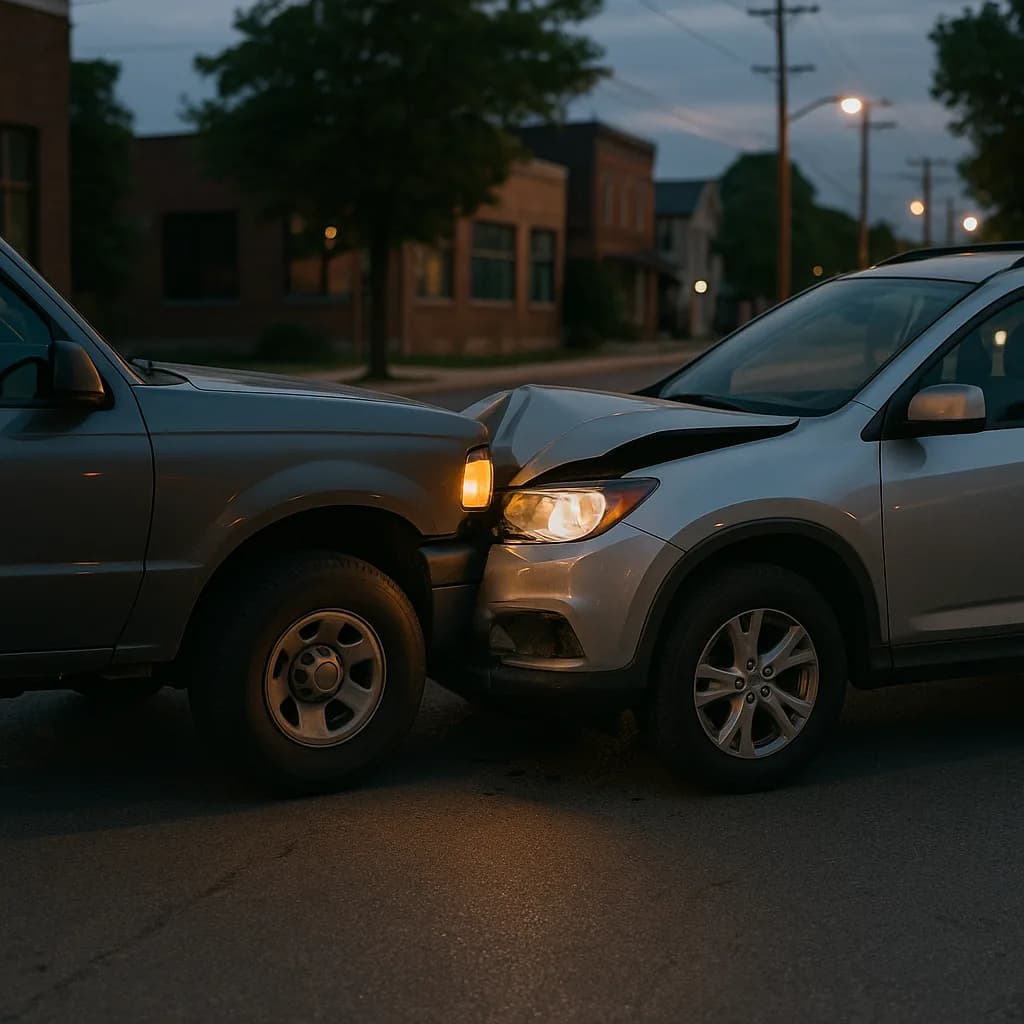
Wisconsin operates on a point system where traffic violations add points to your driving record, and insurance companies access that record when setting your rate. A speeding ticket 10–19 mph over the limit adds 3 points and typically increases your premium 20–35% for three years. An at-fault accident adds 6 points and raises rates 40–70% for the same period. Points expire after three years, but the insurance surcharge often lasts the full three years even after points drop off your DMV record.
A single OWI (Operating While Intoxicated) conviction — Wisconsin's term for DUI — adds 6 points, triggers a 6–9 month license revocation for a first offense, and increases insurance premiums 80–150% for five years. You'll also be required to file an SR-22 certificate, which is proof your insurer submitted to the Wisconsin DMV confirming you carry at least minimum liability coverage. The SR-22 itself doesn't cost much ($15–$25 filing fee), but it flags you as high-risk and prevents you from accessing standard-market insurers that offer the lowest rates.
New drivers face a compressed timeline: your first three years of driving history determine whether you'll access preferred rates at age 21 or remain in the high-risk pool until 25. A clean record from 16–19 can reduce your age-21 premium by 30–45% compared to a driver with one at-fault accident. The math is blunt — every violation extends your expensive years by three years from the violation date, not from when you first got licensed.
Discounts That Actually Move the Number for Young Drivers
Good student discounts — typically requiring a 3.0 GPA or higher — reduce premiums 8–15% and remain available through age 24 as long as you're enrolled in school. You'll need to submit a transcript or report card every six months to maintain eligibility. Defensive driver course discounts (5–10% off) apply if you complete an approved course, but they're often one-time discounts that expire after three years, not permanent rate reductions.
Telematics programs — where you install an app or device that monitors your braking, acceleration, cornering, and mileage — can cut premiums 10–30% if you score well. These programs penalize hard braking events, speeds over 80 mph, and driving between midnight and 4 a.m. For new drivers who genuinely drive cautiously and keep low annual mileage, telematics programs offer the fastest route to a measurable discount. For drivers who accelerate aggressively or drive late nights regularly, telematics programs can actually increase your rate or disqualify you from renewing the discount.
Multi-car discounts (10–20%) apply when you insure more than one vehicle on the same policy, which is why staying on a parent's multi-car policy saves significantly more than just splitting the cost of adding you as a driver. Once you go independent, you won't access multi-car savings until you own and insure a second vehicle, which is rarely practical for drivers under 23.
When You Should Get Your Own Quote Even If Staying on a Parent Policy
Run an independent quote at three trigger points: when you turn 21, when you hit three years of continuous coverage with no violations, and when you move to a different address. Insurers re-evaluate risk at these milestones, and the parent-policy advantage can flip if your driving record is cleaner than your parents' or if you relocate to a ZIP code with significantly lower claim frequency than where the family policy is based.
If your parent's policy is with a non-standard insurer (companies that specialize in high-risk drivers), you may qualify for a standard-market policy on your own even as a young driver, especially if you've maintained a clean record while your parent has violations or lapses. Standard-market insurers — the companies that advertise heavily and offer the lowest rates to low-risk drivers — generally won't accept you as a standalone young driver unless you have three years of history, but they will compete for your business at age 21 if your record is clean.
Get quotes 30–45 days before your current policy renews, not the week before. Insurance companies in Wisconsin can take 7–14 days to process applications for young drivers because they manually review driving records and sometimes request additional documentation. Waiting until three days before your parent's policy renews leaves no time to compare, negotiate, or switch if you find a better rate.