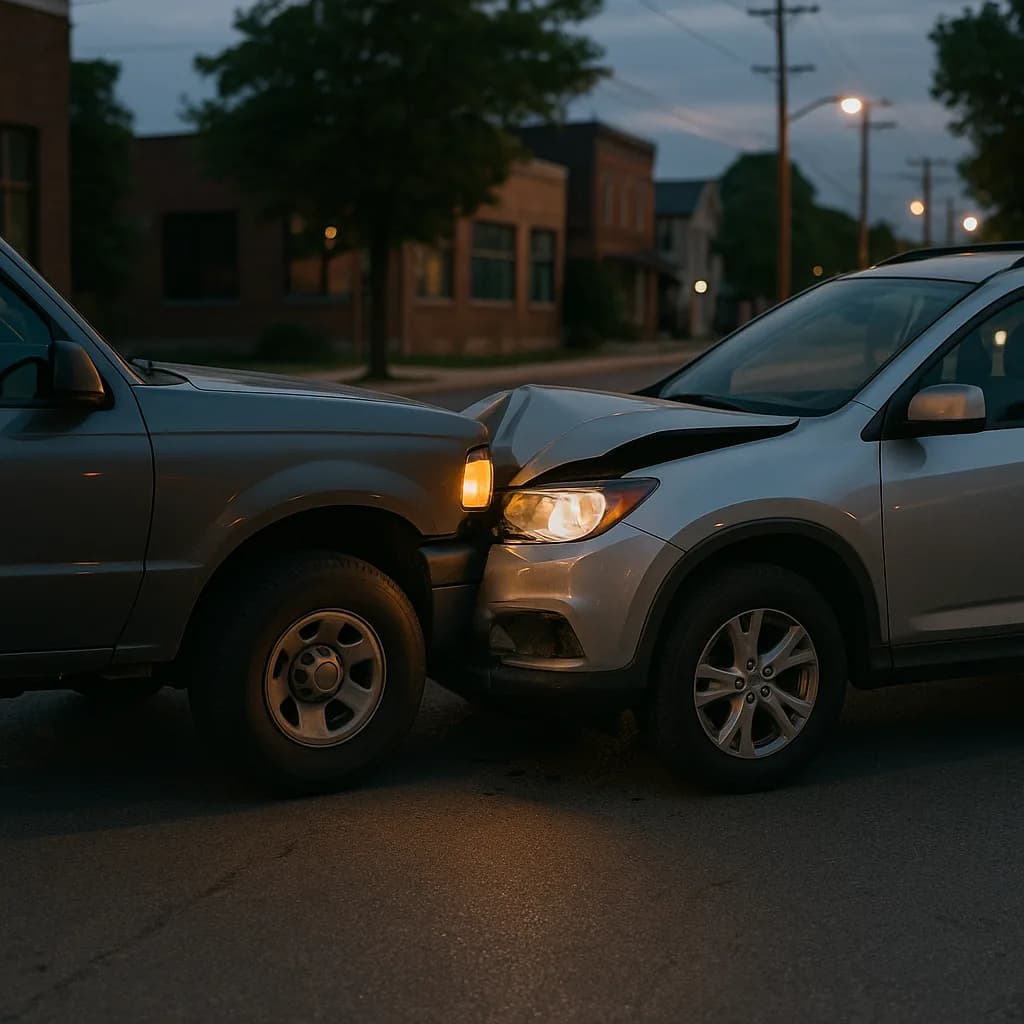
Texas requires new drivers to carry more liability coverage than 38 other states, but most first-time buyers don't know which add-ons actually matter before their first claim.
What Texas Legally Requires vs. What Actually Protects You
Texas requires all drivers to carry liability insurance with minimum limits of 30/60/25. That breaks down to $30,000 per person for bodily injury, $60,000 per accident for bodily injury, and $25,000 for property damage. These are your legal minimums — the baseline to avoid tickets and registration penalties — but they're not designed to fully protect you after a serious accident.
Here's the gap most new drivers miss: Texas has the sixth-highest uninsured driver rate in the country at 14.1%, according to the Insurance Research Council. That means roughly one in seven drivers on the road has no insurance at all. If an uninsured driver hits you and you only carry state minimums, your own liability coverage won't pay for your injuries or repairs — liability only covers damage you cause to others.
This is why uninsured motorist coverage matters more in Texas than in states with lower uninsured rates. It's optional under Texas law, but it covers your medical bills and car damage when someone without insurance hits you. For new drivers unfamiliar with how insurance actually works after an accident, this is the most commonly skipped coverage that leads to out-of-pocket costs later.
Why Your Rate Is Higher and What Actually Lowers It
New drivers in Texas pay significantly more than experienced drivers — industry data suggests first-year premiums can run 50–100% higher than the state average. Carriers price new drivers as high-risk because there's no driving history to prove otherwise. Age compounds this: drivers under 25 statistically file more claims, and insurers price accordingly.
Two factors lower your rate faster than anything else: time and a clean record. Every six months without a claim or traffic violation improves your risk profile. Most carriers recalculate rates at renewal, so a year of safe driving typically drops your premium 10–15%. Some insurers offer a "new driver discount" after the first policy term if you stay claims-free.
Discount programs marketed to young drivers — good student discounts, telematics apps that monitor driving habits, defensive driving courses — can shave 5–10% off your premium, but they don't override the base pricing structure. A good student discount might save you $30–50 per month, but it won't bring your rate down to what a 35-year-old with ten years of clean history pays. That only happens with time.
Compare car insurance for first-time drivers
Rates are high for new drivers — but the right carrier and discounts can make a real difference.
Get Your Free Quote✓ New Driver Specialists✓ No Obligation✓ Licensed Carriers✓ All 50 States
Collision and Comprehensive: When They're Required vs. When They Make Sense
If you're financing or leasing your car, your lender will require collision and comprehensive coverage — this isn't optional. Collision coverage pays to repair your car after an accident regardless of fault. Comprehensive coverage covers theft, vandalism, hail, flooding, and animal strikes. Lenders mandate both because the car is collateral for the loan.
If you own your car outright, the decision is different. Collision and comprehensive typically add $80–150 per month to your premium in Texas, depending on your car's value and your deductible. The math question is simple: if your car is worth $4,000 and full coverage costs $120/month, you'd pay $1,440 per year to insure a $4,000 asset. After three years, you've paid more in premiums than the car is worth.
A common rule among insurance professionals: if your car's value is less than ten times your annual collision and comprehensive premium, consider dropping them and banking the savings for your next vehicle. For new drivers with older first cars, liability-only coverage often makes more financial sense than paying for full coverage on a low-value vehicle.
How Deductibles Actually Affect Your Monthly Cost
Your deductible is the amount you pay out of pocket before insurance kicks in after a covered claim. Texas insurers typically offer deductible options of $250, $500, $1,000, or $2,000 for collision and comprehensive. Choosing a higher deductible lowers your monthly premium — sometimes significantly.
Moving from a $500 deductible to a $1,000 deductible typically saves $15–25 per month on your premium. That's $180–300 per year. If you don't file a claim for two years, you've saved $360–600 — more than the extra $500 you'd pay out of pocket if you did file. Most drivers overestimate how often they'll file claims and choose low deductibles that cost them more over time.
The decision depends on whether you have $1,000 in accessible savings. If a $1,000 deductible would force you onto a credit card or prevent you from repairing your car, choose the $500 option even though it costs more monthly. If you can cover the higher deductible without financial strain, the math favors taking it and pocketing the monthly savings.
What Happens If You Drive Without Insurance in Texas
Texas enforces insurance requirements through a statewide database called TexasSure, which tracks every registered vehicle's insurance status in real time. If your policy lapses or cancels, the Texas Department of Motor Vehicles receives notification. Driving without insurance in Texas triggers escalating penalties that stick with you for years.
First offense: a fine of $175–350 plus a surcharge of $250 per year for three years to keep your license valid. That's $750 in surcharges alone, on top of the initial fine. Second offense within a year: the fine increases and your license can be suspended. If you're caught driving during a suspension, you're looking at a Class B misdemeanor, which carries potential jail time and a criminal record.
Beyond legal penalties, a lapse in coverage creates a gap in your insurance history. When you reapply for coverage after a lapse, insurers categorize you as high-risk and may require non-standard insurance, which costs 30–60% more than standard policies. For new drivers already paying elevated rates, a coverage gap can double your premium for the next several years.
Getting Your First Quote: What Information You'll Need
When you request your first insurance quote in Texas, carriers will ask for your driver's license number, vehicle identification number (VIN), and details about where you park the car overnight. They'll also ask about other drivers in your household — if you live with family members who have licenses, insurers may require you to list them as excluded drivers or add them to your policy.
Your credit score affects your rate in Texas unless you're shopping with a carrier that doesn't use credit-based insurance scores. Most major insurers do. New drivers with limited credit history may not get the best rates initially, but this improves as you build credit. Some carriers offer first-time buyer programs that reduce the credit score weight for applicants under 25.
Expect to compare at least three quotes. Rates for the same coverage can vary by $50–100 per month between carriers for new drivers. Texas uses a competitive pricing model — there's no state-set rate, so each insurer prices risk independently. Some specialize in high-risk or new driver policies and price more competitively for your profile than mainstream carriers do.