New drivers in no-fault states face an unfamiliar requirement: PIP coverage that pays your medical bills regardless of who caused the crash. Here's what you're actually buying and what it costs.
What PIP Coverage Actually Does (And Why No-Fault States Require It)
If you just got your first car in a no-fault state, you're seeing a coverage requirement you've never heard of: Personal Injury Protection (PIP). This isn't optional add-on coverage. It's a mandatory first layer of protection that pays your medical bills, lost wages, and sometimes funeral expenses after a crash — regardless of who caused it. The term "no-fault" means you file a claim with your own insurance company first, not the other driver's, which speeds up payment but adds to your base premium cost.
Twelve states currently operate under no-fault insurance systems: Florida, Hawaii, Kansas, Kentucky, Massachusetts, Michigan, Minnesota, New Jersey, New York, North Dakota, Pennsylvania, and Utah. Each sets different minimum PIP limits, ranging from $2,500 in Kentucky to unlimited medical coverage in Michigan (though Michigan's system underwent major reforms in 2019). New drivers in these states typically pay $80–$180/mo for PIP coverage alone, depending on state minimums and the limits selected.
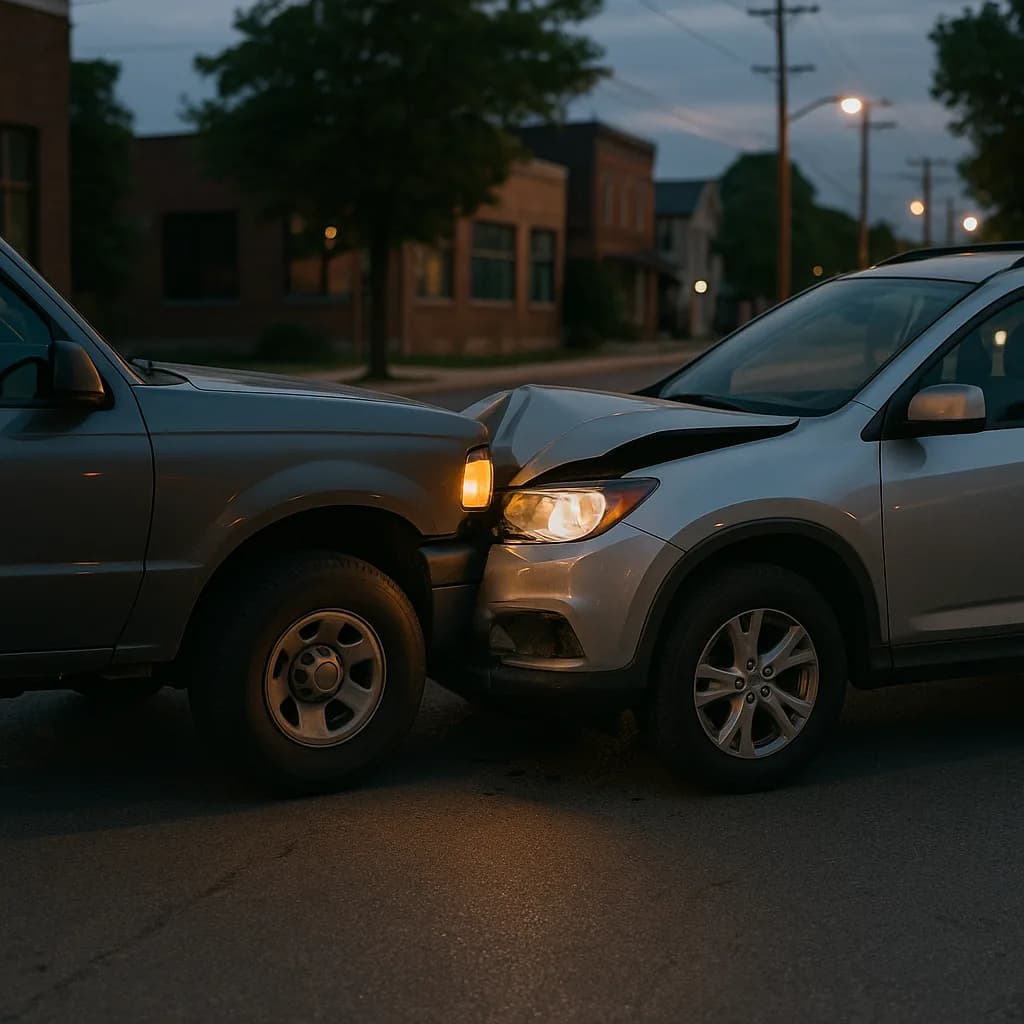
PIP kicks in immediately after a crash, covering medical expenses before you reach any health insurance deductible. It also covers passengers in your car, pedestrians you hit, and sometimes family members injured while riding in someone else's vehicle. This automatic coverage eliminates most injury lawsuits between drivers — which is the tradeoff no-fault states made to reduce court congestion and speed up claim payments.
How PIP Coordinates With Your Health Insurance (The Part Most New Drivers Miss)
Here's the coverage overlap most first-time buyers don't realize: if you already have health insurance through your parents, school, or employer, PIP functions as a secondary payer in many states — meaning your health plan pays first, then PIP covers what remains. In states like New York and New Jersey, you can formally coordinate benefits by selecting lower PIP limits if you have qualifying health coverage, reducing your premium by 10–20%. But in Florida and Michigan, PIP pays first regardless of other coverage, creating genuine duplicate protection.
The decision gets more complicated if you're on a high-deductible health plan. Let's say you have a $3,000 health insurance deductible and select Florida's minimum $10,000 PIP limit. After a crash requiring $8,000 in medical care, PIP pays the full amount immediately — you never touch your health deductible. But if you're on a parent's plan with a $500 deductible and comprehensive coverage, paying for $10,000 in PIP when your health plan would have covered most expenses anyway creates expensive overlap.
In states that allow coordination of benefits (New Jersey, New York, Pennsylvania), you can select a lower PIP limit or add a "health insurance primary" endorsement that typically reduces PIP premiums by $15–$35/mo. If you're under 26 and still on a parent's health plan, this coordination option usually makes financial sense. If you have no health insurance at all, maximum PIP limits become your primary medical safety net and are worth the higher cost.
Compare car insurance for first-time drivers
Rates are high for new drivers — but the right carrier and discounts can make a real difference.
Get Your Free Quote✓ New Driver Specialists✓ No Obligation✓ Licensed Carriers✓ All 50 States
State-by-State PIP Minimums and What New Drivers Actually Pay
Florida requires $10,000 in PIP coverage with an 80% benefit level, meaning the insurer pays 80% of medical bills up to the limit. New drivers in Florida typically pay $120–$200/mo for this mandatory coverage — among the highest PIP costs nationally due to fraud concerns and high utilization rates. Michigan's reformed system now allows drivers to select PIP limits ranging from $50,000 to unlimited medical coverage, with new drivers paying $90–$250/mo depending on the option chosen and whether they coordinate with health insurance.
New Jersey offers a "basic policy" option with $15,000 PIP and a standard policy with $250,000 — new drivers selecting the basic option pay approximately $85–$140/mo for PIP, while standard policies cost $110–$180/mo for the PIP portion alone. New York requires $50,000 in PIP coverage with no aggregate limit, costing new drivers roughly $95–$165/mo. Kentucky's $10,000 minimum is among the lowest, with new drivers paying $60–$110/mo for PIP coverage.
Young drivers under 25 face rate multipliers of 1.4–2.1× on PIP premiums compared to drivers over 30, even though PIP doesn't consider fault. Insurers price based on crash frequency — younger drivers get in more accidents overall, triggering more PIP claims regardless of who's at fault. If you're comparing quotes, the PIP line item will be substantially higher than what an older driver with identical coverage would pay.
Choosing PIP Limits When You're Buying Your First Policy
Start by documenting your existing health coverage. If you're on a parent's plan, know the deductible, out-of-pocket maximum, and whether it covers auto accident injuries (most do, but some employer plans exclude them). If you have no health insurance, treat PIP as your medical coverage and select the highest limit you can afford — this is not the place to minimize cost.
In states allowing coordination, compare quotes with and without the health insurance primary endorsement. Request a side-by-side showing monthly cost difference and how claims would be paid. A typical scenario: New York driver, age 22, on parent's health plan with $1,000 deductible. Standard $50,000 PIP with health primary endorsement: $105/mo. Same limit without coordination: $135/mo. The $30/mo savings ($360/year) makes coordination worth it if the health plan reliably covers auto injuries.
For states where PIP pays first (Florida, Michigan), evaluate your risk of lost wages. PIP covers 60–80% of lost income in most states, up to a weekly cap (often $450–$1,000/week). If you're working full-time while going to school, lost wage coverage becomes more valuable. If you're a full-time student with no earned income, this portion of PIP provides minimal benefit. Some states allow you to exclude work loss coverage in exchange for a premium reduction — Florida offers this option, saving approximately $15–$25/mo.
What PIP Doesn't Cover (And Why You Still Need Other Coverage)
PIP only covers injuries to you and your passengers — it pays nothing for vehicle damage, property you hit, or injuries to people in other cars if you're at fault. That's why every no-fault state still requires liability insurance to cover harm you cause to others. The "no-fault" system eliminates small injury lawsuits, but if you cause serious injuries exceeding the other driver's PIP limit, you can still be sued and need liability protection.
PIP also caps quickly. If you cause a crash that sends another driver to the hospital for $80,000 in treatment, your PIP pays nothing toward their bills — that comes out of your bodily injury liability coverage. If you selected your state's minimum liability limits to keep costs down, you're personally exposed for the difference. This is why new drivers in no-fault states need to think about PIP and liability as a package, not separate decisions.
Most PIP policies include a time limit for filing claims — typically one to three years from the accident date — and exclude injuries from intentional acts, driving under the influence, or using the vehicle for commercial purposes without proper coverage. If you're doing any gig work (delivery, rideshare), standard PIP won't cover injuries that occur while you're on a delivery — you need commercial or hybrid coverage that most new drivers don't realize exists until after a crash.
Getting Your First Quote in a No-Fault State
When you request quotes, insurers will ask whether you have health insurance and what type. Answer precisely — "on parent's employer plan" triggers different underwriting than "individual marketplace plan" or "no coverage." Insurers in coordination states use this to determine which PIP options you're eligible for and may automatically quote you the lower-cost coordinated option.
Expect your total premium in a no-fault state to run $140–$320/mo as a new driver, with PIP representing 35–50% of that cost. If you're seeing quotes below $100/mo total, verify you're actually getting state-minimum PIP — some online quote tools default to out-of-state configurations or exclude required coverage to show lower initial numbers. Confirm the declarations page explicitly lists PIP at your state's minimum or higher before binding coverage.
Most carriers allow you to start coverage the same day you get your vehicle, but PIP becomes effective only once the policy is fully paid and processed — typically within 2–4 hours for online purchases, up to 24 hours if underwriting review is required. Don't drive off the lot assuming you're covered the moment you click "buy." Confirm the effective date and time on your policy documents, and if you need coverage immediately, call the insurer directly rather than relying on automated systems.