Most new drivers choose their first policy backward — prioritizing the lowest monthly premium rather than the coverage that prevents financial disaster after a first accident.
Why Your First Quote Looks Nothing Like Your Parents' Rate
You just got your license and your first car, searched for insurance quotes, and saw monthly premiums between $250 and $450. Your parents pay $120/mo for two vehicles. The sticker shock is real, and it's not a mistake.
New drivers under 25 with less than three years of driving history pay approximately 80–140% more than drivers over 30 with clean records, according to rate filings analyzed by state insurance departments. Insurers price policies using loss data — drivers in their first three years are statistically 2–3 times more likely to file a claim than drivers with a decade of experience. You're not being penalized unfairly; you're being priced according to actuarial risk until you build a driving record.
The gap narrows predictably. After six months with no violations or claims, some carriers offer a claim-free discount of 5–10%. After one year, expect a 10–15% rate reduction at renewal if your record stays clean. Most carriers recalculate risk brackets at age 21, again at 25, and again at 30 — each transition typically brings a 12–20% drop if your record remains clean. Your first policy will be your most expensive, but only if you maintain it that way.
The Coverage Decision Most First-Time Buyers Get Wrong
Every state except New Hampshire and Virginia requires you to carry liability insurance — coverage that pays for damage you cause to other people and their property. The minimum required limits are typically expressed as three numbers, like 25/50/25, meaning $25,000 per person for injuries, $50,000 total per accident for injuries, and $25,000 for property damage.
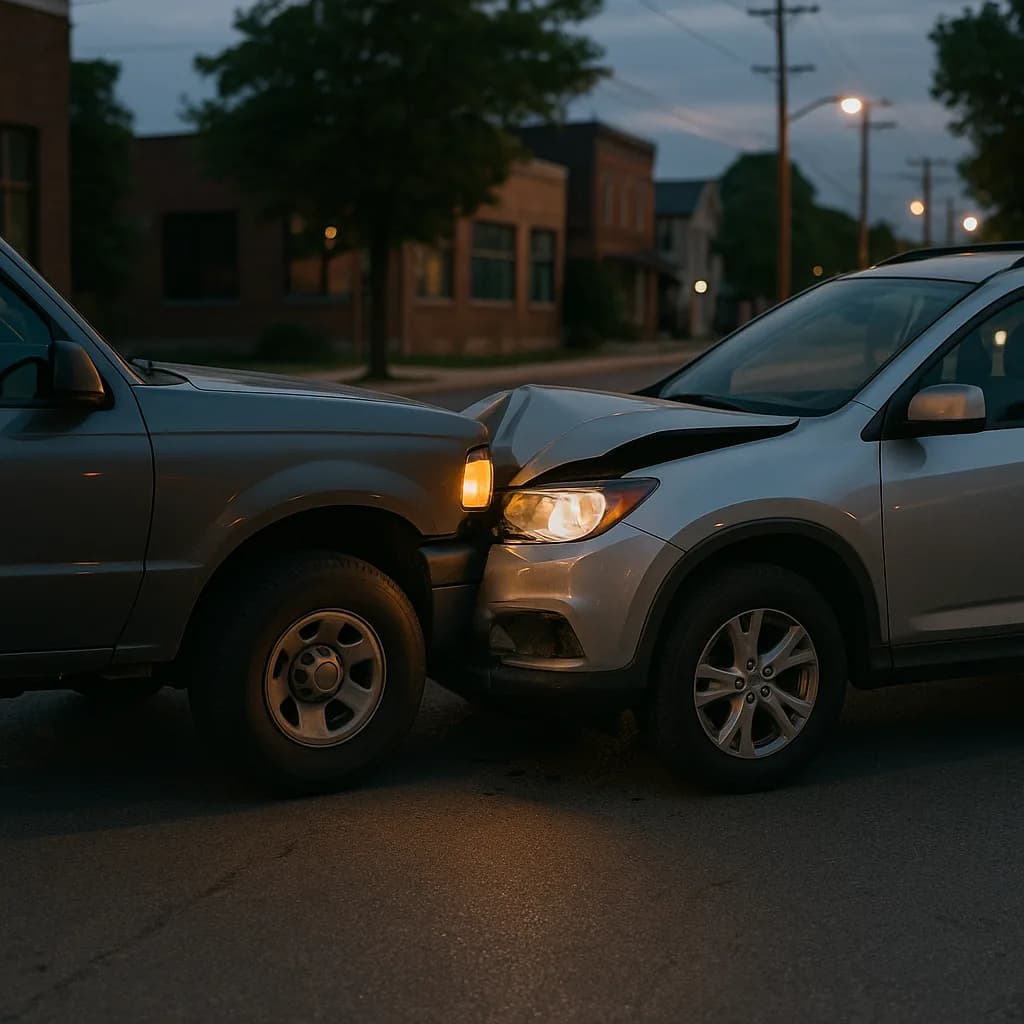
Here's what most new drivers miss: state minimums are almost never adequate. A single-car accident that injures another driver and totals their vehicle can easily generate $75,000–$150,000 in combined medical bills, lost wages, and property damage. If you carry only 25/50/25 and cause $100,000 in damages, your insurer pays the first $50,000 in injury costs and $25,000 in property damage — you're personally liable for the remaining $25,000. At 22 years old with minimal assets, a judgment that size follows you for years and can trigger wage garnishment in most states.
Industry loss data suggests that increasing liability limits from state minimum to 100/300/100 typically adds $15–$35/mo to your premium — but protects you from five-figure personal liability. The math is clear: if you can afford an extra $25/mo now, you avoid potential financial catastrophe later. This is where your budget should stretch first, not on comprehensive or collision coverage for an older vehicle.
A liability insurance policy with adequate limits is the single most important coverage decision in your first policy, because it's the only coverage that protects your future earnings and assets from a lawsuit.
Compare car insurance for first-time drivers
Rates are high for new drivers — but the right carrier and discounts can make a real difference.
Get Your Free Quote✓ New Driver Specialists✓ No Obligation✓ Licensed Carriers✓ All 50 States
How to Set Your Deductible Based on What You Actually Have Saved
Your deductible is the amount you pay out-of-pocket before your insurance covers the rest of a claim. Choosing between a $500 deductible and a $1,000 deductible isn't about preference — it's about whether you have $1,000 in accessible savings right now.
Most new drivers see that a $1,000 deductible costs $30–$50/mo less than a $500 deductible and choose the higher deductible to lower their monthly payment. This backfires immediately if you're in an at-fault accident in month two and don't have $1,000 available. You either don't file the claim and drive a damaged car, or you go into debt to pay the deductible. Neither outcome justifies the $40/mo you saved.
The correct deductible is the highest amount you could pay tomorrow without borrowing. If you have $500 in savings, choose a $500 deductible even though it costs more monthly. If you have $2,000 saved and want to preserve $1,000 as an emergency fund, a $1,000 deductible makes sense. The monthly savings from a higher deductible only benefit you if you never file a claim or if you've already built the reserves to cover it.
Run the break-even calculation: if a $1,000 deductible saves you $40/mo compared to $500, it takes 12.5 months of no claims to recover the $500 difference. If you're in an accident in month six, you've saved $240 but now owe an extra $500 — a net loss of $260. Choose your deductible based on your bank balance today, not your optimism about avoiding accidents.
Six Discounts That Actually Apply to New Drivers
Most insurance discounts require years of driving history, homeownership, or bundled policies — things you don't have yet. But six discounts are specifically accessible to first-time drivers if you know to request them.
Good student discounts apply if you're under 25 and maintain a 3.0 GPA or higher — typically worth 10–20% off your premium. You'll need to submit a transcript or report card every six months, but the savings on a $300/mo policy is $30–$60/mo. Defensive driving course discounts are available in most states for completing an approved course, usually worth 5–10% for three years. Courses cost $25–$50 and take 4–8 hours online.
Telematics or usage-based programs track your driving through a smartphone app or plug-in device, monitoring hard braking, speed, and mileage. Safe drivers can earn 10–30% discounts after the monitoring period, though aggressive driving patterns can prevent any discount. Pay-in-full discounts apply if you pay your six-month premium upfront rather than monthly — typically 5–8% savings, though it requires significant cash on hand.
Paperless and auto-pay discounts are small (2–5% each) but require zero effort beyond setting up electronic billing. Low mileage discounts apply if you drive fewer than 7,500–10,000 miles annually — relevant for students who leave their car at home during the school year or urban drivers who primarily use public transit. Document your actual mileage and request a re-rate if you qualify.
When to Add Collision and Comprehensive (and When to Skip Them)
Collision coverage pays to repair your car after an accident regardless of fault. Comprehensive coverage pays for non-accident damage — theft, vandalism, hail, hitting a deer. Both are optional unless you finance or lease your vehicle, in which case your lender requires them.
The decision framework is simple: if your car is worth less than 10 times your annual premium for those coverages, skip them. Collision and comprehensive typically cost $80–$150/mo combined for a new driver. If your car is worth $3,000, you're paying $960–$1,800 annually to insure an asset worth $3,000. After one claim (minus your $500–$1,000 deductible), you've nearly exhausted the car's value, and your rates will increase at renewal.
For a financed $25,000 vehicle, collision and comprehensive are non-negotiable — your lender won't release the title without proof of full coverage. For a paid-off 2012 sedan worth $4,500, the math doesn't support it. Put the $100/mo you'd spend on collision/comprehensive into a separate savings account. After 12 months, you have $1,200 reserved for repairs or replacement. After 24 months, you have $2,400 — more than half the car's value.
If you do carry these coverages, revisit the decision annually. As your car depreciates and your driving record improves, the break-even point shifts. A $6,000 car insured at $1,200/year might make sense in year one, but by year three when the car is worth $3,800, it's time to drop to liability-only.
What Happens in the 72 Hours After You Buy Your First Policy
Most states require proof of insurance before you can register a vehicle or drive off a dealer lot. You'll receive a digital insurance ID card via email within minutes of binding coverage and a physical card by mail within 7–10 days. Save the digital version to your phone immediately — you'll need it for registration, and police accept digital proof in all 50 states as of 2024.
Your policy effective date is the date and time you specify during purchase, not when you submit payment. If you buy a policy at 2 p.m. on Tuesday but select a Wednesday 12:01 a.m. effective date, you're not covered if you drive the car Tuesday afternoon. Coordinate your effective date with when you take possession of the vehicle — most buyers set it to match their purchase appointment or DMV registration appointment.
Expect a separate mailed packet within two weeks containing your full policy documents, declarations page (which lists all your coverages and limits), and renewal notice date. Read the declarations page line by line and confirm every coverage, limit, deductible, and discount matches what you selected. Errors happen during data entry — if you requested 100/300/100 liability but the dec page shows 50/100/50, call your agent or carrier immediately. You have a 10–14 day review period in most states to modify coverage without penalty.
Set a calendar reminder for 30 days before your renewal date — six months from your effective date. This is when you should compare rates from other carriers. Your first policy is rarely your best long-term option; you're establishing a record. After six or twelve months of clean driving, you have negotiating power and access to lower rates.