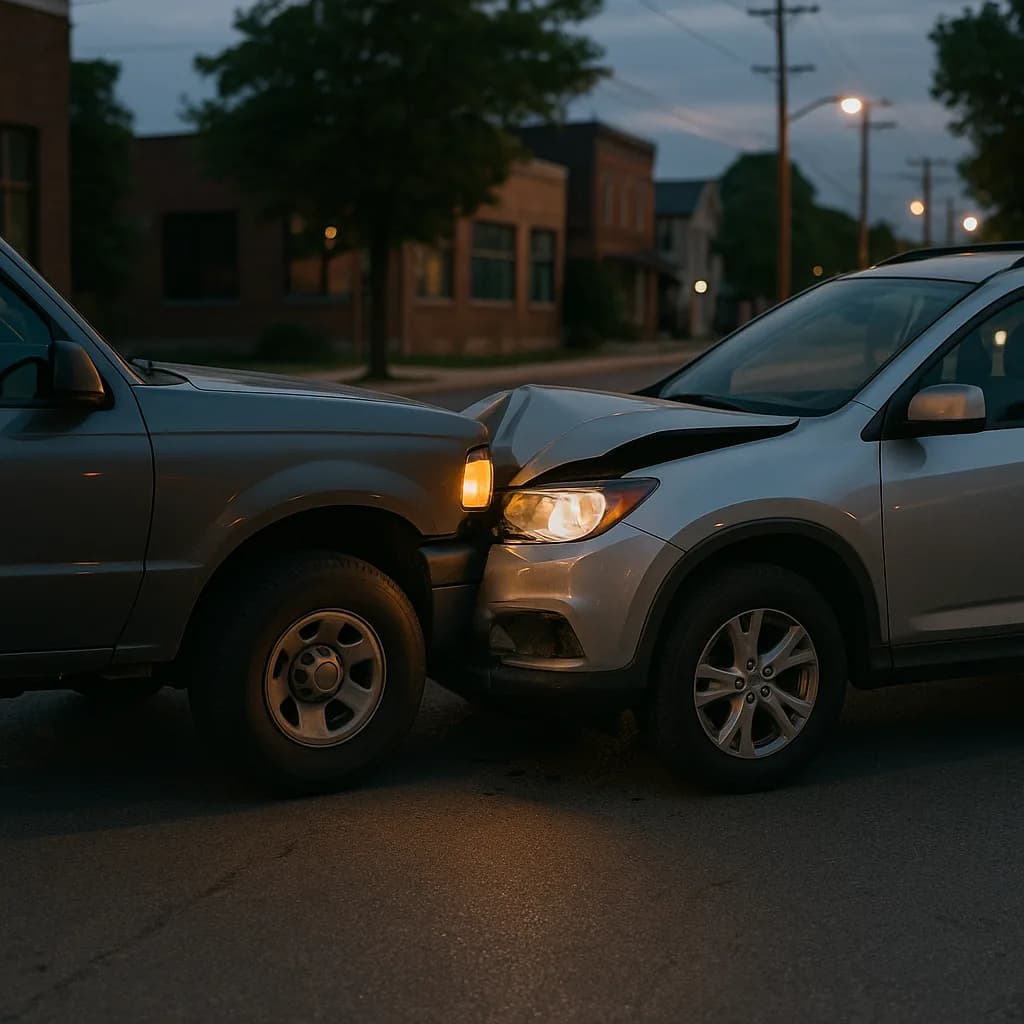
Virginia requires first-time drivers to carry minimum liability coverage of 25/50/20, but these state minimums often leave new drivers exposed to out-of-pocket costs after even minor accidents.
Why Virginia's Minimum Coverage Numbers Are Outdated
You just got your license and your first car, and now you're looking at insurance quotes that feel impossibly high. The cheapest option is Virginia's state minimum coverage — 25/50/20 liability — which typically costs first-time drivers between $180 and $320 per month depending on age, location, and vehicle type. But those numbers were set decades ago when the average car accident property damage claim was under $2,000.
Today, the average property damage claim in Virginia is approximately $4,700 according to industry data, and injury claims routinely exceed $30,000 when emergency room visits and follow-up care are included. Your 25/50/20 policy covers up to $25,000 per person for injuries, $50,000 total per accident for injuries, and $20,000 for property damage — which means if you cause an accident involving a newer SUV or truck, you could personally owe thousands of dollars beyond what your insurance pays.
First-time drivers face the highest accident rates during their first two years of driving, with crash involvement rates nearly triple that of drivers over 25. This makes the gap between state minimums and actual financial exposure particularly dangerous for new drivers who typically have limited savings to cover out-of-pocket costs after an at-fault accident.
What Virginia Legally Requires You to Carry
Virginia operates as a "financial responsibility" state, which means you must prove you can pay for damages if you cause an accident. Most drivers satisfy this requirement by purchasing auto insurance, but Virginia uniquely allows you to pay a $500 annual Uninsured Motor Vehicle (UMV) fee instead of buying insurance. This fee does not provide any coverage — it simply allows you to drive legally while completely uninsured.
If you choose insurance instead of the UMV fee, you must carry minimum liability coverage of 25/50/20. This breaks down as $25,000 per person for bodily injury, $50,000 per accident for bodily injury, and $20,000 for property damage. These are the lowest limits you can legally purchase in Virginia. Liability insurance only pays for damage and injuries you cause to others — it does not repair your own vehicle or cover your own medical bills.
Virginia does not require collision coverage, comprehensive coverage, or uninsured motorist coverage by law. However, if you financed your vehicle or have a lease, your lender will require collision and comprehensive coverage until the loan is paid off. Most lenders also require higher liability limits than the state minimum, typically 50/100/50 or 100/300/100.
Compare car insurance for first-time drivers
Rates are high for new drivers — but the right carrier and discounts can make a real difference.
Get Your Free Quote✓ New Driver Specialists✓ No Obligation✓ Licensed Carriers✓ All 50 States
The Real Cost Gap Between Minimum and Adequate Coverage
Moving from Virginia's 25/50/20 minimum to 100/300/100 liability limits typically adds $40 to $75 per month for first-time drivers under 25. That feels substantial when you're already paying $200+ monthly for basic coverage, but the financial math changes dramatically when you consider actual accident scenarios.
If you cause an accident that totals a three-year-old Honda CR-V (current used value around $28,000), your minimum property damage coverage pays $20,000 and you personally owe the remaining $8,000. If the other driver suffers a broken wrist requiring surgery, their medical bills easily reach $35,000 to $50,000 — your policy pays the first $25,000 and you are legally liable for the rest, which can lead to wage garnishment or liens against future assets.
Adding uninsured motorist coverage costs an additional $15 to $30 per month but protects you when hit by one of Virginia's uninsured drivers, who represent approximately 11% of all drivers on the road. This coverage pays your medical bills and repairs your vehicle when the at-fault driver has no insurance or insufficient coverage — without it, you pay those costs entirely out of pocket even though you weren't at fault.
Coverage Decisions That Matter Most for New Drivers
Your deductible choice affects both your monthly premium and your out-of-pocket cost after an accident. A $500 deductible typically costs $30 to $50 more per month than a $1,000 deductible for first-time drivers. Most new drivers choose the higher deductible to reduce monthly payments, but this creates a $1,000 immediate expense if you file a claim — make sure you have that amount accessible before selecting a $1,000 deductible.
Collision coverage pays to repair your vehicle after an accident regardless of fault, while comprehensive coverage pays for non-accident damage like theft, vandalism, hail, or hitting a deer. If your vehicle is worth less than $4,000, many financial advisors suggest dropping these coverages and setting aside the premium savings for eventual replacement — but only if you can afford to replace the vehicle yourself if it's totaled.
Medical payments coverage (MedPay) is often overlooked by first-time buyers but costs only $8 to $15 per month for $5,000 in coverage. This pays your medical bills after an accident regardless of fault, with no deductible, and covers you even as a pedestrian or bicycle rider hit by a car. For young drivers still on their parents' health insurance, this may feel redundant, but it covers your health insurance deductible and copays that you'd otherwise pay yourself.
How Virginia Assigns Risk for First-Time Drivers
Insurance companies in Virginia use a tiered rating system that places first-time drivers in higher-risk categories based on multiple factors beyond just age. Drivers under 25 with fewer than three years of licensed driving history pay the highest rates, but the specific increase varies by company — some carriers charge first-time drivers 180% of the base rate while others charge 240% or more.
Your residential ZIP code creates significant rate variation within Virginia. First-time drivers in Virginia Beach typically pay $220 to $340 per month for minimum coverage, while those in Arlington or Fairfax County often pay $280 to $420 monthly due to higher traffic density, accident frequency, and repair costs. Rural areas like Shenandoah County see rates closer to $160 to $260 monthly for the same coverage.
Virginia allows insurance companies to use credit-based insurance scores for rating, which disadvantages many first-time drivers who have limited credit history. A thin credit file can increase your premium by 20% to 40% compared to someone with established good credit, even if you have a clean driving record. Some carriers offer "new to credit" programs that reduce this penalty for young drivers with no credit history rather than poor credit history.
When You'll Need to File SR-22 as a New Driver
An SR-22 is not insurance — it's a certificate your insurance company files with the Virginia DMV to prove you're carrying at least minimum liability coverage. Virginia requires SR-22 filing after specific violations including DUI, driving without insurance, accumulating too many demerit points, or certain at-fault accidents. For first-time drivers, the most common SR-22 trigger is being caught driving without valid insurance.
Filing an SR-22 adds $15 to $25 to your policy as a one-time fee, but the real cost comes from being labeled high-risk. First-time drivers who need SR-22 filing typically see their premiums increase by 60% to 90% compared to similar drivers without violations. A first-time driver paying $240 monthly for standard coverage might pay $380 to $450 monthly after requiring SR-22 filing, and this elevated rate typically continues for three years.
Not all insurance companies accept SR-22 filings — many standard carriers will non-renew your policy when you require SR-22, forcing you into the non-standard market where options are limited and rates are higher. If you're a first-time driver facing SR-22 requirements, comparing quotes from multiple carriers becomes essential since rate differences between companies can exceed $100 monthly for the same coverage.