Texas requires only $30,000 in bodily injury coverage per person — but that won't cover a single serious accident. Here's how to build coverage that protects you without overpaying.
Why Texas Minimum Coverage Leaves You Exposed
You just got your license and your first car, and you're looking at insurance quotes that show Texas minimum coverage for around $150–$200/mo. The state requires 30/60/25 liability coverage — that's $30,000 per person for injuries, $60,000 per accident total, and $25,000 for property damage. Those numbers sound reasonable until you learn what they actually cover.
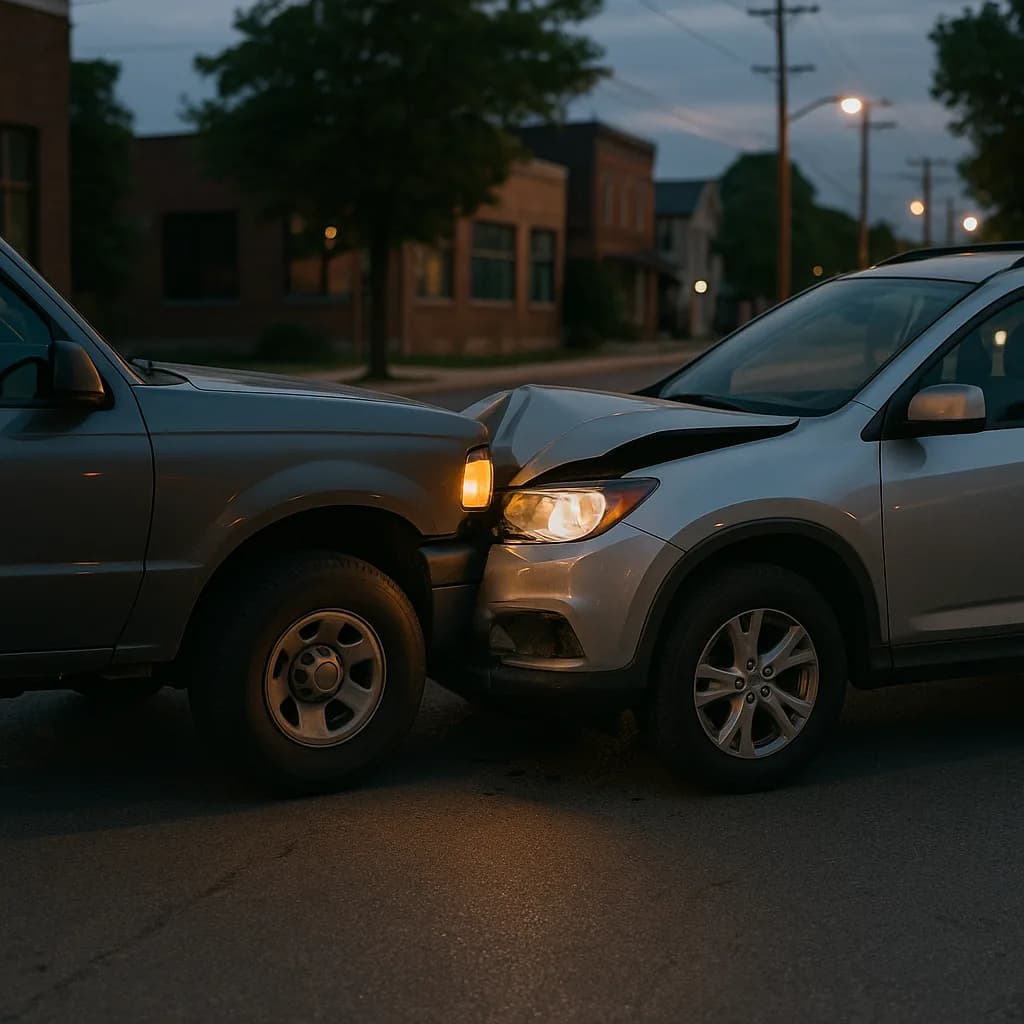
A single night in a Texas trauma center averages $40,000–$60,000 before any surgery or long-term care. If you cause an accident that seriously injures another driver, your $30,000 per-person limit gets exhausted before they leave the ICU. The injured party can then sue you personally for the remaining medical bills, lost wages, and pain and suffering — costs that can easily reach $200,000 or more in a serious collision.
Most insurance carriers in Texas won't even offer you state minimum coverage as a first-time driver under 25. They'll start you at 50/100/50 or 100/300/100 because they know the liability exposure. When you see those higher limits quoted, that's not the carrier upselling you — it's them protecting both you and themselves from a lawsuit that bankrupts a young driver with no assets.
The Four Coverage Decisions You Actually Control
Insurance quotes break down into four decisions, and only one of them is optional for most first-time drivers in Texas. First is liability coverage — the amount your insurer pays if you hurt someone or damage their property. This is legally required and should be your biggest investment. Second is collision coverage, which pays to repair your car if you crash regardless of fault. Third is comprehensive coverage, which handles theft, hail, vandalism, and animal strikes. Fourth is uninsured motorist coverage, which protects you when someone without insurance hits you.
If you financed or leased your car, your lender requires both collision and comprehensive until the loan is paid off. You don't get to skip these. If you own your car outright and it's worth less than $4,000, you might reasonably drop collision and comprehensive and pocket the $60–$100/mo savings — but only if you can afford to replace the car out of pocket tomorrow.
The decision most first-time drivers get wrong is liability limits. Raising your liability from 30/60/25 to 100/300/100 typically adds $40–$70/mo, but it's the difference between financial protection and personal bankruptcy after a serious accident. Uninsured motorist coverage costs another $15–$30/mo and matters in Texas, where approximately 14% of drivers have no insurance according to the Insurance Information Institute.
Compare car insurance for first-time drivers
Rates are high for new drivers — but the right carrier and discounts can make a real difference.
Get Your Free Quote✓ New Driver Specialists✓ No Obligation✓ Licensed Carriers✓ All 50 States
What Coverage Actually Costs for Texas First-Time Drivers
A first-time driver in Texas under 25 with a clean record typically pays $220–$380/mo for full coverage with 100/300/100 liability limits, $500 collision deductible, and $500 comprehensive deductible. That same driver with state minimum liability and no collision or comprehensive might pay $150–$240/mo. The $70–$140/mo difference buys you protection against totaling your own car and quadruples your liability protection.
Your rate depends heavily on where you live within Texas. A 19-year-old driver in rural areas like Amarillo or Lubbock might see rates 20–30% lower than the same driver in Houston or Dallas, where accident frequency and repair costs run higher. Adding a parent as a named driver on your policy can drop your rate 15–25% even if they never drive your car, because carriers view parental oversight as reducing risk.
Deductibles control how much you pay monthly versus how much you pay when you file a claim. A $500 deductible is the standard starting point — lowering it to $250 adds $25–$40/mo but only saves you $250 if you total your car. Raising it to $1,000 cuts $30–$50/mo off your premium but means you're covering the first $1,000 of every collision repair yourself. Choose the highest deductible you could pay tomorrow if you wrecked your car tonight.
How Texas-Specific Factors Change What You Need
Texas is a tort state, meaning the at-fault driver's insurance pays for damages after an accident. That makes liability coverage your primary financial protection — if you cause the accident, your liability coverage is the only thing standing between the other driver's medical bills and your personal bank account. Unlike no-fault states where each driver's insurance covers their own injuries, Texas law allows injured parties to sue you directly for damages beyond your policy limits.
Texas also doesn't require personal injury protection (PIP) or medical payments coverage, which pay your own medical bills after an accident. Some carriers include $5,000–$10,000 in medical payments automatically, but many don't. If you have health insurance with a low deductible, you can skip medical payments coverage. If you don't have health insurance or have a high deductible, adding $5,000 in medical payments costs about $8–$15/mo and covers your ER visit and immediate treatment after a crash.
Hail damage is a significant risk across most of Texas, particularly from the I-35 corridor through the Panhandle. Comprehensive coverage handles hail claims, but your deductible applies. A severe hailstorm can cause $4,000–$8,000 in damage to a vehicle, meaning a $500 comprehensive deductible makes financial sense if you park outside regularly.
What to Do in the Next 48 Hours
Get quotes from at least three carriers, and make sure each quote includes identical coverage limits so you're comparing actual price differences, not different products. Specify 100/300/100 liability, $500 collision deductible, $500 comprehensive deductible, and uninsured motorist coverage that matches your liability limits. Write down the monthly premium and the exact coverage details for each quote.
Ask every carrier about available discounts before you buy. Completing a defensive driving course approved by the Texas Department of Licensing and Regulation typically cuts 5–10% off your premium for three years and costs $25–$40 to complete online. Good student discounts (usually requiring a 3.0 GPA or better) save another 10–15%. Installing a telematics device or app that monitors your driving can save 10–20% if you demonstrate safe driving habits over the first 90 days.
Buy coverage before you drive the car off the lot or out of the seller's driveway. Texas law requires proof of insurance before you can register a vehicle, and driving without insurance carries a fine of $175–$350 for a first offense plus a potential license suspension. Most carriers can bind coverage immediately over the phone or online and email you proof of insurance within minutes. When you're ready to lock in coverage that actually protects you, compare personalized quotes built for first-time drivers in Texas.