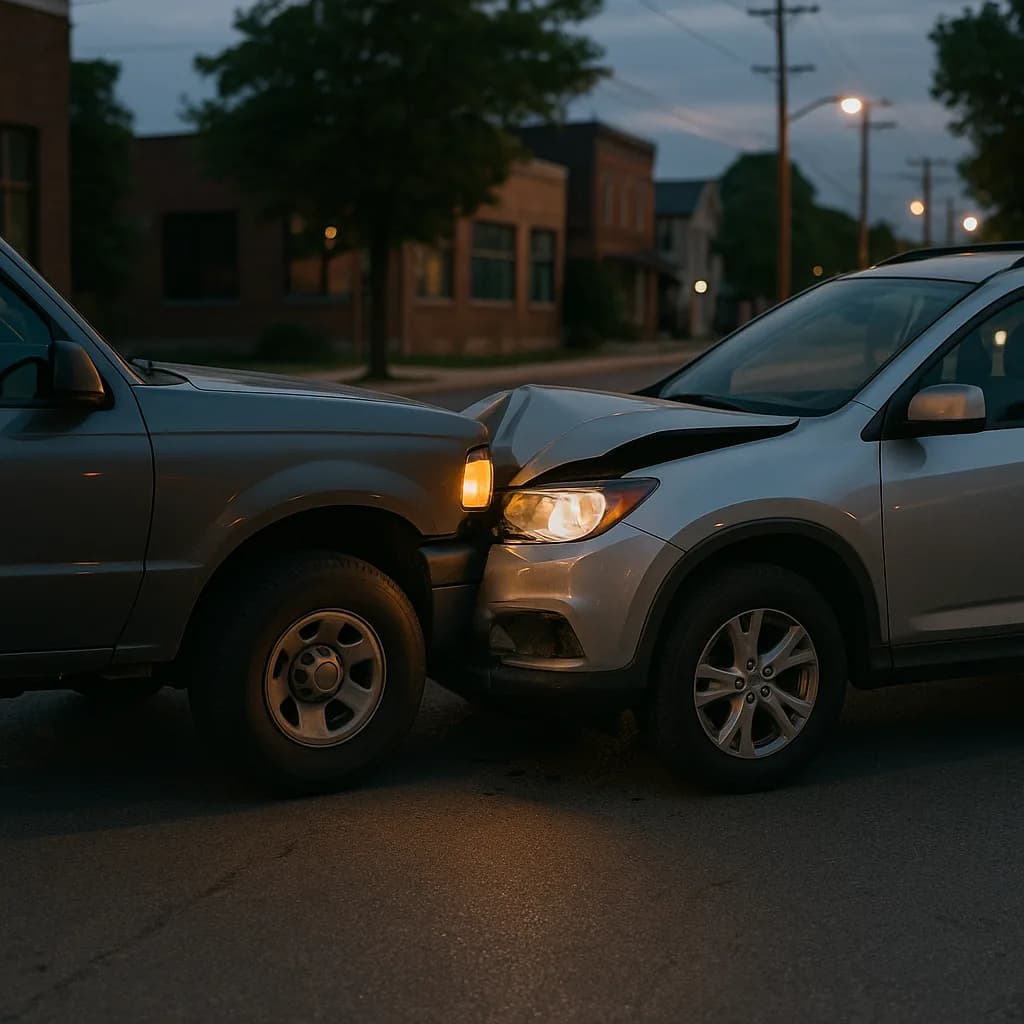
Your address alone can change your rate by 40–80%. Urban density pricing works differently for young drivers because you're being charged for both your age and everyone else's accidents in your ZIP code.
Why Your ZIP Code Changes Your Rate More Than Your Driving Record
Insurance carriers don't price your policy based solely on how you drive. They price it based on how likely they think you are to file a claim, and a significant portion of that calculation comes from where you park your car overnight. Your ZIP code determines your base rate before your age, driving record, or coverage choices ever enter the equation.
For young drivers specifically, this creates a compounding effect. You're already paying 80–100% more than a 30-year-old with equivalent coverage because of statistical accident rates in your age group. Then the carrier applies a second layer of pricing based on claim frequency in your specific area. If you live in a city with high traffic density, frequent thefts, or elevated collision rates, you're paying the inexperienced operator surcharge on top of an already-elevated ZIP code base rate.
The difference is measurable. A 22-year-old driver with a clean record typically pays $180–$240/mo in a major metropolitan area for full coverage on a sedan, compared to $110–$150/mo in a rural county with lower claim density. That's a $70–$90/mo gap driven almost entirely by address, not behavior.
This matters because most young drivers don't realize the rate difference isn't linear — it's multiplicative. The urban surcharge doesn't just add dollars to your premium. It increases the base amount that your age penalty is calculated against, which means you're paying a percentage markup on an already-marked-up number.
What Drives the Urban Rate Penalty for Young Drivers
Urban areas generate more insurance claims per capita, and carriers price that risk into every policy issued in those ZIP codes. The factors that increase city rates apply to all drivers, but they hit young drivers harder because you're already in the highest-risk pricing tier before location is factored in.
Traffic density is the primary driver. More cars on the road means statistically more accidents, more frequent fender-benders in parking lots, and higher repair costs when collisions do happen. Urban drivers also face elevated theft rates — comprehensive claims for stolen vehicles or broken windows occur more frequently in cities, which raises the cost of comprehensive coverage across the board.
Uninsured motorist rates also vary significantly by region. In some urban areas, 15–25% of drivers carry no insurance at all, which means your uninsured motorist coverage is priced higher to account for the increased likelihood you'll need to use it. Rural areas typically see lower uninsured rates, which translates to lower premiums for that coverage.
Repair costs compound the gap. Urban body shops charge more per hour for labor, and parts availability in densely populated areas can drive up replacement costs. Carriers build these higher repair expenses into the base rate for the ZIP code, which means even a minor claim in a city costs the insurer more than the same claim in a rural area.
Compare car insurance for first-time drivers
Rates are high for new drivers — but the right carrier and discounts can make a real difference.
Get Your Free Quote✓ New Driver Specialists✓ No Obligation✓ Licensed Carriers✓ All 50 States
How Rural Addresses Lower Your Premium (and Where They Don't)
Rural ZIP codes typically generate 30–50% fewer claims per insured driver than urban centers, and carriers price that reduced risk directly into your rate. If you're under 25 and living in a low-density area, you're still paying the age surcharge, but you're paying it against a lower base rate.
The savings show up most clearly in collision and comprehensive coverage. Fewer cars on the road means fewer accidents. Lower theft rates mean lower comprehensive premiums. In many rural counties, a young driver can carry full coverage for close to what liability-only costs in a major city.
But rural doesn't always mean cheaper across the board. If you live in a rural area with limited access to emergency services, carriers may price in higher medical costs for injury claims. If your county has poorly maintained roads or high rates of deer collisions, your comprehensive coverage may not drop as much as you'd expect. And if you're in a rural state that uses credit-based insurance scores heavily in pricing, a thin credit file can offset some of the geographic savings.
Mileage also matters more in rural areas than most young drivers expect. If you're commuting 40+ miles each way to work or school, your annual mileage may push you into a higher rating tier even though you live in a low-density ZIP code. Carriers price long-distance rural commuters differently than low-mileage urban drivers, and the rate difference isn't always intuitive.
The College Address Decision: When a Temporary Move Changes Your Rate
If you're attending college in a different city or state, your insurance address matters more than most students realize. Carriers require you to list the address where your car is parked most often, which means your rate is tied to your school ZIP code, not your parents' home address.
Moving from a rural home address to an urban college town can increase your premium by 40–70%, depending on the density difference. That's not a temporary spike — your rate stays elevated for as long as your car is registered at the school address. If you're on your parents' policy, that increase applies to their entire policy, not just your portion.
Some students try to keep their home address on file to avoid the rate jump, but this creates a coverage risk. If you're in an accident near campus and the carrier discovers your car is actually garaged 200 miles away, they can deny the claim for material misrepresentation. It's not worth the savings.
The better strategy: check whether your school qualifies for a distant student discount. Many carriers offer reduced rates for students who attend school more than 100 miles from home and don't bring a car to campus. If you only drive when you're home for breaks, you can keep your parents' address and qualify for the discount. If you need a car at school, you'll pay the urban rate, but at least you're covered correctly.
When Shopping by ZIP Code Actually Saves You Money
The rate gap between city and rural addresses is widest at the entry point — when you're first getting your own policy or being added to a parent's policy. That's when it makes sense to compare quotes across multiple carriers, because different insurers weight ZIP code risk differently.
Some carriers use hyper-local pricing models that adjust rates block by block within the same city. Others use broader county-level zones. If you're in a borderline area — a suburb just outside a major city, or a town that straddles two counties — the carrier you choose can change your rate by 20–30% even if your coverage is identical.
The timing also matters. If you're moving from a city to a rural area, notify your carrier immediately and request a rate adjustment. Most insurers will reprice your policy mid-term if your garaging address changes, which means you don't have to wait until renewal to see the savings. The reverse is also true — if you move from a rural area to a city and don't update your address, you're risking a coverage denial if you file a claim.
Telematics programs can offset some of the urban penalty if you're a low-mileage driver. If you live in a city but only drive 4,000–6,000 miles per year and avoid peak traffic hours, a usage-based insurance program may cut your rate by 15–30%, which can bring your urban premium closer to what you'd pay in a rural area with standard pricing.
What Changes When You Turn 21 and 25 in Different Locations
The inexperienced operator surcharge that drives young driver rates drops at two key milestones: age 21 and age 25. But the size of that drop depends heavily on where you live, because the base rate you're dropping to is still shaped by your ZIP code.
At age 21, most carriers reduce your rate by 10–20%, assuming you have a clean record. In a rural area, that might drop your full coverage premium from $130/mo to $105/mo. In an urban ZIP code, the same reduction might take you from $220/mo to $185/mo. You're getting the same percentage discount, but the dollar savings are smaller because you're starting from a higher floor.
At age 25, the drop is more significant — typically 20–30% if you've maintained a clean record. But again, the final rate is anchored to your location. A 25-year-old in a low-density county might pay $85/mo for full coverage. A 25-year-old in a major city with the same record and coverage might still pay $140/mo.
This is why the right time to shop isn't after you hit these milestones — it's 30–60 days before. New carriers price your future risk, which means they'll quote you at the post-milestone rate if your birthday is coming up. Your current carrier may not apply the age discount until your renewal date, which could be months after you turn 21 or 25. Shopping early lets you lock in the lower rate without waiting.