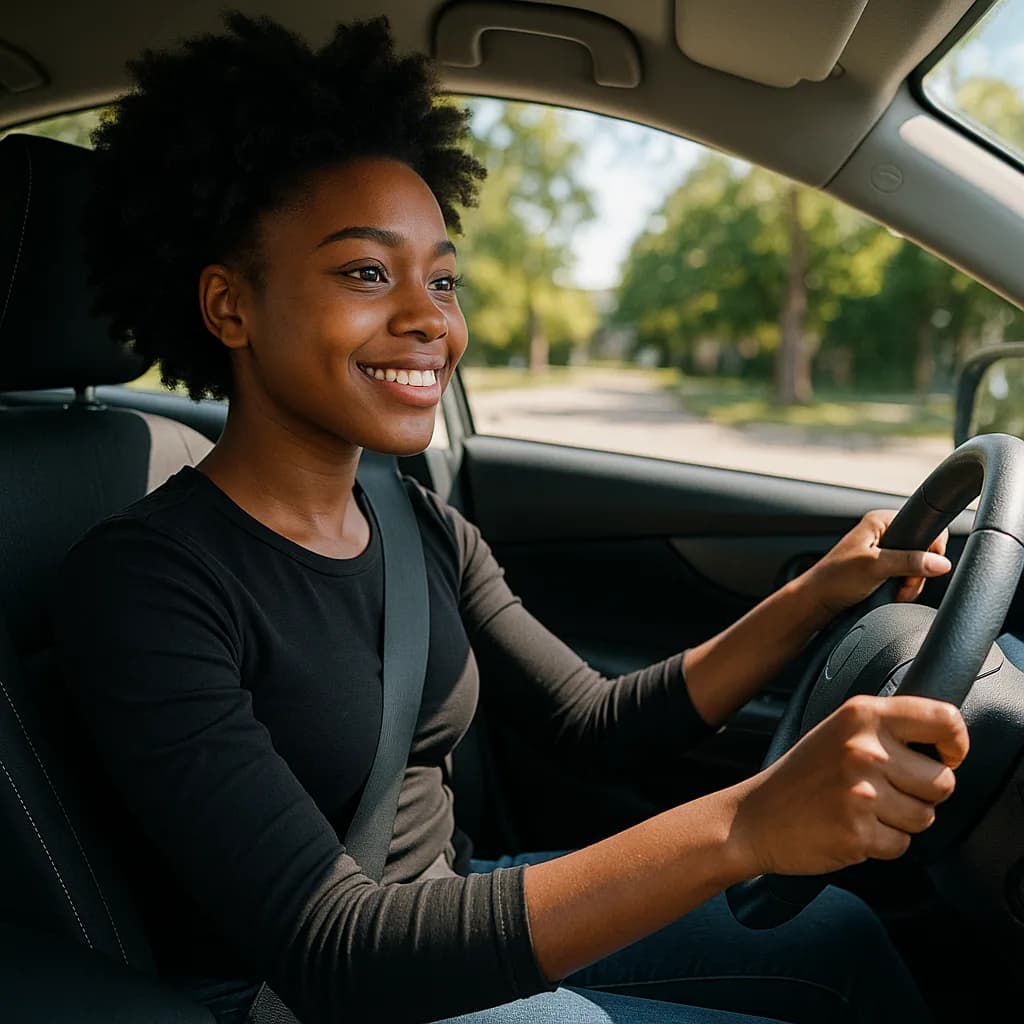
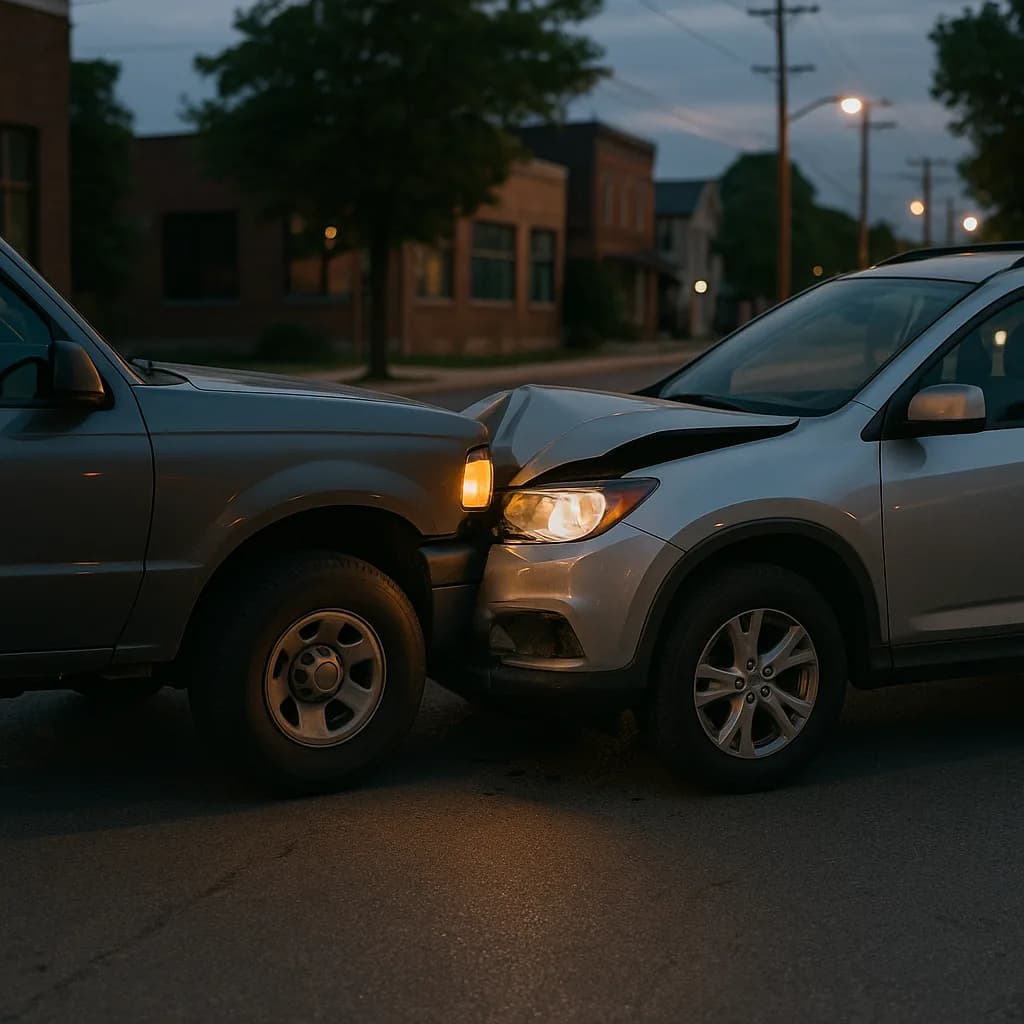
Most learner's permit holders are covered under a parent's or sponsor's policy automatically — but only while supervised. What happens when you're driving alone, what coverage gaps exist, and when you need your own policy.
How learner's permit coverage actually works
If you're practicing with a learner's permit under a parent or other licensed adult, you're typically covered by their auto insurance policy automatically. Most carriers treat supervised permit driving as an extension of the policyholder's coverage — the same way their policy would cover them if they were teaching you to parallel park in a parking lot.
The critical word is supervised. Coverage applies when a licensed driver who meets your state's supervision requirements is in the passenger seat. That usually means someone 21 or older with a valid license who's been driving for a specified period — often 1 to 3 years depending on your state. If you're driving alone with just a permit, even to move the car in a driveway, most policies provide no coverage.
This isn't a gap you can close by asking nicely. It's a hard exclusion. Learner's permits legally restrict you to supervised driving, and insurance policies are written to match that legal restriction. The supervising driver's policy covers you because they're responsible for the vehicle and for your actions while you're learning under their direct supervision.
Some parents assume they need to add a permit holder to their policy formally. In most cases, you don't — not yet. The formal addition usually happens when you get your provisional or full license and begin driving independently. But if the insurance company asks during a policy review whether there are any household members with a permit, answer honestly. Failing to disclose can create problems later when you do need to be added.
When you're not covered under a parent's policy
Three scenarios consistently create coverage gaps for permit holders: driving unsupervised even briefly, practicing with someone who doesn't meet the supervision requirements, and practicing in a vehicle not covered by the supervising driver's policy.
If you're practicing in a car your parent doesn't own — say, a friend's car or a vehicle you're planning to buy — the supervising driver's policy may not extend coverage. Most policies cover vehicles the policyholder owns or regularly uses, but not vehicles they're merely present in as a passenger. If your parent is supervising you in someone else's car, the coverage typically needs to come from that car's owner, not your parent's policy.
The supervision requirement itself is stricter than most learners realize. If your state requires the supervising driver to be 21 or older and you practice with an 18-year-old sibling, the supervising driver's policy may deny a claim even if that sibling is licensed and insured. The policy exclusion mirrors the legal restriction — if the supervision doesn't meet state requirements, the insurance doesn't apply.
Some states allow permit holders to practice with any licensed driver over 18, while others require 21 or even 25. The insurance policy will defer to whatever your state's graduated licensing law specifies. If you're unsure of your state's supervision rules, check your state's DMV requirements before assuming you're covered during any practice session.
Compare car insurance for first-time drivers
Rates are high for new drivers — but the right carrier and discounts can make a real difference.
Get Your Free Quote✓ New Driver Specialists✓ No Obligation✓ Licensed Carriers✓ All 50 States
Does a learner's permit increase the parent's insurance rate
In most cases, simply having a learner's permit in the household does not increase the parent's auto insurance premium — as long as the permit holder is practicing under supervision and hasn't been formally added to the policy as a rated driver. The rate increase typically occurs when you obtain a provisional or full license and begin driving independently.
That changes the moment you're licensed to drive alone. Adding a newly licensed driver under 25 to a parent's policy increases the annual premium by $1,500 to $3,000 on average, depending on the state, the vehicle, and the coverage limits. The increase reflects statistical risk: drivers under 25 are involved in accidents at roughly double the rate of drivers over 30, and insurers price that risk into the policy.
Some carriers ask whether there are household members with learner's permits during policy renewals or updates. If asked, disclose it. The disclosure itself usually doesn't trigger a rate increase during the permit phase, but failing to disclose and then filing a claim can lead to denial or retroactive premium adjustments.
Once you do get your license, the timing of when you're added to the parent's policy matters. Some parents wait until the young driver is actually using the car regularly, assuming that delays the rate increase. That's a coverage gap. If you're licensed and living in the household, most policies require you to be listed — whether you're driving daily or occasionally. Delaying the addition doesn't avoid the cost; it creates a window where claims may be denied.
When you need your own policy with just a permit
Most learner's permit holders don't need their own standalone insurance policy. But there are specific situations where you do: if you own the vehicle you're learning in, if you're an adult learner not living with a parent or family member who can supervise, or if you're practicing in a state that requires all registered vehicle owners to carry insurance regardless of license status.
If you buy a car while you still have a learner's permit — which is uncommon but happens, especially for older first-time drivers — you'll need to insure it in your own name. Lenders and state registration systems require the vehicle owner to be the policyholder in most cases. You can't register a car in your name and insure it under someone else's policy.
Adult learners over 18 who don't live with a parent face a different scenario. If you're learning to drive at 22 and practicing with a roommate or driving instructor, you're not automatically covered under anyone's policy. Some driving schools provide coverage during lessons, but outside of formal instruction, you'll likely need a named non-owner policy or to be added to the vehicle owner's policy if you're practicing regularly in their car.
Getting a standalone policy as a permit holder is expensive and often unnecessary unless one of these scenarios applies. Premiums for drivers without a full license are higher than even newly licensed drivers because carriers view the permit phase as higher risk. If you're in a situation where you need coverage as a permit holder, expect to pay a significant premium — often 30 to 50% more than a comparable newly licensed driver would pay for the same coverage.
What happens when you transition from permit to license
The transition from learner's permit to provisional or full license is the point where you must be formally added to a parent's policy or obtain your own. This is not optional. Once you're legally allowed to drive unsupervised, the automatic coverage extension that applied during supervised permit driving ends.
Most states issue a provisional or intermediate license first — you're licensed to drive alone but with restrictions on passengers, nighttime driving, or both. Even with those restrictions, you're now a rated driver. The insurance company will assess your risk independently and adjust the household policy premium accordingly. This is also when your driving record starts to matter. A ticket or accident during the provisional phase affects your rates immediately and follows you for typically three to five years.
Some young drivers assume they can delay being added to the policy if they're not driving often. That's a mistake. Insurance policies typically require all licensed household members to be listed, regardless of how frequently they drive. If you're licensed, living at home, and have access to a household vehicle, you need to be on the policy. Failing to add yourself and then getting into an accident creates a scenario where the insurer can deny the claim entirely.
The cost of being added as a newly licensed driver is significant, but it's also the beginning of your insurance history. Every month you're on a policy without a claim or violation builds your record. That history directly affects the rates you'll pay when you eventually get your own independent policy — whether that's at 18, 22, or 25. Delaying coverage or letting gaps occur restarts that clock.
Building insurance history during the permit and early license phase
One of the least understood aspects of the learner permit and early license phase is that this is when your insurance history begins — or doesn't. Time on a parent's policy counts as insurance history, but only if you're formally listed. If you're driving under a permit with informal coverage, that time doesn't build any record in your name.
Once you're licensed and added to a parent's policy, every month without a claim or traffic violation strengthens your profile. Carriers track this as "continuous coverage" and "clean driving record." After three years of clean history, most insurers move you into a lower-risk pricing tier. That's a meaningful rate drop — typically 15 to 25% — but it only happens if you've been continuously insured during that period.
If you go off a parent's policy and get your own at 19 or 20 without maintaining continuous coverage, you'll be priced as a newly insured driver even if you've been licensed for years. A gap of 30 days or more typically restarts the experience clock at most major carriers. For young drivers, that gap can mean paying $50 to $100 more per month than you would have with uninterrupted coverage.
The long-view decision here is whether to stay on a parent's policy longer to build history or go independent earlier to establish your own policy in your name. Staying on a parent's policy is almost always cheaper per month, but it delays the point at which you have an independent insurance record. If you're planning to move, buy your own car, or apply for credit that considers insurance history, having your own policy earlier can be worth the higher short-term cost. That calculus is individual, but the key is understanding that the permit and early license phase is when the foundation of your insurance profile is set — and gaps or delays compound over the next five years.