Most new drivers delay filing claims because they don't know the exact steps or fear premium increases they can't predict. Here's the real timeline, what to say, and how your rate actually changes.
What to Do in the First Hour After an Accident
The first hour after your accident determines whether your claim gets approved or disputed. Call 911 immediately if anyone is injured or if vehicle damage appears to exceed $1,000 — most states legally require police reports above this threshold, and filing without one when required can void your claim entirely.
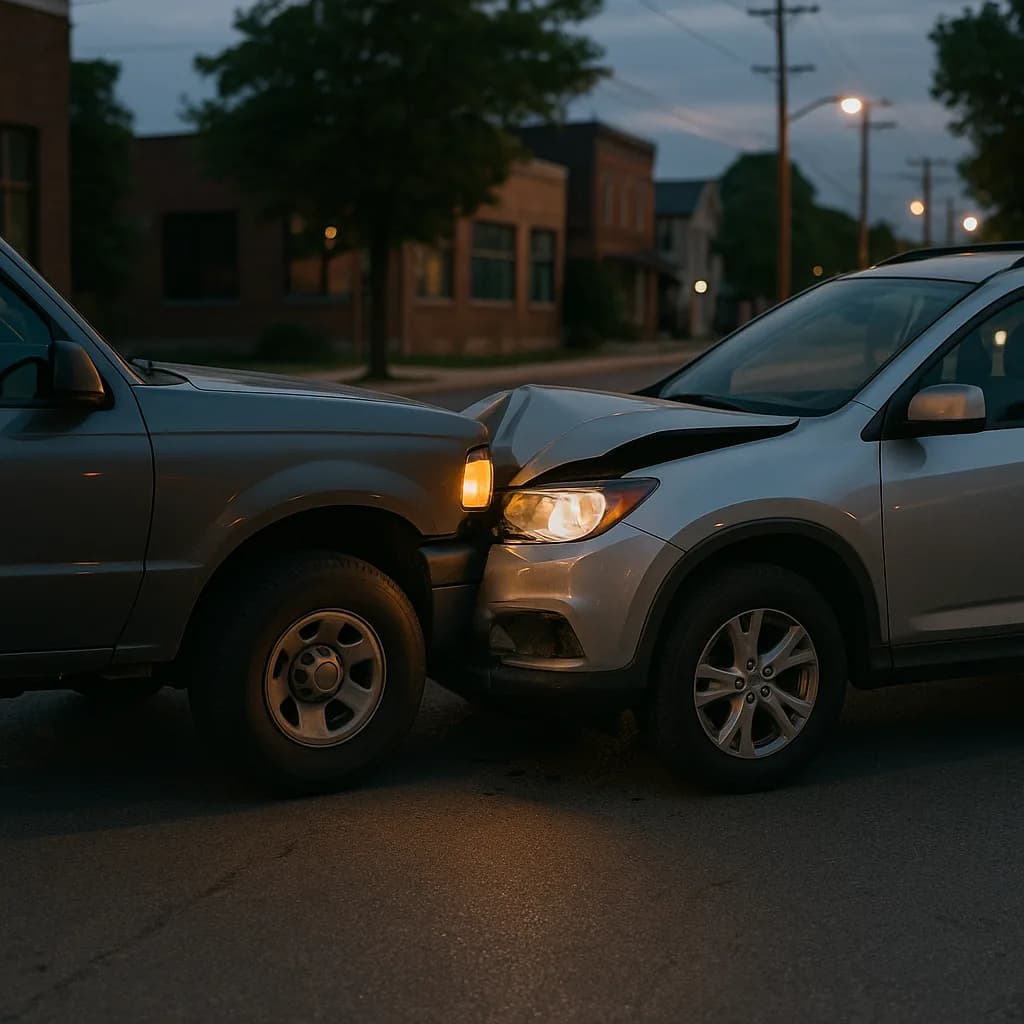
Take photos of all vehicle damage, license plates, street signs showing your location, and any visible injuries before moving your car. Insurance adjusters review an average of 40-60 photos per claim, and gaps in your photo sequence raise questions about what happened between shots. Capture wide shots showing final vehicle positions, then close-ups of each damaged area from multiple angles.
Exchange information with the other driver: full name, phone number, insurance carrier name, policy number, and license plate. Do not discuss fault, apologize, or speculate about what happened — Missouri and Illinois courts have used apology statements as fault admissions even when the other driver caused the accident. If the other driver refuses to share information or leaves the scene, note their vehicle description and direction of travel, then call police immediately.
Notify your insurance company within 24 hours even if you plan to file through the other driver's insurance. Most policies include a "prompt notification" clause that can reduce or deny your claim if you wait beyond 48-72 hours without documented reason. Your carrier's claims number appears on your insurance card and typically operates 24/7.
Filing Your Claim: The 48-Hour Window
Contact your insurance carrier's claims department by phone rather than through an app or website for your first accident. Live claims representatives create more detailed initial reports and can explain your coverage limits and deductible immediately. When you call, have your policy number, the accident location, date and time, and the other driver's insurance information ready.
The representative will assign you a claim number and an adjuster within 24-48 hours. Write down both — you'll reference this claim number in every future conversation. The adjuster is the person who investigates your claim, determines fault percentage, and approves repair costs. In states that follow comparative negligence rules, your adjuster will assign you a fault percentage between 0-100%, which directly affects how much the insurance company pays.
Your adjuster will ask for a recorded statement within 2-5 days of filing. This is not optional — refusing delays your claim and triggers additional investigation. Answer questions directly: describe what you saw, what you did, and the sequence of events. Do not guess about vehicle speeds, distances, or the other driver's actions if you're unsure. Saying "I don't remember" is acceptable and preferable to guessing.
If you're filing a claim through the other driver's insurance (a third-party claim), expect a slower timeline. Their adjuster has no contractual obligation to respond within a specific timeframe, and you may wait 7-14 days for initial contact. This is why carrying collision coverage matters even when you're not at fault — it lets you file through your own policy and get your car fixed faster.
Compare car insurance for first-time drivers
Rates are high for new drivers — but the right carrier and discounts can make a real difference.
Get Your Free Quote✓ New Driver Specialists✓ No Obligation✓ Licensed Carriers✓ All 50 States
The Vehicle Inspection and Damage Assessment
Your adjuster will schedule a vehicle inspection within 3-7 days of filing, either at a drive-in claims center, an approved repair shop, or through a mobile appraiser who comes to your location. Failing to appear for a scheduled inspection without 24-hour notice can pause your claim indefinitely.
The adjuster photographs your damage, writes a repair estimate, and determines whether your car is repairable or totaled. A vehicle is declared a total loss when repair costs exceed 70-80% of the car's actual cash value (what your specific car was worth the moment before the accident, not what you paid for it or what you owe on your loan). For a car worth $8,000, total loss is typically declared around $5,600-$6,400 in damage.
If your car is repairable, the adjuster's estimate becomes your approved repair amount. You can take this estimate to any licensed repair shop, though using an insurer-preferred shop often includes a repair guarantee and faster parts delivery. The shop may find additional damage once they begin work (called a supplement), which requires adjuster re-approval and adds 2-4 days to your repair timeline.
If your car is totaled, your insurer pays the actual cash value minus your deductible (the amount you pay out-of-pocket before insurance covers the rest, typically $500-$1,000 for new drivers). If you owe more on your car loan than the insurance payment, you remain responsible for that gap unless you carry gap insurance. Most lenders require collision and comprehensive coverage (together called full coverage) on financed vehicles specifically because of this risk.
Getting Your Car Repaired and Receiving Payment
Once repairs are approved, most shops complete work in 7-14 days depending on parts availability. Your insurance company pays the shop directly if you use a preferred facility, or reimburses you if you choose your own shop. You pay your deductible directly to the repair shop when you pick up your car.
If you're not at fault and filing through the other driver's insurance, you typically pay nothing out-of-pocket — third-party claims don't involve your deductible. However, you also have no control over repair timeline, and you may wait 3-4 weeks for parts approval and payment authorization.
For total loss claims, your insurer sends payment within 5-10 business days after you accept their valuation. This payment goes to your lienholder first if you have a car loan, with any remaining amount sent to you. If you disagree with the total loss valuation, you can submit comparable vehicle listings from your area showing higher prices — adjusters will review and may increase the offer by $200-$800 if your comparables are genuinely similar.
Rental car coverage (typically $25-$40/mo extra on a new driver policy) pays for a rental while your car is being repaired or for 3-5 days after a total loss settlement. Without this coverage, you pay for rentals yourself even if the other driver was at fault, then seek reimbursement from their insurance — a process that can take 30-60 days.
How Filing a Claim Affects Your Insurance Rate
Your premium (the amount you pay monthly for coverage) will increase at your next renewal if you're found at-fault, typically 6 months after the accident. First-accident increases for drivers under 25 average 40-60% depending on state and claim amount, translating to $60-$120/mo more for a driver previously paying $200/mo.
Claims under $1,000 sometimes qualify for accident forgiveness programs that prevent rate increases, but these programs are rarely available to drivers with less than 3-5 years of claims-free history. If you're at 50% fault or less in a comparative negligence state, some insurers treat it as a not-at-fault claim with no premium increase.
Not-at-fault claims (where you're 0% responsible) should not increase your premium, though some insurers still apply small increases of 5-15% based on the statistical finding that any accident involvement predicts higher future claim likelihood. If your rate increases after a not-at-fault claim, call your insurer to confirm the claim was coded correctly — coding errors happen in approximately 8-12% of claims.
Rate increases typically remain on your record for 3-5 years depending on state law. During this period, compare quotes annually — insurers weigh accident history differently, and switching carriers after an at-fault accident can sometimes reduce your rate by 15-25% compared to staying with your current insurer.